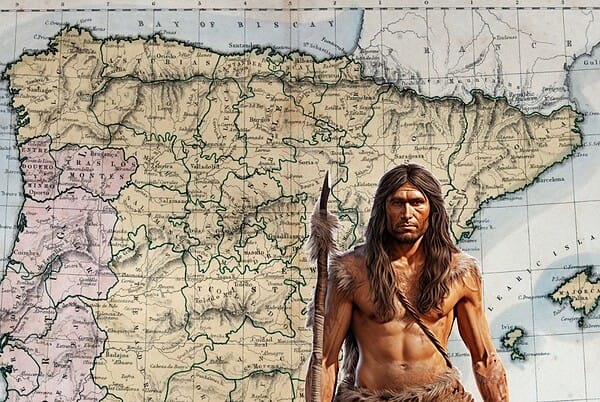
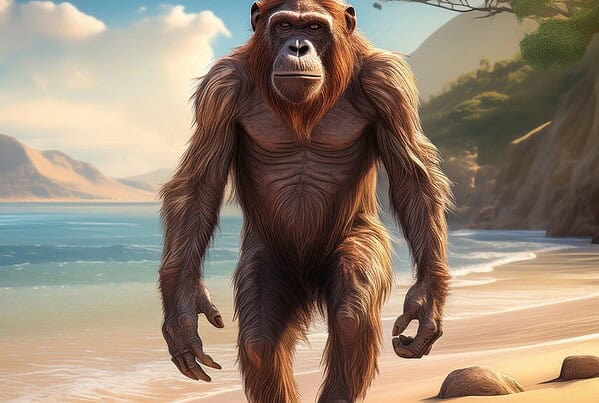
Pierolapithecus catalaunicus is a 12 million year old Miocene Ape just discovered in the north of Spain
Pierolapithecus catalaunicus stands as one of the most important hominoids of the Miocene, a fossil whose anatomy and evolutionary implications continue to reshape how scientists understand the origins of great apes and humans. Discovered in 2002 in the hills of Catalonia, Spain, this 13‑million‑year‑old specimen has become a focal point in the debate over where the earliest hominid traits emerged — and whether Europe played a larger role than once believed.
Some Alt-Anthropologists have proposed that the human line originated in Europe during the Miocene, with the Last Common Ancestor splitting and a line of Apes moving into Africa.
Discovery in Catalonia by Salvador Moyà‑Solà and his team
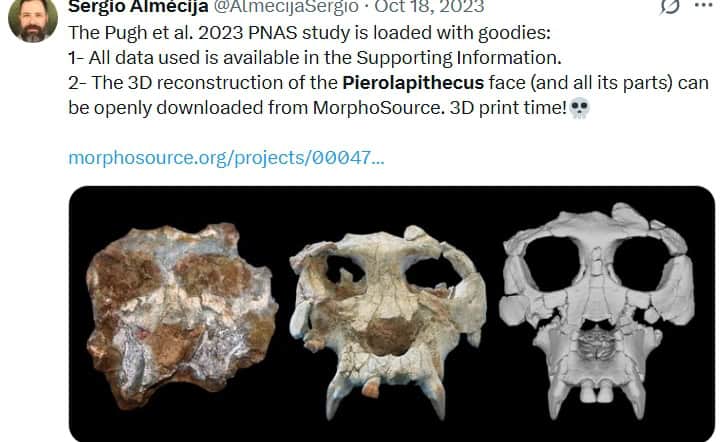 The nearly complete cranium and associated skeletal remains were unearthed at the Barranc de Can Vila 1 site near Barcelona. The discovery team, led by paleoanthropologist Salvador Moyà‑Solà, immediately recognized the fossil’s significance. Unlike most Miocene ape finds, Pierolapithecus preserved enough facial and postcranial anatomy to allow researchers to reconstruct both its appearance and its locomotor behavior.
The initial description, published in Science in 2004, positioned Pierolapithecus as a potential candidate for the last common ancestor of great apes and humans. Its flat face, orthograde torso, and human‑like midface morphology made it stand out from other Miocene apes.
Morphology and Locomotion
 Morphologically, Pierolapithecus presents a fascinating mosaic:
- Orthograde body plan — an upright torso similar to modern great apes and humans.
- Short, stiff lower back — suggesting vertical climbing rather than suspensory behavior.
- Flat, human‑like face — with reduced prognathism compared to other Miocene apes.
- Robust hands — but lacking the curved phalanges associated with brachiation.
This combination of traits indicates that Pierolapithecus was not a suspensory ape. It climbed vertically but did not hang or swing beneath branches like modern chimpanzees, gorillas, or orangutans.
This point has become central to modern reinterpretations of the fossil.
African Miocene Apes such as Kenyapithecus, have differing morphology particularly in the facial area with more prognathism.
Shi Huang’s interpretation
Geneticist Shi Huang recently highlighted the evolutionary implications of Pierolapithecus in a widely shared commentary. He noted:
“Pierolapithecus catalaunicus… lacked suspensory adaptations, unlike all extant great apes. This raises the possibility that it may represent a lineage closer to the human branch rather than the common ancestor of all living great apes.”
Huang argues that the conventional model — placing Pierolapithecus near the last common ancestor of great apes and humans — requires multiple independent origins of suspensory behavior. Under a parsimonious evolutionary framework, repeated convergence is a red flag. A simpler explanation is that Pierolapithecus represents a stem hominid, closer to the human line than to the ancestors of chimpanzees, gorillas, or orangutans.
This interpretation aligns with recent biomechanical analyses showing that suspensory adaptations likely evolved after orthogrady, not before.
Europe’s role in Miocene Ape Evolution
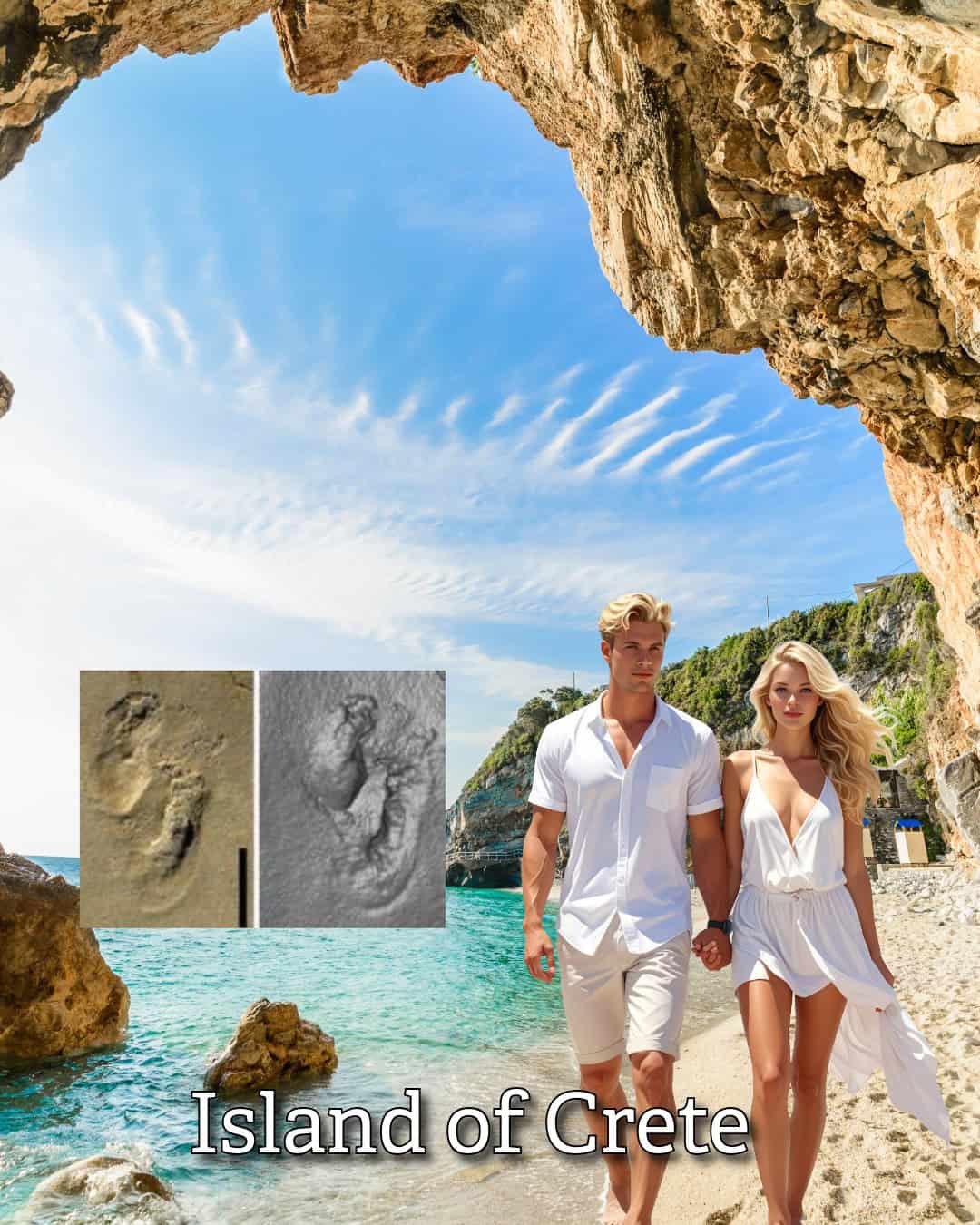 The significance of Pierolapithecus extends beyond its anatomy. It is part of a growing body of evidence suggesting that Europe may have played a major role in the evolution of early hominids.
Several recent discoveries support this emerging view:
- Trachilos footprints (Crete) — 5.7‑million‑year‑old hominin‑like tracks that challenge the assumption that bipedalism originated exclusively in Africa.
- Azmaka femur (Bulgaria) — a 7‑million‑year‑old hominoid femur with human‑like bipedal traits.
- Graecopithecus and Anadoluvius — late Miocene apes from Europe and Anatolia showing hominid‑like dental and facial features.
Together, these finds suggest a possible European‑to‑African dispersal of hominid‑like apes during the late Miocene.
Conclusion
In this context, Pierolapithecus becomes even more important. As a 13‑million‑year‑old orthograde ape from Spain, it may represent an early member of the lineage that later moved into Africa, eventually giving rise to Ardipithecus and other early hominins.
Pierolapithecus catalaunicus is no longer just a curious Miocene fossil. It is a key piece of a rapidly evolving puzzle — one that challenges long‑held assumptions about ape evolution, hominid origins, and the geographic pathways that shaped our lineage. As researchers continue to reevaluate the Miocene record, Pierolapithecus stands as a reminder that the story of human origins may be far more complex, and far more European, than once believed.