Moana movie has a science behind it, and Disney got it right
 Disney’s Moana is often praised for its music, its animation, and its celebration of Pacific Island culture. But beneath the surface of the film lies something far more interesting: a surprisingly accurate reflection of real anthropology, archaeology, and genetics.
The story of Moana’s people — voyagers who once crossed the world’s largest ocean using only the stars, waves, and memory — is rooted in one of humanity’s greatest migrations. Modern science has revealed just how extraordinary that journey was, and how closely the film’s themes mirror the real history of Polynesia.
Motunui
Moana’s fictional island of Motunui is a stylized composite of several Polynesian cultures, but the deeper story it tells — of voyaging, exploration, and ancestral knowledge — is grounded in the archaeological record of the Lapita people, the ancestors of Polynesians. These Austronesian voyagers emerged from Island Southeast Asia and carried their distinctive pottery, language, and navigation traditions eastward into the Pacific. Their movement was rapid, intentional, and astonishingly far‑reaching. Within a few centuries, they settled Fiji, Tonga, and Samoa, forming the cultural and genetic foundation of what would later become Polynesia.
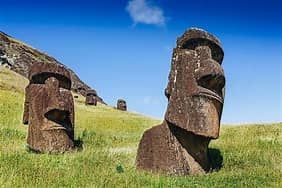 Genetic research over the past decade has sharpened this picture. Genome‑wide studies show that Polynesians derive most of their ancestry from an East Asian Austronesian population originating in Taiwan, moving through the Philippines and into the Pacific between 3000 and 1000 BC. This ancestral population mixed with Melanesian groups in northern Island Melanesia, leaving behind distinctive genetic signatures — including Melanesian α‑globin haplotypes — that persist in Polynesian genomes today. Yet despite this admixture, Polynesians remain one of the most genetically homogeneous populations on Earth, unified by shared mitochondrial haplogroups such as B4a1a1, which trace a clear line across the Polynesian Triangle.
The film’s depiction of voyaging canoes slicing across turquoise water is not fantasy. Polynesian navigation was a sophisticated empirical science. Navigators memorized star paths, read the shape of ocean swells, tracked bird flight patterns, and interpreted cloud formations to detect distant islands. They crossed thousands of miles without instruments, relying on knowledge passed orally from master navigators to apprentices. Modern reconstructions of these techniques — including voyages by the Hōkūleʻa — have demonstrated their accuracy. In this sense, Moana’s training sequence is not a mythic exaggeration but a dramatized version of real Polynesian wayfinding.
And the admixture could contain an element of Denisovan.
Polynesian culture Exported to the New World
 The film also hints at the vastness of the Polynesian world. From Samoa and Tonga, voyagers pushed outward into the deep Pacific, eventually reaching Rapa Nui (Easter Island) by around 1200 CE. Genetic studies of Rapa Nui’s population reveal deep Polynesian ancestry, with limited but detectable Native American gene flow predating European contact — a tantalizing clue that Polynesian voyagers may have reached South America. Even the humble sweet potato, known as kumara in Polynesia, carries a genetic signature linking it to prehistoric South American varieties. Moana doesn’t mention this, but it is one of the most intriguing scientific mysteries in Pacific prehistory.
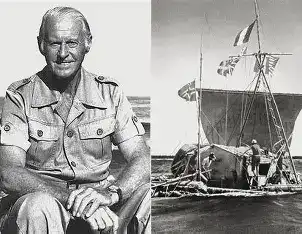
All highlighted by Thor Heyerdahl and his voyage of the Kon tiki in the 1950s made into an award-winning documentary film.
Tonga, Fiji, Tahiti, Hawai‘i blended into one
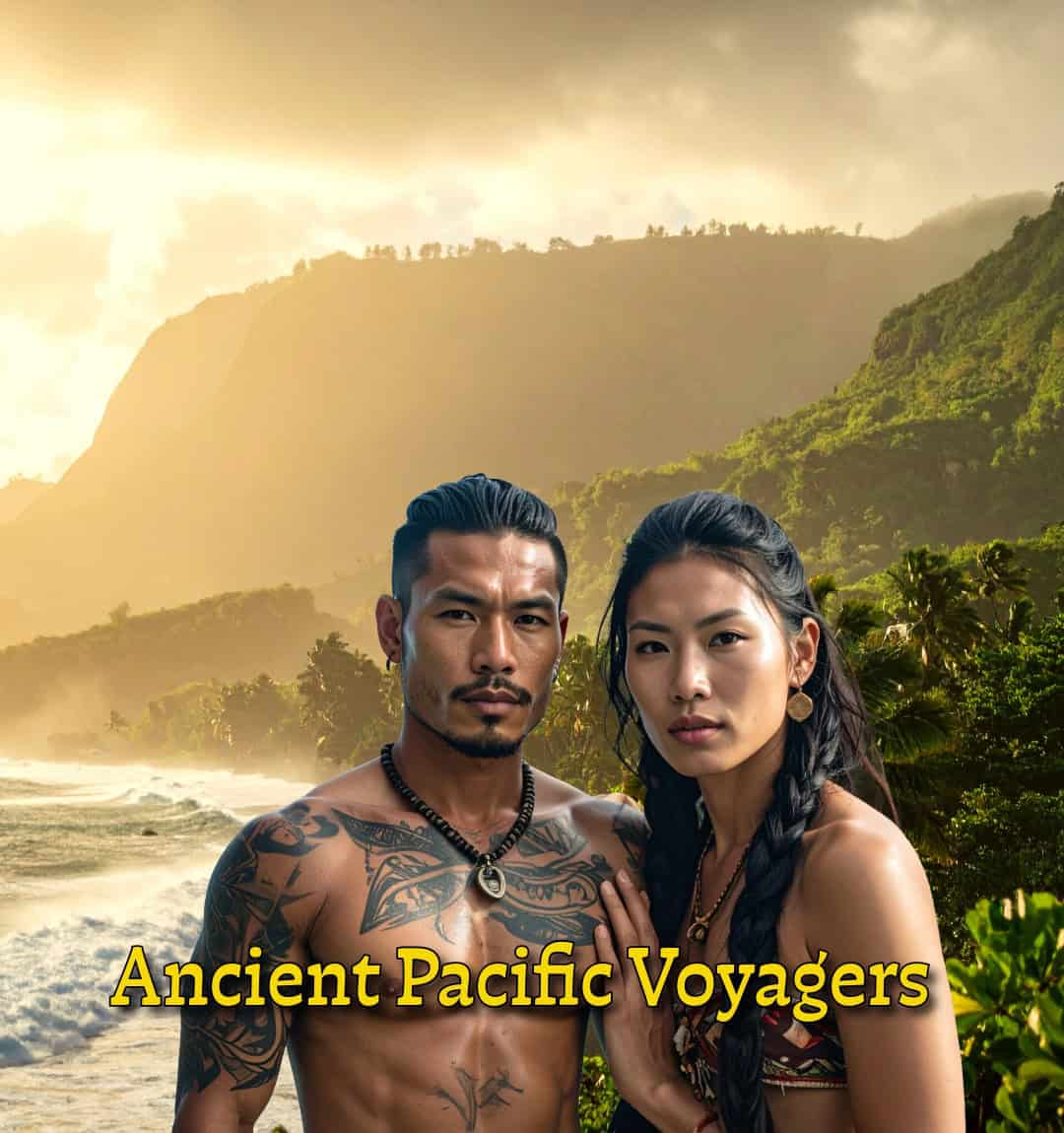 Of course, Disney takes liberties. Maui is a mythological figure, not a historical navigator. The film blends cultural elements from Samoa, Tonga, Fiji, Tahiti, and Hawai‘i into a single aesthetic. And the narrative that “voyaging stopped” is simplified; in reality, shifts in climate, resource distribution, and sociopolitical dynamics played roles in changing voyaging patterns. But these creative choices serve the story rather than distort the underlying anthropology.
What makes Moana remarkable is how much it gets right. The film celebrates intentional exploration, not accidental drift. It portrays Polynesians as scientists of the sea, inheritors of a tradition that stretches back thousands of years. It hints at the Lapita origins of Polynesian culture, the Austronesian expansion, and the deep connection between people and ocean. And it does all this while introducing global audiences to a world that modern genetics and archaeology continue to illuminate.
We invite you to subscribe to our YouTube Channel for more right-anthropology – no Woke, just the Facts.