
Graecopithecus tracks discovered in Crete by a Dinosaur hunter
 For over half a century, the “Out of Africa” theory has stood as the cornerstone of paleoanthropology. It’s a compelling narrative: early hominins emerged in Africa, evolved over millions of years, and eventually spread across the globe. But what if that story is incomplete? What if the first tentative steps toward humanity were taken not on the savannas of Africa—but on the sunbaked limestone of Crete?
In 2002, Polish paleontologist Gerard Gierliński was vacationing on the Greek island of Crete with his girlfriend. The couple had wandered onto an isolated beach near the village of Trachilos, enjoying a romantic walk along the shoreline. As she paused to take in the sweeping view of the Mediterranean, Gierliński stepped a few paces inland, onto a hardened surface just off the beach. That’s when he saw them—faint impressions in the limestone that looked eerily familiar. Not animal tracks. Not erosion marks. Footprints.
These fossilized tracks, later dated to approximately 5.7 million years ago, bore a striking resemblance to human feet—complete with a forward-pointing big toe and a ball of the foot that suggests upright walking. The discovery, now known as the Trachilos footprints, has ignited a firestorm of debate. If these prints were made by a hominin—or a close ancestor of Homo—they would predate many of the earliest known African hominin fossils. That’s not just a chronological wrinkle. It’s a potential paradigm shift.
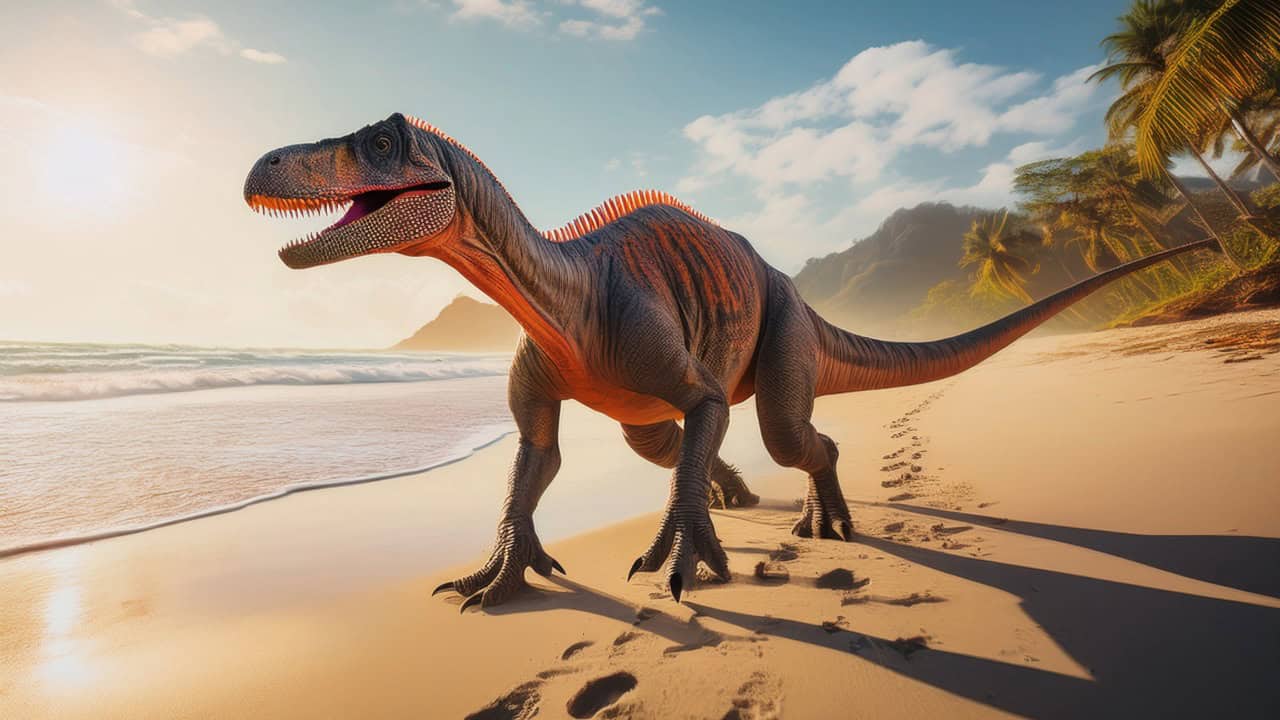 Gierliński wasn’t just any tourist. He was a trained dinosaur fossil expert, with years of experience studying ancient animal tracks. His eye was attuned to subtle patterns in stone, and he immediately recognized the significance of what lay before him. These weren’t random marks or erosion scars. They were footprints—clear, deliberate, and astonishingly human-like.
Graecopithecus and the European Connection
The footprints have been tentatively linked to Graecopithecus freybergi, a Miocene ape whose fossilized jaw was discovered in Bulgaria and dated to around 7.2 million years ago. Some researchers argue that Graecopithecus may represent an early member of the hominin lineage—possibly even the oldest known one.
If true, this would suggest that key evolutionary developments—such as bipedalism—may have emerged in Europe before migrating into Africa. It’s a hypothesis that challenges the geographic orthodoxy of human origins and opens the door to a more complex, multi-regional narrative.
Rethinking the Cradle of Humanity
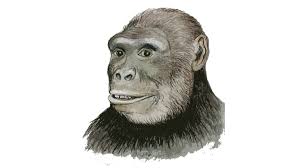 The implications are staggering. For decades, Africa has been considered the undisputed cradle of humanity. Fossils like Australopithecus afarensis (“Lucy”) and Ardipithecus ramidus have provided compelling evidence of early hominins walking upright in East Africa between 4 and 6 million years ago. But the Trachilos footprints suggest that similar locomotion may have been occurring in Europe at the same time—or even earlier.
Could it be that hominins evolved in Europe and later migrated into Africa, where they diversified and flourished? Or might we be looking at a parallel evolutionary experiment—two lineages developing similar traits in different regions?
Other Miocene Apes in Europe include Anadoluvius from Anatolia (Turkey) dated 9mya to 6mya. There is also Danuvius guggenmosi from Germany dated to 11mya.
The Scientific Controversy
 Not everyone is convinced. Critics argue that the footprints could have been made by another primate species, or that erosion may have distorted their shape. Others caution against drawing sweeping conclusions from a single site. After all, paleoanthropology is a field built on fragments—jawbones, teeth, footprints—and each new find must be carefully weighed against the broader fossil record.
Still, the Trachilos discovery has forced scientists to reconsider long-held assumptions. It’s a reminder that evolution is rarely linear, and that the story of human origins may be more geographically diverse than previously thought.
Why This Matters Now
In an age of rapid scientific discovery and digital storytelling, the Trachilos footprints offer a powerful narrative hook. They invite us to question established truths, explore alternative theories, and engage with the ethical dimensions of how we interpret our past.
For science communicators and digital creators, this is fertile ground. The story blends mystery, controversy, and deep-time drama—perfect for sparking engagement across platforms. Whether you’re crafting a YouTube Short, a long-form documentary, or a WordPress deep dive, the footprints in Crete offer a chance to walk the line between science and speculation.
Azmaka Femur Discovery adds to evidence
Final Steps
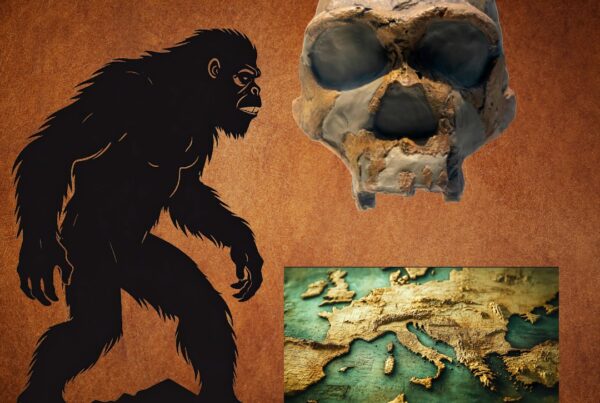
As we trace the contours of these ancient prints, we’re reminded that the path to understanding human origins is anything but straightforward. The Trachilos footprints may not rewrite the entire story—but they’ve certainly added a provocative new chapter. And there is a new chapter folding out of Bulgaria. A femur bone has been found identified as Graecopithecus.
And maybe, just maybe, our ancestors first stood upright not in Africa, but on a rocky beach in Crete—discovered not in a lab, but during a quiet moment between two people, on a walk that changed everything.


Whoa, hold onto your (presumably upright) legs! This Trachilos business is absolutely fascinating – finding human-like prints in Europe dating way back? Its got scientists reeling and questioning everything we thought we knew about humanitys African cradle. The idea that Europe might have been the scene of early bipedal experiments is both mind-blowing and slightly demoralizing for us Africans! 😄 But of course, the old-school critics are already saying, Dont get ahead of yourself, folks – it could just be erosion or some other primate getting fancy. Classic! Still, its a fantastic reminder that our origins story is less of a clear linear path and more of a messy, geographically diverse, evolutionary detective mystery. Perfect fodder for a compelling YouTube Short, wouldnt you say?quay random