Alfred Russel Wallace lived in Charles Darwin’s shadows
When we think of the theory of evolution, Charles Darwin’s name dominates the conversation. But behind the scenes of scientific history stands Alfred Russel Wallace—a visionary thinker whose contributions to evolutionary biology rival Darwin’s, and in some ways, even extend beyond them. In this article and the accompanying video, we explore Wallace’s revolutionary idea that geographic isolation is a key driver of speciation, and why his legacy deserves far more attention than it gets.
The Power of Isolation
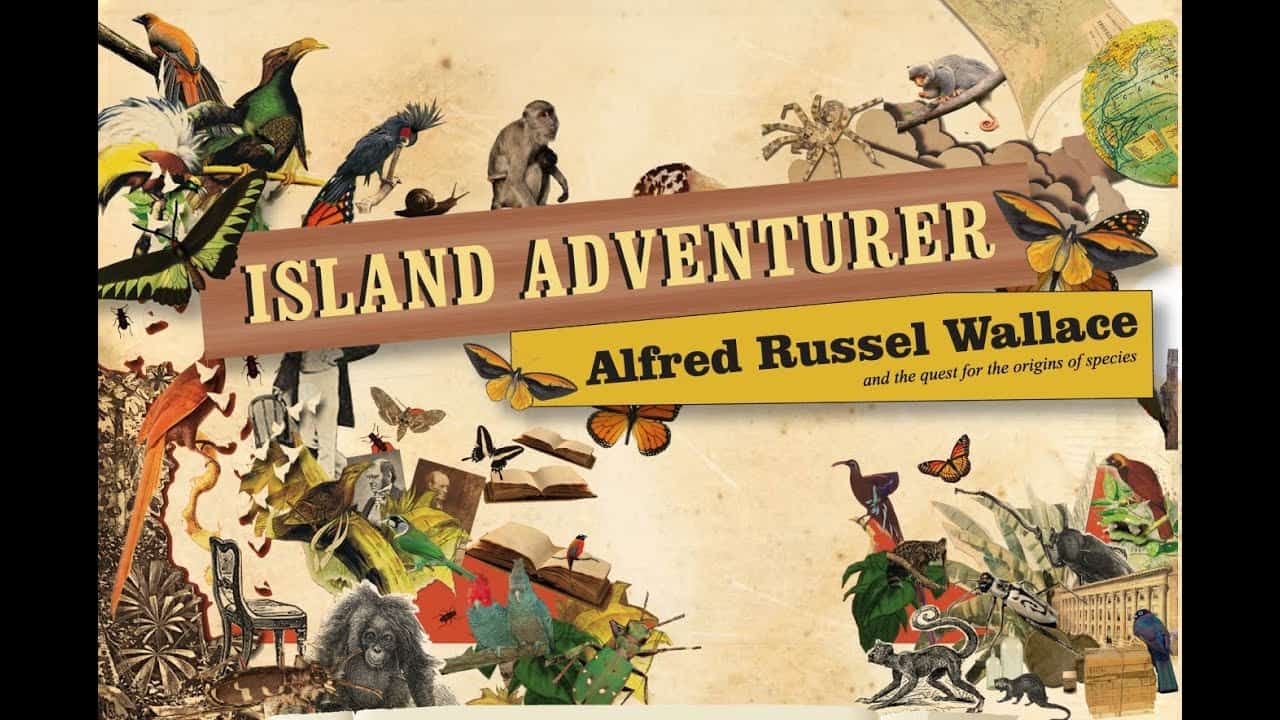 Alfred Russel Wallace’s insight into speciation was rooted in his extensive fieldwork, particularly in the Malay Archipelago, where he observed countless species adapting to their isolated environments. Unlike Darwin, who focused heavily on gradual change and competition, Wallace emphasized the role of physical separation in driving evolutionary divergence. Islands, mountain ranges, and rivers weren’t just geographic features—they were evolutionary engines.
Drawing inspiration from Charles Lyell’s geological principles, Wallace argued that when populations are cut off from one another, they begin to interbreed within their isolated groups. Over time, this leads to specialization, adaptation, and ultimately, the emergence of entirely new species. This concept of allopatric speciation—now a cornerstone of evolutionary biology—was groundbreaking in its time and remains deeply influential today.
The Wallace Line: Nature’s Invisible Border
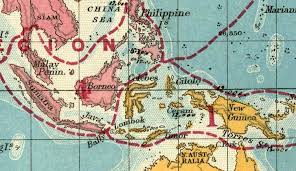 One of Alfred Russel Wallace’s most enduring contributions to biogeography is the concept now known as the Wallace Line—a deep-water boundary that slices through the Malay Archipelago, separating the islands of Borneo and Bali from Sulawesi and Lombok. Though these islands appear close on a map, the Makassar Strait (between Borneo and Sulawesi) and the Lombok Strait (between Bali and Lombok) are deceptively deep. Even during the lowest sea levels of the Ice Age, these trenches remained submerged, preventing land bridges from forming and blocking species migration.
Wallace noticed that the flora and fauna on either side of this invisible line were strikingly different. To the west, species resembled those found in Asia—tigers, orangutans, and hornbills. To the east, the biodiversity mirrored Australasia, with marsupials, cockatoos, and tree kangaroos. This stark contrast couldn’t be explained by climate or geography alone—it was the depth of the straits that kept species isolated and evolution on divergent paths.
The Wallace Line remains one of the most dramatic examples of geographic isolation shaping biodiversity, and it continues to inform conservation strategies and evolutionary research today. Wallace didn’t just observe nature—he decoded its boundaries.
Malthus, Mortality, and the Struggle for Survival
 Wallace’s thinking was also shaped by the grim realities of Thomas Malthus’s population theories, which posited that populations grow faster than resources can sustain. Wallace saw this struggle play out in nature, where only the most adaptable individuals survived long enough to reproduce. His observations led him to a stark conclusion: natural selection is not just about competition—it’s about survival in the face of scarcity.
In the jungles and islands of Southeast Asia, Wallace witnessed firsthand how environmental pressures sculpted species. Birds with slightly longer beaks, insects with better camouflage, and mammals with more efficient foraging behaviors all had a better shot at survival. These weren’t just random traits—they were evolutionary advantages, honed by isolation and necessity.
Wallace vs. Darwin: A Tale of Two Thinkers
While Darwin and Wallace arrived at similar conclusions about natural selection, their approaches diverged in meaningful ways. Darwin’s work was rooted in meticulous breeding experiments and long-term observation. Wallace, on the other hand, was a field naturalist, a boots-on-the-ground explorer whose theories emerged from raw, lived experience.
Wallace also held more spiritual views about evolution, believing that human consciousness might lie outside the bounds of natural selection. This made him a controversial figure in scientific circles, and perhaps contributed to his relative obscurity. But make no mistake—Wallace’s contributions were foundational, and his emphasis on geographic isolation added a critical dimension to Darwin’s framework.
Why Wallace Still Matters
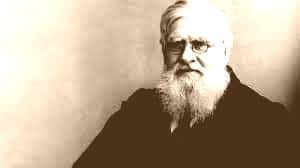 In today’s era of rapid environmental change and biodiversity loss, Wallace’s ideas are more relevant than ever. Conservationists now use his principles to understand how habitat fragmentation affects species survival. Geneticists study isolated populations to track evolutionary changes. And educators are finally beginning to give Wallace his due as a co-discoverer of natural selection.
This video—and now this article—is part of a broader effort to reclaim Wallace’s legacy. With only 315 views, the original video flew under the radar. But the ideas it explores are too important to ignore. By revisiting Wallace’s work, we’re not just honoring a forgotten scientist—we’re deepening our understanding of how life evolves, adapts, and survives.
Final Thoughts
Alfred Russel Wallace was more than Darwin’s shadow. He was a pioneer, a provocateur, and a passionate observer of nature’s complexity. His theory of geographic isolation reshaped evolutionary science, and his fieldwork remains a model of intellectual courage.
If you haven’t watched the video yet, now’s the time. And if you have, consider sharing it—because Wallace’s story deserves to be told, retold, and remembered.