
Is the Mainz Miocene Ape Europe’s Missing Link?
In 2016, deep in the forested terrain near Eppelsheim, Germany, two fossilized teeth were unearthed—an upper molar and a canine, dated to approximately 9.7 million years ago. It has been dubbed the Mainz Miocene Ape.
These weren’t just any teeth. Their pristine condition and morphological features suggested affinities not with known European Miocene apes, but with Australopithecus, the genus long considered central to human origins in Africa. The discovery sent ripples through the paleoanthropological community, hinting at a possible European cradle for hominin evolution. But then, the teeth vanished.
 Now housed—perhaps quietly shelved—within the archives of the Mainz Natural History Museum, these fossils have become symbols of both scientific intrigue and institutional silence. Despite their potential to reshape the narrative of human ancestry, they remain unpublished in peer-reviewed journals and absent from public display. Their disappearance has only amplified the mystery surrounding them.
“I don’t want to overdramatize it. But I would hypothesize that we shall have to start rewriting the history of mankind after today.” — Mainz Mayor Michael Ebling, 2017
Challenge to Out of Africa model
This bold proclamation came during the initial announcement of the find. And while it may have sounded hyperbolic to some, the implications are profound. If these teeth truly belong to a hominin ancestor, they challenge the dominant “Out of Africa” model and suggest a reverse migration—from Europe into Africa—millions of years before Australopithecus afarensis walked the Ethiopian highlands.
🔍 The Teeth That Shouldn’t Exist
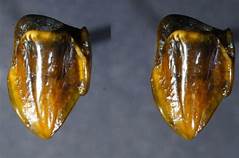
 The canine’s diamond-shaped lingual outline and the molar’s occlusal features bear striking resemblance to Australopithecus. Yet they predate the earliest known African hominins by over six million years. No known species in Europe has been documented with such traits, making these fossils evolutionary outliers. Their morphology doesn’t align with Danuvius guggenmosi, the recently described bipedal Miocene ape from Bavaria, nor with Graecopithecus freybergi, the enigmatic hominin candidate from Greece and Bulgaria.
Instead, the Mainz teeth suggest a lineage that may have evolved in Europe and later migrated southward into Africa, where it diversified into the australopithecines and eventually the genus Homo. This hypothesis, while controversial, gains traction when viewed alongside other Mediterranean discoveries.
From ZME Science, 2017,
Mysterious 9.7-million-year-old fossilized teeth likely belong to unknown ancient European primate

Australopithecus Crash Course
The molar and left canine belonging to the same individual are nearly ten million years old and bear a resemblance to hominin species such as Australopithecus afarensis. The conundrum lies in the fact that A. afarensis is no more than 3 million years old and no human ancestor was found in Europe earlier than 100,000 years ago. This puts the entire debate under a whole new light.
🌍 A Broader Mediterranean Context
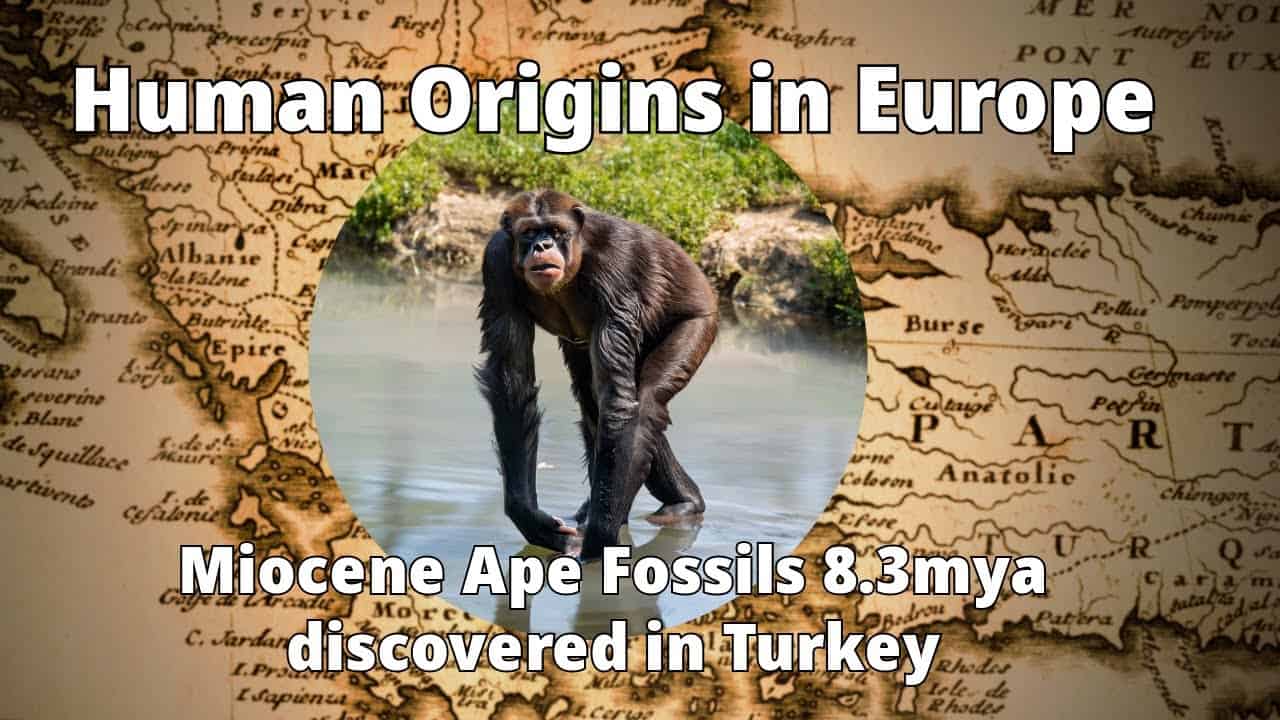
The last decade has seen a surge in fossil finds across southern Europe and western Asia that complicate the traditional narrative. The Graecopithecus jawbone, dated to 7.2 million years ago, was found in Greece and exhibits dental root structures consistent with early hominins. In Turkey, the Anadoluvius fossils suggest a hominid presence in Anatolia around the same time. And in Crete, 6-million-year-old hominin-like footprints have been discovered, further muddying the waters of origin.
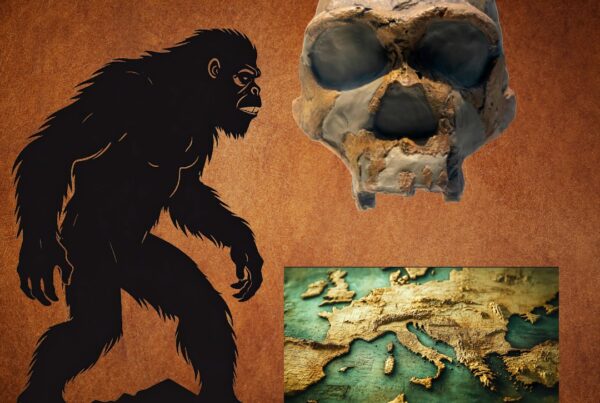
 Taken together, these finds point to a possible Mediterranean corridor—a forgotten migration arc that may have seeded Africa with its earliest hominin ancestors. The Mainz fossils, if properly studied and contextualized, could be the northernmost anchor of this corridor.
🧭 Rethinking the Human Journey
The implications of a European origin for hominins are staggering. It would mean that the evolutionary tree doesn’t sprout solely from African soil but has roots stretching across the continent. It would also suggest that the journey of mankind began not with a single exodus from Africa, but with a complex web of migrations, reversals, and convergences.
Yet for now, the Mainz teeth remain in limbo—silent witnesses to a story that may never be fully told. Whether their obscurity is due to academic caution, political pressure, or simple neglect, their absence from the scientific discourse is a loss for paleoanthropology.
As new evidence continues to emerge from Anatolia, the Balkans, and the Mediterranean basin, the call to revisit the Mainz fossils grows louder. They may not rewrite history alone, but they could be the missing link that forces us to rethink where—and how—the human story truly began.



Fascinating! The idea of human origins being rooted outside Africa challenges everything I thought I knew. These teeth could rewrite history, but keeping them hidden is a mystery in itself. Im eager to see what happens next in this puzzle!
Please check out my YouTube channel. I have 4 to 5 videos on Miocene Apes and European origins.