
African IQ is at a lower level?
By Eric, | October 15, 2025
Dr. Shi Huang, the ever-controversial Chinese geneticist, has once again stirred the paleoanthropological pot. His latest tweet, dated October 12, 2025, takes on the controversial subject of African IQ head on:
“The African Homo sapiens Paradox: The hypothesis that the first and most intelligent modern humans originated in Africa appears contradictory, given that their present-day direct descendants generally rank lowest in cognitive ability and civilizational achievements.” —
This statement—equal parts blunt and provocative—builds on Huang’s long-standing critique of the “Out of Africa” theory. It also echoes themes from his earlier tweet in 2021, where he noted:
“That Africans carry more ancestral alleles (=archaic or apes) has been well demonstrated… Biological significance of this? Eerie silence…”
🧠 Maximum Genetic Diversity and the East Asia Hypothesis
 Dr. Huang, formerly of UC San Diego and now affiliated with Central South University’s Center for Medical Genetics, developed the Maximum Genetic Diversity (MGD) hypothesis. It posits that genetic diversity has an upper limit, set by epigenetic complexity. Populations with less diversity—like East Asians—may be closer to the ancestral root, contradicting the assumption that Africa’s genetic richness implies origin.
His critics call it pseudoscience. His supporters call it paradigm-shifting. Dr. Huang has never backed down, and indeed, he is particularly edgie on the Twitter platform. (See a video interview with Dr. Huang at the Edward Dutton, Jolly Heretic YouTube channel. Dr. Dutton is a friend of this site.)
New analysis of Yunxian 2 suggests Asia origins, not Out of Africa
Dr. Huang has been suggesting Out of Asia origins for years. And now some very recent evidence suggests he may have been right all along.
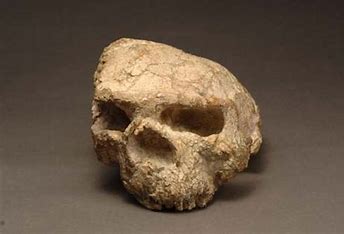 Recent analysis of the Yunxian 2 skull, unearthed in Hubei province and dated to nearly 1 million years ago, has added weight to Huang’s East Asia hypothesis. Once dismissed as a crushed Homo erectus specimen, the fossil was digitally reconstructed using CT scans, revealing traits more aligned with Homo longi and early Denisovans than with African hominins.
The skull’s large brain volume and forward-facing cheekbones suggest a lineage that may have diverged from our own far earlier—and in Asia, not Africa. The morphology also suggests a possible link to Homo antecessor in Spain ~800kya.
Even Chris Stringer, senior anthropologist at the Natural History Museum in London and long-time proponent of the African origin model, acknowledged the find’s significance: “This changes a lot of thinking,” he said, noting the fossil’s unique blend of archaic and modern traits.
More from CBS News:
It also “muddies the waters” on long-standing assumptions that early humans dispersed from Africa, said Michael Petraglia, director of Griffith University’s Australian Research Centre for Human Evolution, who was not involved in the study.
If confirmed, Yunxian 2 could help resolve the long-standing “Muddle in the Middle” of human evolution—and lend empirical support to Huang’s claim that East Asia deserves a central place in the story of Homo sapiens.
🧬 Archaic Admixture in African Genomes
 The “paradox” Huang highlights isn’t just philosophical—it’s genomic. Studies dating back to 2011, including work by Dr. Michael Hammer and Dr. Jeff Wall, revealed traces of archaic DNA in African populations. Hammer’s discovery of the A00 haplogroup in Cameroon stunned the genetics community. A lineage so divergent, it rewrote assumptions about human ancestry—then vanished from mainstream discourse under pressure.
More recent studies, including a Swedish team’s analysis published in PNAS, found:
- Up to 2% archaic DNA in sub-Saharan populations
- Introgression from a lineage that split from modern humans ~700,000 years ago
- Likely candidates: Homo naledi, Australopithecus sediba, or a late Heidelbergensis
John Hawks, Svante Pääbo, and others have speculated about a “ghost species” contributing up to 19% archaic DNA in some African genomes.
🧩 Civilizational Implications—or Misinterpretations?
Huang’s tweet goes further than genetics. It links origin to intelligence and civilizational output—a claim that veers into controversial territory. IQ rankings and cultural achievements are shaped by countless variables: environment, history, education, and systemic factors. Critics argue Huang’s framing risks oversimplification. Others say he’s simply asking the uncomfortable questions that academia avoids.
Genetic evidence of IQ differences
Luca Cavalli-Sforza is widely considered to be the greatest geneticist of the last few decades. Cavalli-Sforza was the PhD advisor for Dr. Spencer Wells, a modern geneticist well-known to readers of this website. Cavalli-Sforza and his team found that some African populations have IQ levels in the 60s, while Europeans were in the high 90s to low 100s and East Asians as high as 110. (See chart at the link).
From Cavalli-Sforza’s groundbreaking study,
Race Differences in Intelligence
 Given these genetic differences among populations, it is statistically inevitable that cognitive differences will also exist. Research has identified both quantitative and qualitative variations in brain structure and function between racial groups.
Cavalli-Sforza’s molecular biology analyses support the existence of approximately a dozen genetically distinct clusters within Homo sapiens. For example, Africans and Caucasians can be genetically distinguished, having evolved in geographically isolated environments for over 100,000 years. Similarly, Caucasians and East Asians (sometimes referred to as Mongoloid populations) have been separated for approximately 40,000 years (Cavalli-Sforza, 2000).
Brain capacity variation among the Race/Subspecies
While brain volume isn’t a direct measure of intelligence, it can offer general insights into neurological complexity and adaptive potential. A 2012 study by A.R. Jensen reported average cranial capacities of 1,267cc for Africans, 1,347cc for Europeans, and 1,364cc for East Asians.
These differences loosely align with known admixture patterns: Africans may carry up to 19% archaic DNA from Australopithecine-like hominins, Europeans show introgression from Neanderthals (up to 4%), and East Asians and Melanesians from Denisovans (up to 8%). The correlation between brain volume and ancestral admixture remains speculative—but it continues to provoke debate across evolutionary biology and cognitive science.
Source: Rushton & Jensen, 2005, THIRTY YEARS OF RESEARCH ON RACE DIFFERENCES IN COGNITIVE ABILITY
Sidebar: Elizabeth Weiss, forensics anthropologist, well-known anti-woke crusader was formerly married to Dr. Jensen. He died in 2011. (See our video on Elizabeth, “The Struggle for Academic Freedom in Anthropology” at our YouTube channel).
🔍 The Silence Continues
As fossil discoveries like the Yunxian skull in China (dated to 1 million years ago) challenge the African timeline, Huang’s voice grows louder. Yet the response from mainstream anthropology remains muted.
Is it caution? Or is it ideological entrenchment?


It’s not as though Dr. Shi Huang is trying to be radical nor wildly speculative; he is merely stating facts based on real material evidence.
His critics just don’t like what he is saying, because it blows away all the OOA nonsense, and they have no evidence to contradict what he is saying.
I’d guess the cover up is operational, though I don’t know how they’ll do it, I’m sure they will try to bury his work somehow!