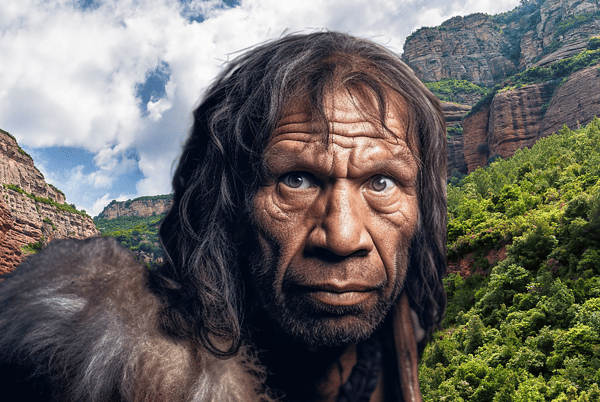
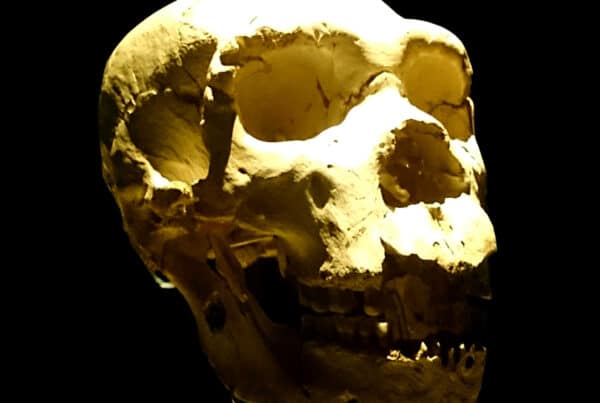
Thorin represents a new Neanderthal Subspecies
In a discovery that’s reshaping our understanding of human evolution, archaeologist Ludovic Slimak has unearthed a previously unknown subspecies of Neanderthal—one that remained genetically isolated for over 50,000 years. Nicknamed “Thorin” after the dwarf king in J.R.R. Tolkien’s The Hobbit, this ancient hominin offers a rare glimpse into the diversity and resilience of our prehistoric cousins.
 Slimak’s team found Thorin’s remains in Grotte Mandrin, a cave nestled in the Rhône Valley of southern France. What began as a routine excavation in 2015 evolved into a nine-year scientific odyssey. Using advanced genomic sequencing, researchers revealed that Thorin belonged to a lineage that split from other Neanderthals roughly 100,000 years ago and remained genetically sealed off from neighboring populations.
Thorin belonged to a small group of Neanderthals who lived between 42,000 and 50,000 years ago. He seems to have lived at the more recent end of that window, but his DNA is similar to a much older group that diverged from the main Neanderthal population around 105,000 years ago. After separating from other Neanderthals, the evidence suggests that group remained isolated for the next 50,000 years.
A Neanderthal Apart
Thorin’s DNA tells a story of extreme isolation. Despite living in a region teeming with other Neanderthal groups, his lineage shows no signs of interbreeding with them. This genetic solitude is unprecedented and suggests that Neanderthal populations were far more fragmented than previously believed.
The implications are profound. The Neanderthal group may have developed unique survival strategies, tool-making techniques, and cultural practices distinct from their contemporaries. Some researchers even speculate that this isolation contributed to their eventual extinction, as smaller populations are more vulnerable to environmental shifts and genetic bottlenecks.
The Intrepid Frenchman Behind the Discovery & the Archery expert Wife
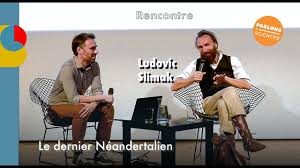
 A paleoanthropologist at the French National Centre for Scientific Research (CNRS), [he] has spent decades exploring the deep past. Known for his meticulous fieldwork and bold hypotheses, Slimak has become a leading voice in Neanderthal research. His work at Grotte Mandrin has previously revealed evidence of early Homo sapiens in Europe, challenging long-held timelines about human migration.
Slimak’s intellectual rigor is matched by his adventurous spirit. He often credits his wife – Laure Metz, an elite archery expert, for inspiring his precision and patience in the field. Metz often engages in digs with her husband and the site.
Together, they embody a blend of scientific discipline and primal skill—a fitting metaphor for the Neanderthals they study.
Ludovic Slimak, the archeologist who wants to rewrite the history of early humans in Europe
 The French archaeologist Ludovic Slimak has spent the past 30 years rummaging fields and caves from the Horn of Africa to the Arctic Circle, and, of course, his beloved Rhône Valley in France. For the past year and a half, his team of 45 researchers have been on a roll, publishing paper after paper on early humanity’s history between 54,000 and 42,000 years ago. All in the scientific community recognises his work’s ambition, but some also regard it as controversial.
Ghosts in the Genome
 Thorin’s discovery also hints at something even more mysterious: a “ghost lineage” of Neanderthals that may have roamed Western Europe undetected. These populations left no direct fossil record but may have contributed genetically to later hominins. Slimak’s findings suggest that the Neanderthal family tree is more tangled than linear, with branches that twist, vanish, and reappear in unexpected places.
This ghost lineage theory aligns with other recent studies showing that Neanderthals were not a monolithic group but a mosaic of genetically distinct populations. Some were robust and cold-adapted; others, like Thorin, may have been more gracile and regionally specialized. (Source – Smithsonian)
Tools, Tactics, and Tenacity
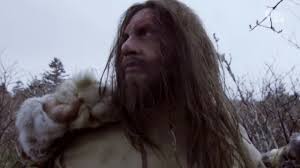
Thorin
Despite their isolation, Thorin’s people were no primitives. Excavations at Grotte Mandrin revealed sophisticated stone tools, including projectile points that rival those made by early Homo sapiens. These artifacts suggest that Thorin’s group possessed advanced hunting strategies and possibly even symbolic behavior.
Their survival in a competitive landscape speaks to their ingenuity. While Homo sapiens were expanding across continents, Thorin’s lineage held its ground in a narrow ecological niche, adapting to local conditions with remarkable resilience. (Source – SciTech Daily)
Why Thorin Matters
Thorin isn’t just another fossil—he’s a challenge to our assumptions. His existence forces scientists to reconsider how Neanderthals lived, interacted, and evolved. It also underscores the importance of regional studies in paleoanthropology. Big-picture theories often miss the nuances that isolated populations like Slimak’s discovery can reveal.
For science communicators, Thorin offers a compelling narrative: a lone lineage, cut off from the world, surviving against the odds. It’s a story that blends Tolkien-esque myth with hard genomic data—a perfect storm for public engagement.