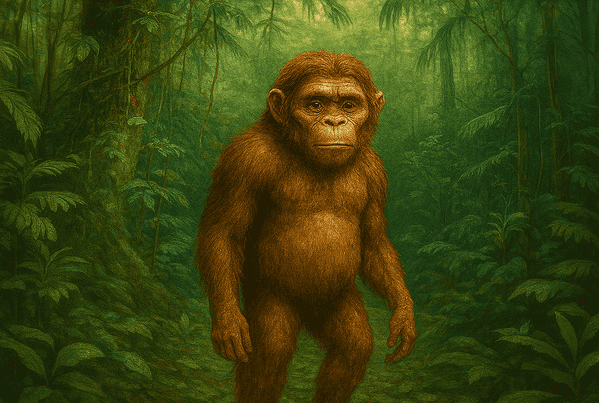
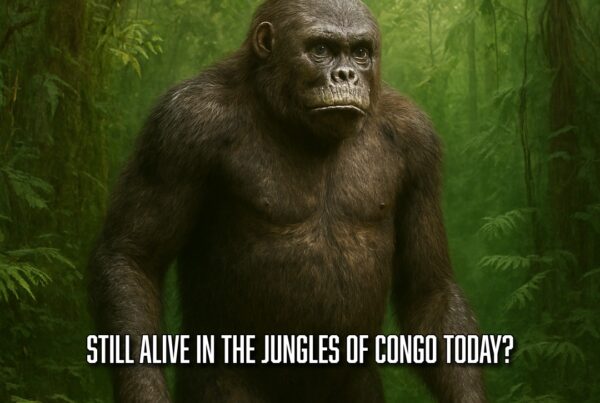
Vadoma, a unique tribe with a tree climbing adaption in their toes and ankles
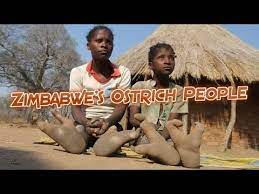 In the remote Kanyemba region of northern Zimbabwe, a tribe known as the Vadoma—or vaDoma—has long captured the attention of explorers, anthropologists, and geneticists alike. Often referred to as the “ostrich people,” the Vadoma exhibit a rare genetic condition called ectrodactyly, a trait that results in the absence of some toes and gives their feet a striking resemblance to those of an ostrich.
But beyond the nickname lies a deeper mystery: could the Vadoma represent a living link to our ancient hominin past?
Adventurer Mike Corey treks to Africa to discover the truth
Canadian explorer Mike Corey, known for his contrarian curiosity and boots-on-the-ground investigations, ventured into Vadoma territory with a team of young researchers. Their goal was not just to document a rare condition, but to challenge the academic orthodoxy that often resists acknowledging the full spectrum of human variation.
In a world where anthropology can feel sanitized and politically cautious, Cory’s approach is refreshingly raw—driven by a thirst for truth and a respect for the people he studies.
Ectrodactyly: Mutation or Ancestral Echo?
 Ectrodactyly, also known as split hand/foot malformation (SHFM), is a rare autosomal dominant condition that affects the development of fingers and toes. Among the Vadoma, it manifests as the absence of the three middle toes, with the outer two often turned inward. This condition is found at significantly higher rates in the Vadoma than in any other population globally.
Mainstream science typically attributes ectrodactyly to genetic drift—a random mutation that became more common due to the tribe’s relative isolation and small population size. But Cory’s team raises a provocative question: could this trait be more than a quirk of genetics? Could it be a vestige of deep ancestry, perhaps even linked to Australopithecine traits?
While there’s no direct evidence tying the Vadoma to Australopithecus, the idea isn’t entirely far-fetched. Australopithecines were early hominins that lived in Africa millions of years ago, and some of their skeletal features—especially in the feet—differed markedly from modern humans. The Vadoma’s unique morphology invites speculation about whether certain traits might persist in isolated populations, especially those with minimal genetic mixing over millennia.
A Tribe Apart
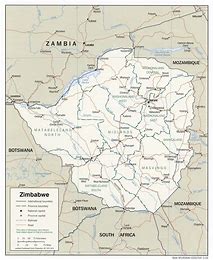 The Vadoma are Zimbabwe’s only traditional hunter-gatherers. They live off the land, relying on fishing, trapping, and foraging for wild fruits, honey, and roots. Despite government efforts to assimilate them into mainstream society through clinics and schools, the Vadoma have largely resisted integration. Their cultural autonomy and geographic isolation have helped preserve not only their way of life but also their genetic distinctiveness.
This resistance to assimilation is part of what makes the Vadoma so compelling. In a world increasingly homogenized by globalization, they stand as a living testament to human diversity—not just in culture, but in biology.
Challenging the Academic Status Quo
Cory’s expedition highlights a growing tension in anthropology: the divide between field-based exploration and institutional gatekeeping. While many academics prefer to fit human variation into neat categories—often avoiding controversial or politically sensitive topics—Cory’s team embraces complexity. Their work underscores the importance of open-minded inquiry, especially when studying populations that defy conventional models.
The Vadoma challenge our assumptions about what it means to be human. Are they simply an isolated tribe with a rare mutation? Or do they represent a deeper lineage—one that stretches back into the shadows of prehistory?
The Bigger Picture
Whether the Vadoma’s ectrodactyly is a product of recent genetic drift or a relic of ancient ancestry, their story invites us to rethink human evolution. It reminds us that the human family tree is not a straight line but a tangled web of branches, some of which may still be alive today.
In the end, Cory’s journey is more than an expedition—it’s a call to embrace the full spectrum of human existence. To look beyond the textbooks and into the eyes of those who live differently, walk differently, and carry the echoes of our shared past in their DNA.
Sources: