Richard Leakey’s War to Save the Elephants
 In 1989, Kenya’s elephant population was in freefall. Poachers, driven by the global ivory trade, were decimating herds with brutal efficiency.
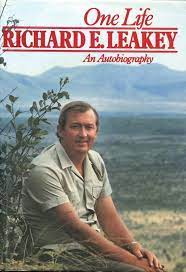
Enter Richard Leakey — paleontologist, conservationist, and son of famed anthropologists Louis and Mary Leakey. Appointed by President Daniel Arap Moi to lead Kenya’s Wildlife Conservation and Management Department across east Africa, Leakey didn’t just step into the fray. He declared war.
MongaBay, January 2022,
Elephant protector and fossil hunter Richard Leakey leaves outsized legacy in Kenya
On July 19th, 1989, Kenyan President Daniel Arap Moi lit the match on twelve tons of elephant tusks soaked in gasoline. The elephants had been the victims of a relentless poaching spree in Kenya, and the ensuing blaze was meant to send a message: Kenya was putting new muscle behind the fight to save its elephants—and it wanted the world to do the same by banning the ivory trade.
The brains behind the burning—which made press around the world—was Richard Leakey, the new head of Kenya’s Wildlife Conservation and Management Department (WMCD), soon to be resurrected by Leakey as Kenya’s Wildlife Service (KWS).
Leakey was, arguably, an odd choice. The Kenyan was world famous, but not for preserving species or places. Instead, it was for digging up new fossils that helped prove that humans evolved in Africa, a continuation of his parents’ groundbreaking work.
🔫 Shoot-to-Kill: Conservation or Colonialism?
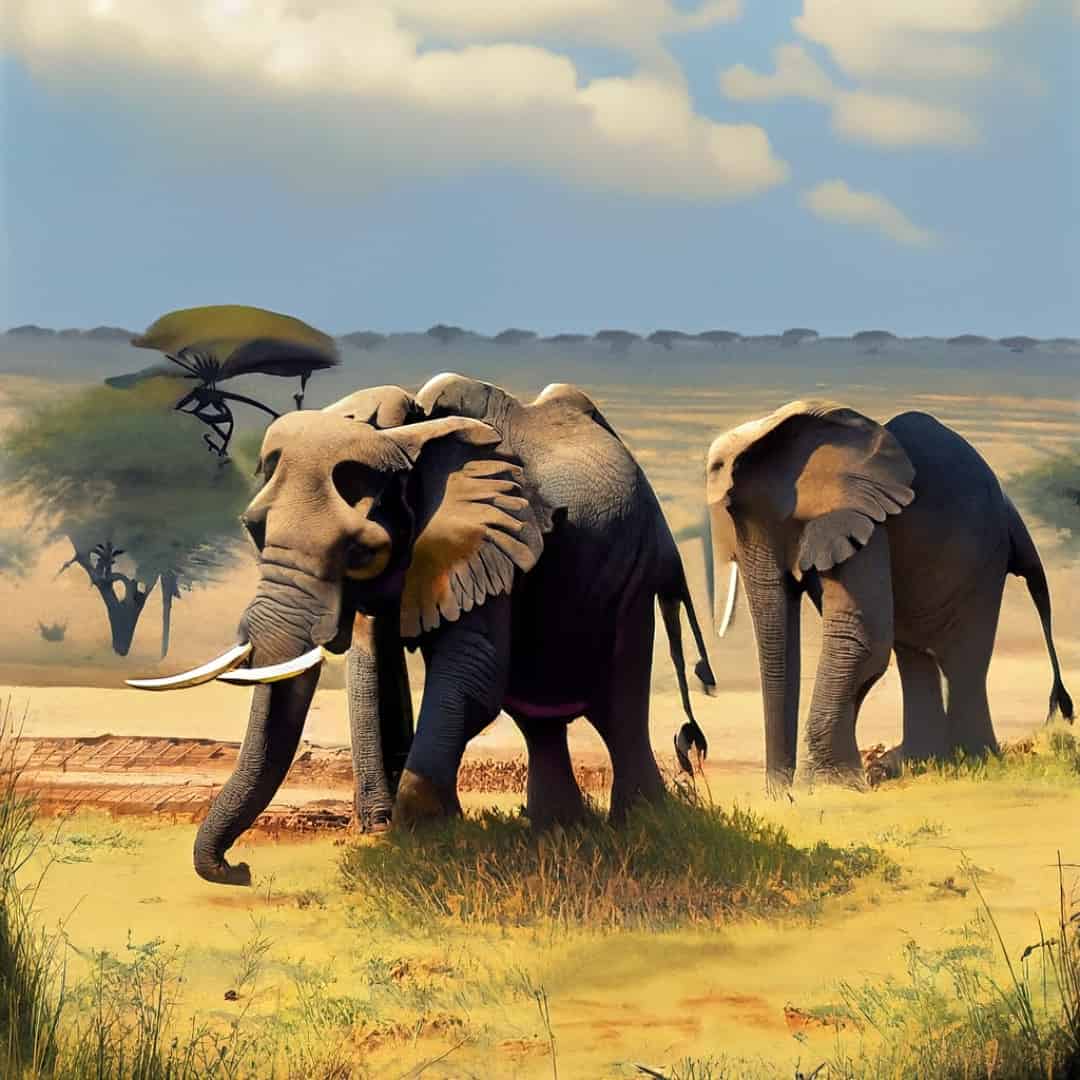 Leakey’s most controversial policy? Authorizing rangers to shoot poachers on sight. It was a tactic that drew international praise and condemnation in equal measure. Wildlife numbers rebounded. So did accusations of brutality, racial bias, and neo-colonial overreach.
Critics asked: Was this conservation, or a violent extension of colonial control over African land and labor?
🔥 The Ivory Burn That Shook the World
On July 19, 1989, Leakey staged a dramatic media event: 12 tons of elephant tusks were set ablaze in Nairobi National Park. The message was clear — ivory had no value unless left on the elephant. The spectacle made global headlines and helped shift international policy on ivory trade.
But the fire also ignited deeper questions: Who gets to decide the value of African wildlife? And at what human cost?
From animals24, January 2022,
Turned Game Department into Kenya Wildlife Service
 By then among the most internationally recognized and respected Kenyans, known for coordinating disciplined field work, Richard Leakey was in 1989 appointed by Kenyan president Daniel Arap Moi to head what was then called the Game Department.
Richard Leakey, in particular, was assigned to stop elephant poaching.
Leakey had an ongoing battle with the poachers, many of whom had direct ties to the Kenyan government. This would cause problems for Leakey, and eventually he was forced to resign.
Additionally,
The most aggressively poached Kenyan species too big to be sold and consumed as “bushmeat,” elephants peaked in number in the Tsavo eco-system of southeastern Kenya at about 25,000 circa 1972.
This was midway through a catastrophic four-year drought. The drought brought a massive elephant die-off, compounded by an explosion of ivory poaching that cut the number of elephants in the Tsavo region to barely 5,000.
🧠 Leakey’s Legacy: A Contradiction Worth Confronting
Leakey resigned in 1994 amid mounting political pressure and ethical scrutiny. Yet his impact endures. Kenya’s elephant population stabilized. Anti-poaching tactics evolved. And the debate over conservation’s colonial roots continues.
As Mongabay noted in its 2022 obituary, Leakey “left an outsized legacy” — one that forces us to ask whether saving nature can ever be separated from power, politics, and history.
🧩 Final Thought: The Irony of Protection
Leakey fought to protect elephants from extinction. But in doing so, he exposed the uncomfortable truth: sometimes, saving nature means confronting the ghosts of empire.