
How Ishango, Iwo Eleru, and an Overlooked Clue Challenge Paleoanthropology’s Political Boundaries
ACTION ALERT! Major brands and top corporations are now advertising on our documentaries at YouTube. We appreciate you visiting our website — truly. But a click on the video above, and a like, helps us grow far more than reading this page ever could. Please click now and support the mission.
 For decades, two African fossils—Ishango and Iwo Eleru—have hovered at the margins of paleoanthropology. They were intriguing, anomalous, and chronologically inconvenient. Ishango, a single molar from Congo, and Iwo Eleru, a skull from Nigeria, both hinted at something older—something stranger—persisting deep into the Late Pleistocene. Yet neither specimen ever received the integrative, high‑stakes attention that their implications demanded.
Meanwhile, geneticists were uncovering a different mystery. Studies of African genomes repeatedly pointed toward admixture with an unidentified archaic population within the last 30,000 years. In 2018, Professor Joshua Akey’s analysis sharpened that window even further, revealing a surprisingly recent pulse of archaic introgression. The genetics were clear: a “ghost lineage” had interbred with modern Africans long after Neanderthals and Denisovans disappeared.
But the fossils and the genetics were never placed in the same frame. Until now.
This investigation revisits overlooked clues buried in the literature—especially a subtle but critical observation in the Wood & Bailey paper on the molar. It is an observation that, in hindsight, may carry far more weight than the authors realized at the time.
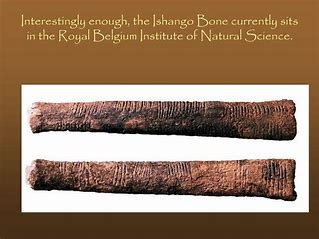
Note – Ishango is best known for the famous iconic bone with ancient markings said to represent early use of mathematics. The Ishango molar is completely unrelated.
A Molar Out of Time
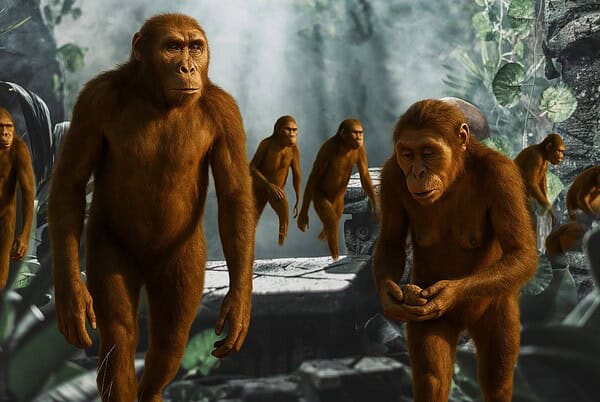
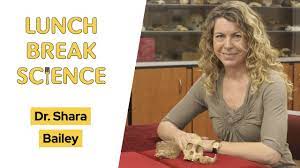 In the comparative morphology section of the Wood & Bailey analysis lies a detail with profound implications. The crown dimensions of the Ishango molar (ISH 25) align not with Homo sapiens or even early Homo, but with australopiths—members of a lineage thought to have vanished more than a million years before the tooth was deposited.
The molar was discovered in Late Pleistocene sediments—tens of thousands of years old, not millions. That alone makes it one of the most chronologically anomalous hominin specimens ever found.
Bailey and her colleagues concluded that the tooth’s external and internal morphology was, in many respects, more consistent with australopiths than with any known Homo species. They reiterated this in their conclusion, noting that the molar resembled Australopithecus—including Australopithecus sediba, the last known member of the genus.
At the time the paper was written, the dental morphology of A. sediba was still emerging in the literature. Its derived cusp proportions—unique among australopiths—were not yet widely recognized. Today, however, those proportions are well documented. And when the Ishango molar is re‑examined through that updated lens, its cusp pattern echoes sediba’s in ways that are difficult to ignore.
This raises a provocative possibility: could a late‑surviving australopith lineage have persisted in Central Africa until 20,000–30,000 years ago?
The Iwo Eleru Connection
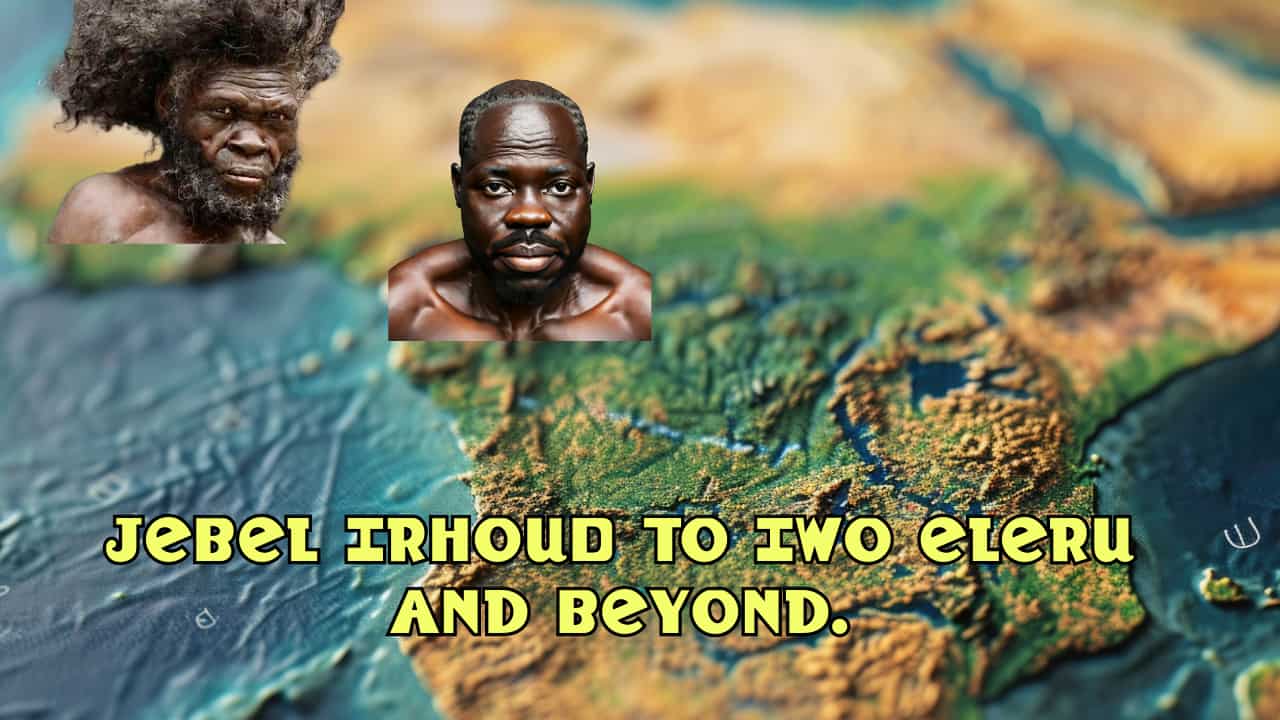 The Iwo Eleru skull, dated to roughly the same period, also exhibits a mosaic of archaic traits inconsistent with modern humans. Several researchers have noted its unusual morphology, yet it too has remained an outlier—acknowledged, but never fully integrated into broader models of African prehistory.
When the two specimens are considered together, a picture begins to form: a lineage persisting far later than expected, intersecting with our own story, and potentially matching the “ghost” detected in African genomes.
The Silence Around Ishango
This brings us to a more delicate question—one not about biology, but about the sociology of science.
Dr. Shara Bailey is one of the world’s leading experts in dental morphology. Her work is foundational, widely cited, and deeply respected. Yet in her public appearances—interviews, lectures, and science communication—she rarely mentions the molar. Nor does she discuss any potential connection between her own findings and the genetic evidence for archaic admixture in Africa.
This silence is striking, given that her analysis contains one of the most important clues in the entire debate.
To be clear, there is no evidence of intentional avoidance or suppression. But paleoanthropology, like any scientific field, operates within cultural and political pressures. Discussions about deep African diversity, archaic admixture, or long‑surviving non‑Homo lineages can become entangled with modern social concerns. Some scholars may feel that certain interpretations risk being misused or misunderstood.
In such an environment, it is not surprising that researchers tread carefully. Yet the cost of caution is that certain lines of inquiry remain unexplored.
A Field at a Crossroads
 Western explorers of the past often followed evidence wherever it led, unconstrained by modern political sensitivities. Today’s scientists operate in a far more complex landscape—one where interpretations carry social weight, and where the boundaries of acceptable discourse are policed not only by data, but by institutional culture.
The result is a strange quiet around Ishango and Iwo Eleru. A quiet that grows louder as genetic evidence accumulates.
What if the “ghost lineage” Akey detected was never a ghost at all? What if it was hiding in plain sight—in two fossils that paleoanthropology never fully connected?
This film argues that the time has come to revisit these specimens with fresh eyes, updated comparative data, and the courage to follow the implications wherever they lead. Ishango, Iwo Eleru, and the ghost within may reshape our understanding of who we are—and who we met along the way.
Note – Sometimes Iwo Eleru Man is described as Homo Iwoelerueensis. (An awkward spelling with a double ‘e’.)

Very clear and very important.
Selective evidence is never good science yet admitting that the evidence shows that blacks are subhumans, is something that the political leftist “scientists” will never do.