Disney’s Planet of the Apes, brand new series
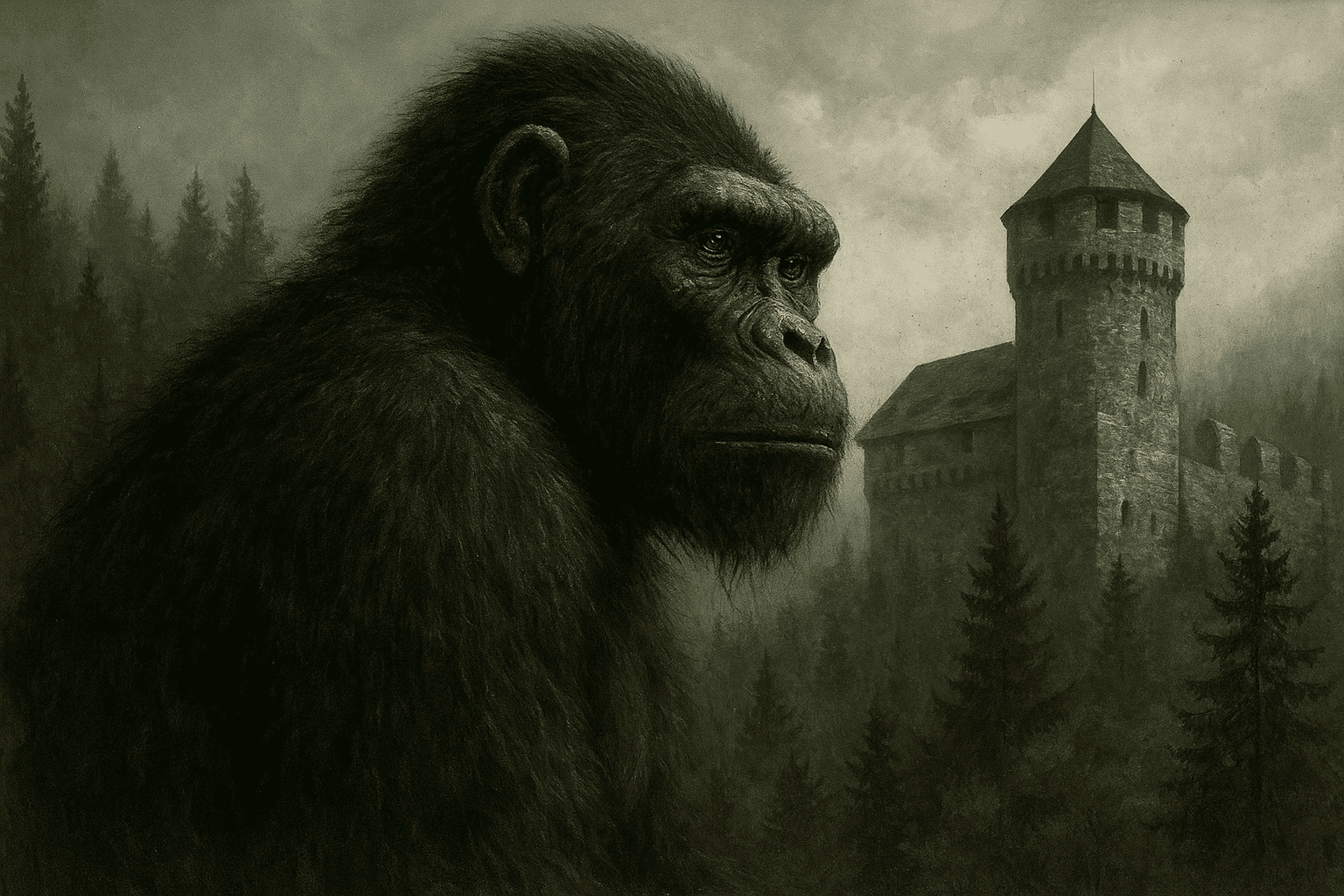 When Disney releases its next Planet of the Apes installment in 2027, audiences will once again step into a world where intelligent apes debate the fate of wandering humans. But long before Hollywood imagined torch‑lit councils and simian politics, the real Planet of the Apes unfolded across the Mediterranean — not in the distant future, but 11 to 7 million years ago, during the Miocene.
And unlike the fictional version, the Miocene was not ruled by one species. It was an ape explosion — a diverse, continent‑spanning radiation of great‑ape ancestors whose fossils still shape debates in paleoanthropology today.
MSN:
It’s the dawn of a new era for a nearly 60-year-old sci-fi franchise.Planet of the Apesis in a period of transition as Disney tries to figure out what to do with the franchise after the conclusion of the “Ceaser Trilogy” in 2017. While Kingdom of the Planet of the Apes came out just two years ago, it appears that the franchise is already going in a different direction that will introduce yet another new story.
A Torch-Lit Council… Millions of Years Before Disney
The video above opens with a cinematic tableau: a council of apes gathered around firelight, debating the fate of humans. It’s a playful nod to the franchise — but it’s also a bridge to something deeper.
Because the Miocene really was a world full of apes.
Across Catalonia, Anatolia, the Balkans, Egypt, and Bulgaria, scientists have uncovered fossils of species that look like early experiments in great‑ape evolution. They weren’t movie villains or sci‑fi monarchs — but they were powerful, diverse, and ecologically dominant.
Pierolapithecus: The Catalonian Climber
 In modern Spain, the discovery of Pierolapithecus offered one of the clearest glimpses into early great‑ape anatomy. With a stiff lower spine and broad torso, Pierolapithecus may represent a key moment in the evolution of upright posture — a trait that would echo through millions of years of primate history.
Anadoluvius: The Anatolian Giant
From Turkey comes Anadoluvius, a robust, ground‑dwelling ape with jaws built for crushing. Its discovery challenged long‑held assumptions about where great apes diversified — suggesting that the Mediterranean basin, not just Africa, played a major role.
Graecopithecus from Greece
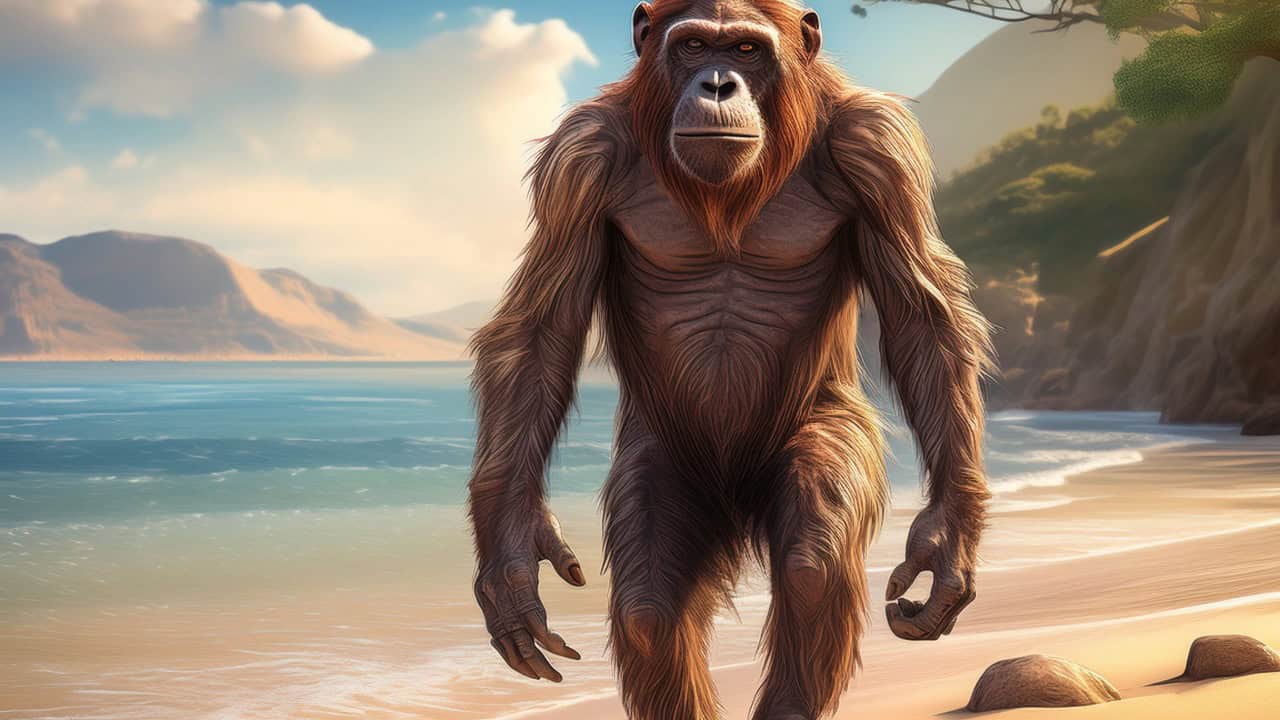 Few fossils spark debate like Graecopithecus. Found in Greece, this enigmatic primate has been proposed — controversially — as a potential stem hominin. Whether or not that claim holds, Graecopithecus proves one thing: the Miocene was full of evolutionary experiments.
In Bulgaria, Azmaka represents one of the last survivors of the Miocene ape radiation, living just before climate shifts reshaped the region.
In Egypt, Masripithecus adds another piece to the puzzle — a small-bodied ape with unusual dental traits.
Together, they show how widespread and diverse these primates were.
A Polish Couple, A Greek Beach, A Quite Moment in the Sand
This film introduces a quiet, human moment: a young Polish couple walking along the sunny shores of Trachilos, Crete. The man spots strange impressions in the sand. His girlfriend wades into the water, unaware of the mystery beneath her feet.
Those impressions echo the controversial Trachilos footprints — fossilized tracks some researchers argue resemble early hominin prints. Whether they belong to a primate or not, they serve as a poetic reminder:
Humans are always discovering traces of the deep past, often by accident.
Pop Culture Meets Paleoanthropology
Disney’s 2027 Planet of the Apes will offer spectacle, drama, and mythology. But the real story — the one written in bone and sediment — is even more astonishing.
This 8.25‑minute documentary bridges these worlds:
- Sci‑fi imagery
- Miocene fossil evidence
- Mediterranean paleoecology
- Human curiosity across time
It reveals how one ancient primate — perhaps Pierolapithecus, perhaps another — may have stood near the root of the great‑ape line, sending evolutionary ripples through the Miocene and ultimately… into us.