Stéphane Peyrégne of the Max Planck Institute got it right on Homo erectus
ACTION ALERT! Major brands and top corporations are now advertising on our documentaries at YouTube. We appreciate you visiting our website — truly. But a click on the video above, and a like, helps us grow far more than reading this page ever could. Please click now and support the mission.
 In the summer heat of Puerto Vallarta, far from the polished lecture halls of Leipzig, a young geneticist from the Max Planck Institute stepped onto a modest conference stage and answered a question he was not expected to answer. The setting was informal — a Q&A session after a talk on archaic introgression — the kind of moment where scientists often relax their guard. But what happened next would echo far beyond that room.
An audience member asked Stéphane Peyrégne directly: “Did you find any Homo erectus DNA in the Denisovan genome?”
Peyrégne paused only briefly before replying with disarming clarity: Yes — traces of something deeply divergent, something superarchaic.
(Ref. Science 2024 – behind a paywall,)
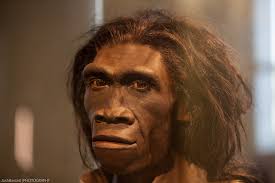
Homo erectus Ancestry in modern Asian Populations and Melanesians
 It was the kind of answer that bypasses the usual layers of scientific caution. No hedging. No qualifiers. No “more research is needed.” Just a plainspoken acknowledgment of a signal that had hovered at the edges of paleoanthropology for decades.
At the time, it felt like a slip — a moment where a researcher spoke a truth that had not yet been formally published, modeled, or framed for the broader scientific community. For years, whispers of Homo erectus ancestry in modern Asian populations had circulated in the literature. A study on Papuans nearly twenty years ago hinted at such a signal, but it was dismissed as noise, contamination, or statistical artifact. The field moved on.
But Peyrégne’s answer in Mexico suggested otherwise. It suggested that the old hypothesis — the one relegated to the margins — had never fully died. It had simply lacked a champion.
Prior Hints of Homo Erectus
 There had been hints before of super-archaic ancestry in Asians and Melanesians. Dr. Michael Hammer was the first to detect such signals in some genetic tests in the mid 2010s. Geneticists such as Joshua Akey and Professor Murray Cox of New Zealand also detected similar signals in genomic sequences.
Who is Stephane Peyregne?
Peyrégne is part of a new generation of population geneticists trained in the post‑Neanderthal‑genome era — a cohort fluent in ancient DNA, demographic modeling, and the statistical archaeology of deep time. His work at the Max Planck Institute for Evolutionary Anthropology has focused on archaic admixture, the structure of ancient populations, and the hidden signals that survive in the genomes of modern humans.
He is not a sensationalist. He is not a provocateur. He is, by all accounts, a careful scientist. Which is precisely why his unguarded admission in Puerto Vallarta carried such weight.
 The Max Planck Institute: A Quiet Giant
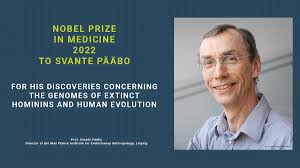
Founded in 1997, the Max Planck Institute for Evolutionary Anthropology in Leipzig has become the global center of gravity for ancient DNA research. Under the leadership of figures like Svante Pääbo and Johannes Krause, the institute has:
- sequenced the Neanderthal genome
- discovered the Denisovans
- mapped archaic introgression across Eurasia
- pioneered the molecular archaeology of human origins
When a Max Planck researcher speaks about archaic ancestry, the field listens — even when the words come in an offhand moment during a Q&A.
Two Years of Silence
After the Mexico conference, nothing happened. No papers. No preprints. No official confirmation. Peyrégne’s comment lived only in the digital record — a fragment of video, a moment suspended between speculation and revelation.
It felt like a truth spoken before its time.
 Then, in 2026, the Proteins Arrived
For the first time in the history of paleoanthropology, scientists recovered actual protein sequences from Homo erectus. Not DNA — which decays too quickly — but enamel proteins, locked inside teeth for nearly a million years.
Among them was a single but decisive substitution: Met → Val. A molecular fingerprint. A signature of identity. A confirmation that Homo erectus was not merely a silhouette in the fossil record, but a biological presence whose traces still echo in our genomes.
This was not Denisovan‑mediated. This was not Neanderthal. This was direct.
The super-archaic signal Peyrégne spoke of in Mexico had found its biochemical anchor.
The Arc Closes
What began as an unguarded moment in a warm conference room has now been vindicated by the oldest molecular evidence ever recovered from a human ancestor. The hypothesis dismissed twenty years ago, whispered about in specialist circles, and spoken aloud by Peyrégne in 2024 has now been carved into the proteomic record.
Chinese Scientists have just confirmed Homo erectus DNA in modern human populations. (Video at our YouTube Channel.)
CGTN May 2026:
Chinese scientists have achieved a major breakthrough in paleoanthropology by obtaining molecular information from teeth of 400,000-year-old Homo erectus for the first time, offering new evidence about the evolutionary relationship between ancient humans and modern populations.
The study, conducted by researchers at the Institute of Vertebrate Paleontology and Paleoanthropology under the Chinese Academy of Sciences, was published on Wednesday in the journal Nature.
The Vindication Arc is complete.
And the story is only beginning.