
Mary Anning helped to launch the field of Paleoanthropology
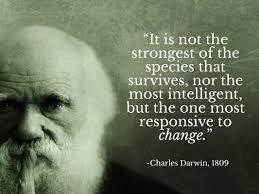 From a small village on England’s southern coast, a poor young woman made discoveries that would transform our understanding of Earth’s ancient past. Long before dinosaurs captured the public imagination, Mary Anning was uncovering spectacular fossils from the cliffs of Lyme Regis and helping to lay the foundations of modern paleontology. Although many of the great scientists of the nineteenth century knew her work well, her name faded from popular memory for generations. Today, historians increasingly recognize Mary Anning as one of the most important fossil hunters in scientific history.
Mary Anning was born in 1799 in Lyme Regis, Dorset, along what is now known as England’s Jurassic Coast. Her family lived in poverty, and life was often difficult. Her father, Richard Anning, worked as a cabinetmaker and collected fossils as a hobby, teaching young Mary how to find, clean, and identify specimens washed out of the coastal cliffs. These fossils were often sold to tourists and collectors, providing a much-needed source of income for the family.
Tragedy struck when her father died in 1810, leaving the family heavily in debt. Rather than surrender to hardship, Mary helped support her mother by continuing to collect and sell fossils. Despite receiving little formal education, she taught herself geology, anatomy, and scientific observation. Over time, her expertise became so impressive that many professional scientists sought her advice.
 Mary’s breakthrough came when she and her brother discovered the remains of what would later be recognized as an ichthyosaur, a giant marine reptile that lived during the age of the dinosaurs. The discovery stunned the scientific world. At the time, many people struggled to understand how such strange creatures could have existed. Some scholars even questioned whether extinction itself was real. The fossil demonstrated that entirely different forms of life had once inhabited the Earth.
She would go on to make several other remarkable discoveries. In 1823, Mary found the first complete plesiosaur skeleton ever identified, a creature so unusual that some scientists initially believed the specimen to be a forgery. Even the famed French naturalist Georges Cuvier expressed doubts before eventually admitting the fossil was genuine. Her discoveries repeatedly challenged existing assumptions and forced scientists to rethink the history of life on Earth.
What made Mary Anning truly exceptional was not simply her ability to find fossils. Many people searched the cliffs around Lyme Regis. Mary possessed a rare talent for recognizing the scientific significance of what she uncovered. She carefully studied anatomy, accurately identified important features, and maintained correspondence with leading scientists of her day. At a time when women were largely excluded from scientific institutions, she became one of the most respected fossil experts in Britain.
Darwin, Louis Agassiz and Polygenism
In many respects, Polygenism was an early precursor of race realism and subspecieism.
From Harvard University:
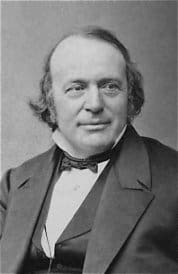 Naturalist Louis Agassiz (1807-1873) became a professor at Harvard’s Lawrence Scientific School in 1847 and remained at the university in Cambridge for the rest of his life. He became convinced of the validity of the theory of polygenism–that there was a plurality of origins of the human races.
Her influence extended far beyond the fossils she discovered. The evidence emerging from Lyme Regis helped support a growing scientific understanding that Earth was far older and more dynamic than many had previously believed. This had a profound impact on Victorian science.
One of the figures influenced by discoveries like Anning’s was Charles Lyell, the pioneering geologist whose work emphasized the immense age of the Earth and the gradual processes that shape it. Lyell’s geological ideas would eventually become a cornerstone of nineteenth-century science. Fossils from Lyme Regis provided dramatic evidence that ancient worlds had existed long before the present age and that life on Earth had changed over vast stretches of time. While Lyell built his theories through many lines of evidence, the remarkable fossils uncovered by Mary Anning contributed to the scientific environment that helped make such ideas possible.
Mary Anning’s discoveries also attracted the attention of Louis Agassiz, one of the most influential naturalists of the nineteenth century. Agassiz studied fossil fish and other ancient organisms, and the extraordinary specimens emerging from Britain’s fossil beds demonstrated the richness and complexity of prehistoric life. Scientists across Europe increasingly recognized that the fossil record revealed entire ecosystems that had vanished from the Earth. Although interpretations differed, Mary’s finds became part of the broader scientific conversation that shaped paleontology during the Victorian era.
Geological Time
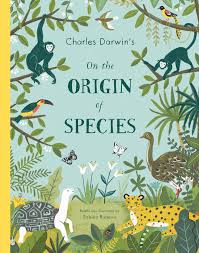 Perhaps most importantly, the world revealed by Anning’s fossils helped prepare the intellectual ground for Charles Darwin. Darwin’s On the Origin of Species would not be published until 1859, years after Mary Anning’s death. Yet discoveries of extinct marine reptiles and other ancient creatures helped demonstrate that life on Earth had a deep history stretching back millions of years. Fossils like those found by Anning showed that species could appear and disappear across geological time. Such evidence made it easier for later scientists, including Darwin, to consider how life might change through natural processes. Britannica notes that some scientists believe fossils recovered by Anning contributed, at least in part, to the scientific developments that eventually influenced Darwin’s theory of evolution.
Despite her accomplishments, Mary Anning received relatively little recognition during her lifetime. Scientific papers often discussed her discoveries without giving her full credit, and she was excluded from many of the institutions dominated by wealthy men. Yet those who knew her work understood her importance. She earned the respect of leading geologists and paleontologists throughout Britain and Europe.
Mary Anning died in 1847, but her legacy has only grown stronger with time. Today she is remembered as a pioneer whose perseverance, curiosity, and scientific insight helped unlock Earth’s prehistoric past. From the windswept cliffs of Lyme Regis, she uncovered evidence that challenged old beliefs and inspired some of the greatest scientific minds of the Victorian age. Though history overlooked her for many years, Mary Anning now stands among the most influential figures in the story of paleontology.


