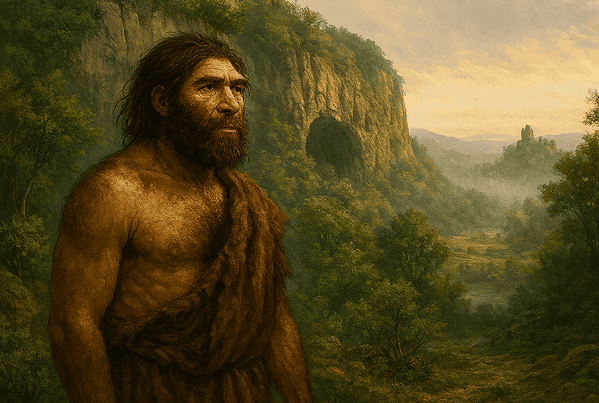
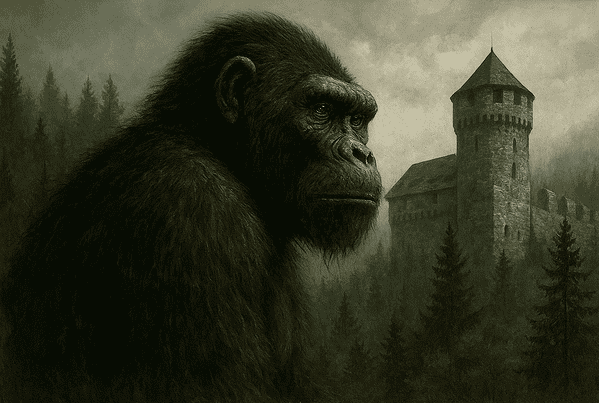
Australopithecus Geraru becomes the 10th identified Australopithecine

Kaye Reed
In 2013, a fossil jawbone unearthed in Ethiopia’s Ledi-Geraru region revealed a new chapter in human evolution. This discovery, dated to approximately 2.8 million years ago, sits at the crossroads of two major hominin lineages—Australopithecus and Homo—and has sparked renewed debate about the mosaic nature of our origins.
It was discovered by local Ethiopian archaeologist Chalachew Seyoum.
This video marks the first digital use of the term Australopithecus Geraru, staking a claim in paleoanthropological discourse and offering a cinematic deep dive into one of the most enigmatic fossils of the early Pleistocene.
🔍 What the Fossil Tells Us
The Ledi-Geraru mandible (LD 350-1) was found in the Afar region of Ethiopia, not far from the famed Hadar site where Australopithecus afarensis—Lucy—was discovered. But this jawbone is different. It exhibits a blend of primitive and derived traits, suggesting a transitional form that may bridge the gap between Australopithecus and early Homo.
Some researchers argue that this fossil represents the earliest known member of our genus. Others see it as a late-surviving Australopithecus species—hence the proposed designation Australopithecus geraru. Either way, it challenges the tidy, linear progression often depicted in textbooks.
From the Abstract, Paper, August 2025, (Open Access),
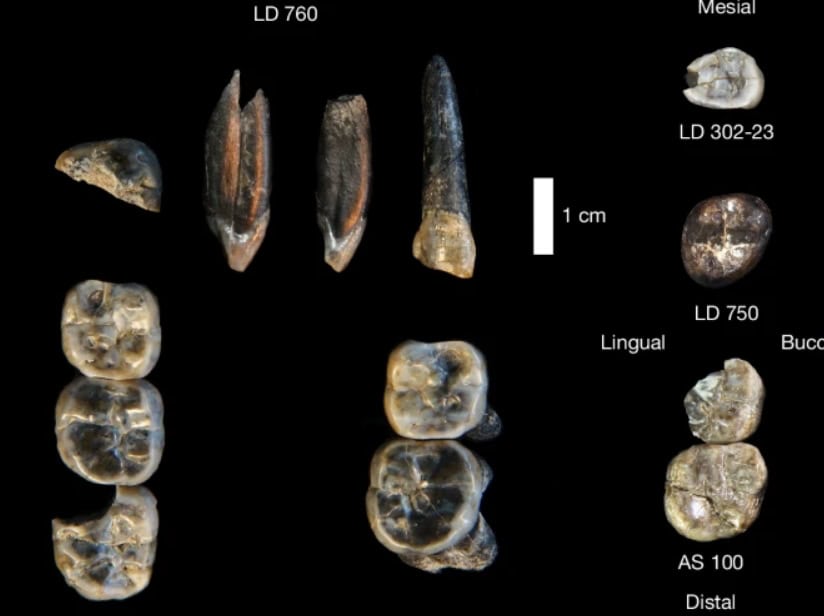 The time interval between about three and two million years ago is a critical period in human evolution—this is when the genera Homo and Paranthropus first appear in the fossil record and a possible ancestor of these genera, Australopithecus afarensis, disappears. In eastern Africa, attempts to test hypotheses about the adaptive contexts that led to these events are limited by a paucity of fossiliferous exposures that capture this interval. Here we describe the age, geologic context and dental morphology of new hominin fossils recovered from the Ledi-Geraru Research Project area, Ethiopia, which includes sediments from this critically underrepresented period.
We report the presence of Homo at 2.78 and 2.59 million years ago and Australopithecus at 2.63 million years ago. Although the Australopithecus specimens cannot yet be identified to species level, their morphology differs from A. afarensis and Australopithecus garhi. These specimens suggest that Australopithecus and early Homo co-existed as two non-robust lineages in the Afar Region before 2.5 million years ago, and that the hominin fossil record is more diverse than previously known. Accordingly, there were as many as four hominin lineages living in eastern Africa between 3.0 and 2.5 million years ago: early Homo1, Paranthropus2, A. garhi3, and the newly discovered Ledi-Geraru Australopithecus.
Why it matters?
From VCU News,
Ancient teeth lead VCU researcher to new human ancestor
Working in Ethiopia, fossil finder Amy Rector helps add another branch to the ‘bushy tree’ that reflects our evolution.
 For many years, scientists thought the genus Homo, which includes today’s humans, evolved directly out of the genus Australopithecus, of Lucy fossil fame. More recently, paleoanthropologists have found fossils that suggest that early Homo species lived alongside other hominins – or upright-walking apes – from at least two additional genera, or groups of species.
“Most people, when they envision human evolution, think of that typical march of progress, where one species evolves into the next species evolves into the next,” said Rector, Ph.D., an associate professor of anthropology in VCU’s School of World Studies. “And the more that paleoanthropologists are out there and looking for fossils, the more we’re finding that that is not an accurate representation of the evolution of our lineage.”
🧠 Featuring William Kimbel: The Prophet of Paleoanthropology
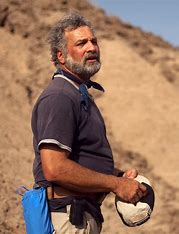 This documentary features insights from the late William Kimbel, whose work at Arizona State University helped shape our understanding of hominin diversity. Kimbel’s prophetic challenge to the linear model of evolution is central to this video’s narrative arc. His voice echoes through the sediment layers of time, reminding us that evolution is not a ladder—it’s a branching tree, tangled and rich with ambiguity.
Bio from World of Paleoanthropology:
Dr. Kimbel received his Ph.D from Kent State University, and went on to lead an impressive career, from ASU’s website, “For more than 30 years, Kimbel has conducted research on Australopithecus and early Homo in Africa, Neanderthals in the Middle East, the evolution of hominin skull form and function, and concepts of biological systematics as applied to paleoanthropological problems. Since 1990, he has codirected or directed research at the Hadar hominin site in the Afar region of Ethiopia.
Kimbel is also a Virginia M. Ullman Professor of Natural History and the Environment in the School of Human Evolution and Social Change. He is a founding member of the Afar Rift Valley Research Consortium, a group working on a region-wide understanding of human evolution and its contexts. Kimbel was elected Fellow of the American Association for the Advancement of Science in 2005.”
🎥 Visual Deconstruction: The March of Progress Reimagined
We also take aim at the iconic “March of Progress” illustration—a staple of popular science that oversimplifies human evolution into a neat sequence of upright figures. Through visual overlays and fossil comparisons, this video dismantles that myth and replaces it with a more accurate, mosaic model of hominin development.
📚 Topics Covered in the Video
- The Ledi-Geraru fossil site and its geological context
- The coexistence of early Homo and Australopithecus species
- William Kimbel’s legacy and his challenge to evolutionary orthodoxy
- The ambiguity of species boundaries in the fossil record
- The implications of Australopithecus geraru for understanding human origins