
Ludovic Slimak may have accidentally revealed the existence of Hobbit Neanderthals in southwest France
 For years, French paleoanthropologist Ludovic Slimak has been the quiet disruptor of European prehistory — the researcher who keeps finding things that shouldn’t exist. From the Mandrin sequence that pushed Homo sapiens into Europe far earlier than expected, to the enigmatic Neanderthal lineage he nicknamed “Thorin,” Slimak has built a career on uncovering populations that lived in isolation, diverged in silence, and left behind traces that rewrite the map of human evolution.
Last year, I covered Slimak’s work in a video exploring Thorin — a Neanderthal subspecies separated from other Neanderthals for over 50,000 years. In that piece, I described how Slimak’s research hinted at ghost lineages roaming Western Europe, groups that survived in ecological pockets and developed their own tool traditions, survival strategies, and identities. Even then, Slimak seemed to be pointing toward something deeper, something older, something still hidden.
Now, it appears he may have already found it.
Co-Pilot/Wiki bio (Prospect Magazine):
Ludovic Slimak — Biography
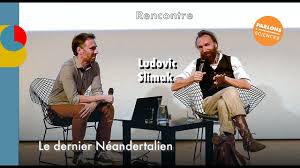 Ludovic Slimak is a French prehistorian and archaeologist specializing in Neanderthal societies, known for his extensive fieldwork and interdisciplinary approach that blends archaeology, anthropology, and philosophy.
For over 30 years, Slimak has directed archaeological missions across three continents, including Turkey, Ethiopia, Djibouti, the Arctic Circle, and the Mediterranean region of France cagt.cnrs.fr. He has led 54 archaeological projects, many in previously underexplored regions, and authored over 230 scientific publications on Neanderthal societies and early Homo sapiens populations in Europe
The El Pais Interview – and the Line That Vanished
 In a recent interview with El País, Slimak was asked whether he had any new discoveries. His answer, in the published version, is cautious and elliptical. He says he cannot give details because the team plans to publish in a scientific journal in two or three years. He mentions that his next book will be titled “La gente del bosque” — The People of the Forest. He describes working in layers older than 100,000 years, in a Europe covered in dense primary forests before the great glaciations. He hints at human populations living in these dark, closed landscapes with lifeways unlike anything we associate with classic Neanderthals.
That alone is intriguing.
But according to the channel Highly Compelling, the original version of the interview contained something far more explosive — and it was quietly removed.
Why this Matters
If Slimak truly has an adult, small‑bodied hominin from >100,000 years ago in Europe, this would be one of the most significant paleoanthropological discoveries of the decade. It would imply:
- A non‑Neanderthal lineage surviving in Europe
- A population adapted to dense forest refugia
- A body size comparable to Homo floresiensis or Homo naledi
- A relict species persisting far later than expected
- A new chapter in the story of European hominin diversity
And it would align perfectly with Slimak’s long‑standing interest in isolated populations — Thorin, Mandrin, and now perhaps something even stranger.
A Human Face Behind the Leak
One more detail strengthens the credibility of the Highly Compelling report. The channel, normally AI‑assisted and faceless, recently broke format. In a video released just weeks before this story, the editor appeared on camera for the first time. For a creator who usually hides behind stylized narration, this is a signal. It says: I stand behind this one.
The People of the Forest
Slimak’s upcoming book title now feels less poetic and more literal. If the deleted line is accurate, “The People of the Forest” may not be a metaphor. It may be a description — the first hint of a small‑bodied, long‑hidden hominin lineage that survived in Europe’s deep, ancient woods long before the ice returned.
Something was said. Something was removed. And something is waiting in those >100,000‑year‑old layers.
This story is only beginning.