
Beachy Head Woman based on flawed reconstructions early on
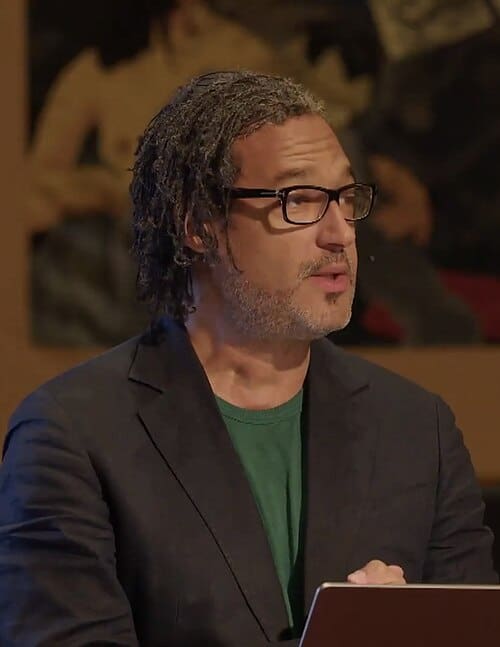 The BBC once hailed the Beachy Head Woman as “Britain’s first Black lady,” a symbol woven into museum plaques, documentaries, and school materials. For nearly a decade, she stood as a centerpiece in public‑facing narratives about early African presence in Britain — a striking reconstruction with dark skin, tightly curled hair, and a story framed as proof of a multicultural Roman‑era island. But new DNA and isotopic analysis has overturned that narrative entirely, revealing that she was fair‑skinned and genetically closer to ancient Europeans and Mediterranean migrants than to sub‑Saharan Africans. This video unpacks how such a dramatic reversal happened, and why the original claim was embraced so confidently by major institutions.
To understand the stakes, it helps to know who the Beachy Head Woman actually was. Her remains were discovered near the famous chalk cliffs of East Sussex — a region long known for its archaeological richness. According to summaries from sources like the Smithsonian and Britannica, the Beachy Head area has yielded burials dating from the Neolithic through the Roman period, reflecting centuries of migration, trade, and cultural exchange along the English Channel. The woman herself lived around the 3rd century AD, during a time when Roman Britain was a crossroads of people from across Europe and the Mediterranean. Early isotopic studies suggested she may have grown up in southern Europe, possibly the Mediterranean basin, which already made her an unusual and intriguing figure in Britain’s archaeological record.
Fit the BBC’s Left- Multicultural Narrative, but not the Facts
 But the leap from “Mediterranean migrant” to “Britain’s first Black woman” was not a scientific conclusion — it was a narrative one. The BBC’s original reconstruction, produced for a 2016 educational series, depicted her with distinctly sub‑Saharan features. That artistic choice, amplified by museum displays and classroom materials, quickly hardened into a cultural claim: that a Black African woman had lived and died on the cliffs of East Sussex in Roman times. The story fit neatly into a broader institutional push to highlight diversity in ancient Britain, and it was repeated widely without significant scrutiny.
This video traces the collapse of that narrative through forensic evidence, expert commentary, and the evolving science behind ancient DNA. Salena Brace of the Natural History Museum underscores the shift: scientific understanding is constantly advancing, and the tools available today simply didn’t exist when the original reconstruction was made. Early interpretations relied heavily on isotopes and skeletal morphology — methods that can suggest geographic origin but cannot determine skin color or ancestry with precision. Once full genomic sequencing became possible, the picture changed dramatically. The DNA showed no sub‑Saharan ancestry. Instead, her genetic profile aligned with populations from southern Europe and the Mediterranean, consistent with the movement of people within the Roman Empire.
 The result is a case study in how media enthusiasm, institutional storytelling, and emerging science can collide — sometimes with spectacular consequences. The BBC’s framing wasn’t created in a vacuum. It emerged alongside high‑profile programming such as David Olusoga’s Black and British, a series promoted by the BBC as a sweeping re‑examination of the African presence in Britain from Roman times to the modern era. Promotional materials emphasized “long‑overlooked stories” and “hidden histories,” encouraging audiences to rethink assumptions about Britain’s past. Within that editorial climate, the Beachy Head Woman became a convenient symbol — a visually striking embodiment of the message that Britain had always been diverse. The problem, as the new DNA evidence shows, is that the symbol was built on a scientific foundation that simply wasn’t there.
Did the BBC fudge other facts on Blacks in Britain to fit their narrative?
Finally, we ask the uncomfortable question: if the Beachy Head Woman was misidentified for a decade, what other claims about early Africans in Britain may also crumble under scrutiny? This is not just a correction — it’s a moment of reckoning for how history is reconstructed, narrated, and believed. Ancient DNA has already overturned long‑held assumptions about migration, identity, and ancestry across Europe. As the science continues to advance, it will inevitably challenge stories that were built more on modern aspirations than on ancient evidence.
The Beachy Head Woman deserves to be understood for who she truly was — not as a symbol, but as a person. And the public deserves narratives grounded in evidence, not wishful thinking. This video is part of that ongoing effort to bring forensic clarity, historical accuracy, and intellectual honesty back into the conversation.


