
Elon Musk on the hot seat with London Science Elite
In a moment that feels torn from the pages of a geopolitical thriller, Elon Musk’s fellowship with the London Royal Society for the Sciences is under fire. The controversy erupted after Musk addressed the “Unite the Kingdom” rally in London, organized by right-wing activist Tommy Robinson. His remarks—warning of “massive uncontrolled migration” and declaring that “violence is coming to you… you either fight back or you die”—have triggered internal backlash within the Royal Society, one of the world’s most prestigious scientific institutions.
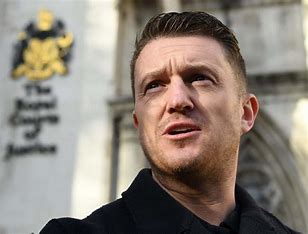 Sir Adrian Smith, president of the Society, responded with a letter to fellows expressing grave concern over the “language of violence” and its threat to the organization’s core values. The matter is now slated for discussion at the next council meeting, and whispers of Musk’s dismissal are growing louder.
But this isn’t just about politics. It’s about prestige, power, and the fossil gatekeepers who have long shaped the narrative of human origins.
From the BBC, Sept. 15,
Musk’s fellowship of Royal Society in doubt after rally address
 In response, Sir Adrian Smith, president of the Society, wrote a letter to fellows in which he raised concerns about “resorting to the language of violence” and the threat it posed to the organisation’s values.
He said the matter would be discussed at the society’s next council meeting.
Elon Musk was first elected a fellow of the UK’s national academy of sciences in 2018, for his work in the space and electric vehicle industries. But his continued participation in the Royal Society has grown increasingly controversial.
Earlier this year, thousands of scientists signed a letter raising concerns about his involvement in funding cuts to US scientific research, as part of his previous role in Trump’s Department of Government Efficiency.
Chris Stringer: A Legacy Under Scrutiny
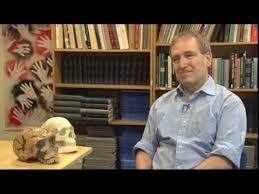 At the center of this scientific storm stands Chris Stringer, a leading figure in paleoanthropology and longtime curator at the Natural History Museum in London. Stringer’s legacy is both celebrated and contested. He has contributed extensively to the “Out of Africa” model of human evolution, but critics argue that his methods and decisions reflect outdated and ethically fraught practices.
Among the most controversial episodes: Stringer’s alleged mishandling of the world’s most precious Neanderthal skull—dropping it during a research session. More troubling is his continued defense of craniology, a field historically rooted in racial classification. And perhaps most damning, his role in shielding the Kabwe skull (also known as the Broken Hill Man or Rhodesian Man) from repatriation to Zambia, despite growing calls for its return.
These controversies raise urgent questions: Who controls the fossil record? And whose stories are being told—or silenced?
The Yunxian Skull: A Paradigm Shift?
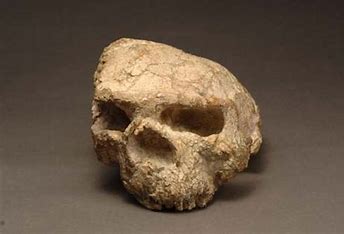 In a stunning twist, Stringer recently released a video analyzing the Yunxian skull, a fossil unearthed in Hubei Province, China. The skull, dated to approximately 900,000 years ago, exhibits features that challenge the dominant “Out of Africa” narrative. Its morphology suggests a complex web of human evolution that may have unfolded in Asia, not Africa.
Stringer, of course, is known as one of the earliest and most diehard proponents of Recent Out of Africa. Though, to be fair, he has walked that back somewhat in recent years.
This discovery of Yunxian has reignited debates about the geographic cradle of humanity. Could the Yunxian skull represent a new origin point? Is “Out of Asia” the next evolutionary paradigm?
While the mainstream scientific community remains cautious, the implications are profound. If validated, the Yunxian fossil could reshape our understanding of early hominins and force a reevaluation of long-held assumptions about migration, adaptation, and ancestry.
Breaking News and the Road Ahead
As of this writing, the Royal Society has not made a final decision on Musk’s fellowship. But the controversy has exposed deep fissures within the scientific establishment—between tradition and transformation, gatekeeping and global accountability.
Meanwhile, the Yunxian skull continues to make waves in paleoanthropological circles. Chinese researchers are calling for greater recognition of Asia’s role in human evolution, and international teams are preparing new excavations in the region.
The fossil record is no longer a static archive—it’s a battleground of ideas, ethics, and identity.
Be sure to check out the short version of our video on Musk vs. Chris Stringer.


Oh, the kerfuffle surrounding Musk and the Royal Society! One minute you’re celebrating space achievements, the next you’re being summoned for using language of violence – perhaps referring to rockets? As for paleoanthropology’s hotbed, Chris Stringer’s legacy is under such scrutiny it’s practically a geological fault line. The Yunxian skull discovery is like finding a fossilized joke in Asia, challenging the Out of Africa narrative with a cheeky Out of Nowhere? Maybe humanity’s origin story is less about a single point origin and more about a messy, globetrotting family reunion with a few awkward encounters and a skull dropped here and there. The scientific establishment’s splits are deeper than a Neanderthal’s fracture – time for some global accountability, perhaps with a new Out of Asia paradigm to boot?