Homo luzonensis is the newest Hominid discovery
 Scientists are dubbing it “a new branch of the human family tree.” A total of 13 fossil bones and teeth have been found in the Callao cave in northern Luzon province. The researchers have dated some of the fossils to be 67,000 years old and another at 50,000.
New species discovered in the Philippines
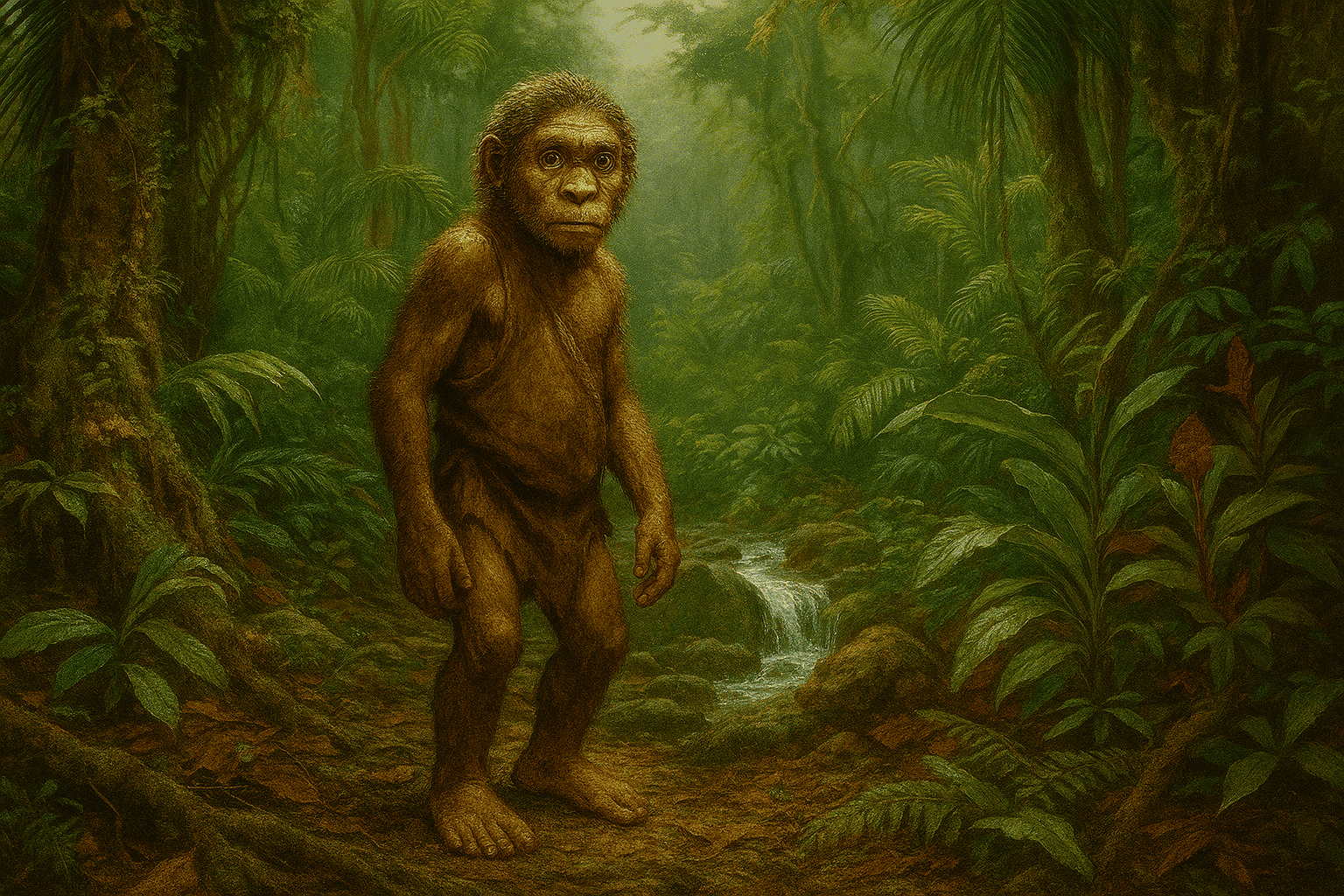
Several teeth, finger bones, toe bones, and a thigh bone belong to a newly discovered early human species: Homo luzonensis. Found in Callao Cave on the island of Luzon in the Philippines, Homo luzonensis had a small body, much like another island species: Homo floresiensis. How this new species is related to the rest of the human family tree is unclear.
Its teeth are distinct from every other early human species, and its fingers and toes are relatively longer than a modern human’s. Dating to about 67,000 years old, it predates the earliest human presence in the Philippines by 40,000 years. At that time the Philippines were islands, separated from mainland Asia. This means that Homo luzonensis must have reached the Philippines over water.
First major paleoanthropology finds in the Philippines
 “Filipino archaeologist Armand Salvador Mijares said the discovery of the remains in Callao Cave made the Philippines an important research ground on human evolution.”
University of Wisconsin Professor John Hawks notes “If we have missed these species that lived less than 100,000 years ago, how much are we missing from the earlier phases of evolution?”
From Science:
“This is a truly sensational finding,” says Adam Brumm, an archaeologist at Griffith University in Nathan, Australia. The paper, published this week in Nature, “sent shivers down my spine.”
The discovery echoes that of another unusual ancient hominin—the diminutive H. floresiensis, or “hobbit,” found on the island of Flores in Indonesia. “One is interesting. Two is a pattern,” says Jeremy DeSilva, an expert on Homo foot bones at Dartmouth College. He and others suspect the islands of Southeast Asia may have been a cradle of diversity for ancient humans, and that H. luzonensis, like H. floresiensis, may have evolved small body size in isolation on an island.
UPDATE!
MSN.com, April 1, 2024,
Archaeologists unravel mystery of unknown species of human discovered on Asian island
 Many of its other, more defining features hark back to the days of the australopithecines, an odd species that though walked upright resembled an ape more than a human.
Its finger and toe bones are also curved, hinting that climbing was an integral part of its existence, something that was also the case for australopithecines.
A further update in a paper put out by Chris Stringer and Rainer Gunn, Dec. 2023:
In summary, the H. luzonensis remains are likely all of similar ages, and the apparently younger individual ages are the result of a secondary U-overprint. The minimum age would fall at the transition of MIS 6 to MIS 5, which is significantly older than the ∼70 ka commonly seen in the literature. However, since the ESR results on Callao1 and 2 indicate a younger age, it may be worthwhile to attempt a direct US-ESR analysis on a hominin tooth.