⚔️ The Forgotten War at Denmark’s Gates: How Mesolithic Seafarers, the Ertebolle, Halted the Anatolian Advance
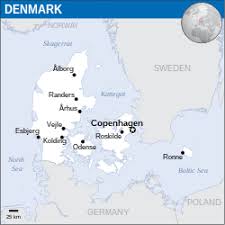 For over a millennium, a silent standoff unfolded at the edge of Europe—a clash not of empires, but of endurance. As Anatolian farmers swept across the continent, bringing agriculture and settlement to new lands, their expansion came to a mysterious halt at the southern shores of Scandinavia. The question that has haunted archaeologists and historians alike: Why did these pioneering agriculturists stall at Denmark’s doorstep for nearly 1,000 years?
The answer lies in the islands off Denmark’s coast, where a fierce and enigmatic population of maritime warriors held their ground. These were the Proto-Danish defenders, known to scholars as the Ertebølle tribe—a Mesolithic culture whose coastal resilience and seafaring prowess defied the agricultural tide.
🌊 Warriors of the Water: The Ertebølle Resistance
 Unlike the sedentary farmers who relied on crops and livestock, the Ertebølle people thrived on the sea. Their diet was rich with fish, shellfish, and marine mammals. Their tools—harpoons, fishhooks, and dugout canoes—spoke of a life attuned to the rhythms of the ocean. But it wasn’t just subsistence that defined them. It was resistance.
These island warriors didn’t merely survive—they repelled. For centuries, they thwarted the Anatolian advance, preserving their way of life against the encroaching tide of agriculture. Their settlements, often perched on coastal bluffs and estuaries, became bastions of Mesolithic defiance.
The Jutland People explained, prehistoricexperience.com,
The people who lived in this region of southern Scandinavia relied heavily on fishing and shellfish, leaving extensive shell middens. The landscape was one of marshes, expanses of shallow salty water which must have invited fishing, and a network of rivers and Estuaries. Much of Europe was covered in deciduous forest at that time, but Jutland itself was a marshy archipelago rich in resources. The people moved through established territories, setting up lightweight but not permanent camps and apparently returning to particular ritual sites to bury their dead. Because of sea level changes many of the sites are underwater now, which has (in some cases) helped their preservation- although sadly some have suffered badly from erosion.
🧬 A Genetic Echo from the Deep Past
 Here’s where the story takes a mythic turn. Recent genetic studies suggest that the Ertebølle people may have carried lineages tracing back to the Cro-Magnon—an ancient subspecies of Homo sapiens known for their robust physiques, advanced tools, and cave art masterpieces. If true, the Ertebølle tribe could represent one of the last echoes of a prehistoric lineage, standing firm against the Neolithic wave.
This theory, while still debated, adds a layer of ancestral drama to the tale. Imagine it: descendants of Cro-Magnon seafarers, hardened by millennia of survival, facing off against the organized, crop-growing newcomers from the south. It’s a narrative worthy of epic cinema—Game of Thrones meets National Geographic.
🛡️ Clash of Cultures: Agriculture vs. Autonomy
The standoff wasn’t just genetic—it was cultural. The Anatolian farmers brought with them permanent dwellings, domesticated animals, and hierarchical social structures. The Ertebølle, by contrast, lived in fluid communities, guided by seasonal rhythms and maritime mobility.
This clash—between rootedness and roaming, cultivation and hunting—shaped the trajectory of northern Europe. It delayed the Neolithic transition in Scandinavia by centuries, creating a unique cultural mosaic that still echoes in the region’s archaeological record.
🕯️ Secrets Beneath the Soil
Today, Denmark’s soil holds the remnants of this ancient resistance: shell middens, bone tools, and burial sites that whisper of a people who refused to be absorbed. Each artifact is a testament to a forgotten war—not of swords and shields, but of survival and sovereignty.
As we continue to unearth these clues, the legacy of the Ertebølle tribe grows clearer. They were not merely Mesolithic holdouts—they were guardians of a fading world, protectors of a lineage that stretched back to the dawn of humanity.
Watch the full video to uncover the secrets of Denmark’s ancient soil, the astonishing heritage of its earliest inhabitants, and the dramatic standoff that shaped the fate of northern Europe. Help us reach 1,000 views and keep the archive alive—every click is a ritual, every share a spark.