
There is a Museum Revolution going on across the Globe; Out with the Recognition of Biological Reality; in with the Woke Agenda
From Cape Town to Toronto, a new wave of anthropologists is rewriting the origin story—and they’re not asking permission.
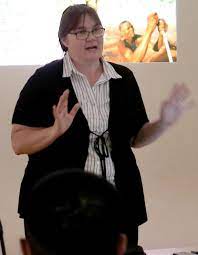 In the hallowed halls of the Iziko South African Museum, once a colonial archive of white male exploration, a seismic shift is underway. Dr. Wendy Black, Chief Curator of Art and Social History, is leading a rebellion against the racial scaffolding of paleoanthropology. Her message? Race is not real—but racism is.
This isn’t just a curatorial tweak. It’s a full-blown paradigm shift. Exhibits now confront the racist foundations of evolutionary science, exposing how race-based research legitimized apartheid and distorted our understanding of human origins. “We realized the story of our origins was mostly told from the point of view of the white explorer,” Black explains to Counter Punch Magazine.
Paleoanthropology has been “racist”
Race and racism are discussed strongly in the exhibit. Black says this is because “the foundations of how we have studied and understood human evolution and paleoanthropology, in general, have been racist.”
“Much of the past research was based on race-based scientific study… this filtered into South African legislation.”
Steering Away from Western Influences
 Black, Rebecca Ackerman of the University of Cape Town and others have been critical of white paleoanthropologists like the famous Raymond Dart, discoverer of the Taung Child, Philip Tobias and even Lee Berger.
Continuing from Counter Punch:
Overall, she shares that the Iziko Museums of South Africa are trying to make all of their exhibitions more approachable and inclusive.
“We are steering away from Western-style exhibits and applying a more Afrocentric style, view and focus in the hopes of making our museums an exciting place to visit for locals and foreigners alike,” she says, adding that “HERI continues to build South African science by South African women through groundbreaking research and mentorship.”
Black’s exhibit doesn’t just deconstruct—it reconstructs. It threads the archaeological record with the lived experience of racism, reframing evolution as a shared human journey rather than a hierarchy of difference.
“Paleoanthropology is so White”
And she’s not alone.
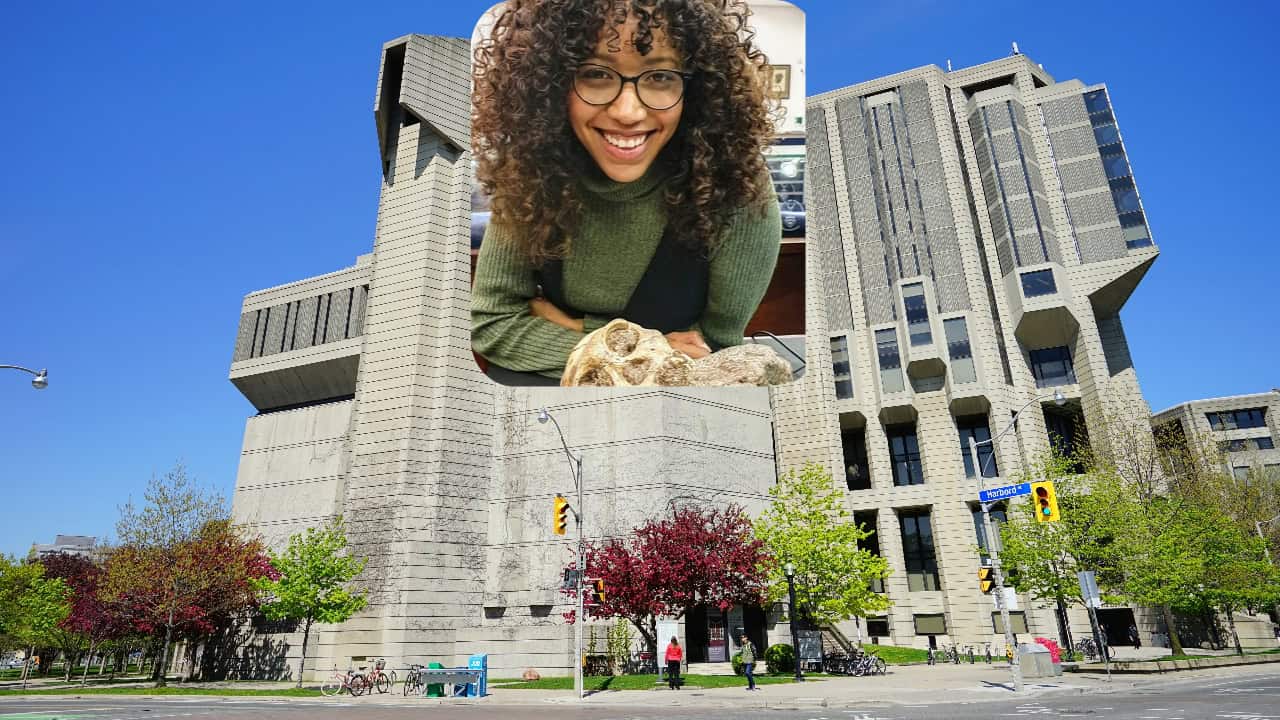 Dr. Lauren Schroeder, formerly of Cape Town University and now at the University of Toronto, echoes the critique: “Paleoanthropology is so white.” Her work challenges the discipline’s Eurocentric bias and calls for a more inclusive lens—one that doesn’t erase the voices of the colonized or the complexity of human variation.
Race is a Social Construct scream the Woke.
Continuing:
we are 99.9 percent the same biologically. Skin color i.e., melanin production, is a trait that is an example of human variation. We focus on skin color in the exhibit as it is generally one of the first things we notice about people around us and it has played an important role in the history of South Africa (and Africa, more broadly). But race defined by skin color is a social construct, not a scientific one. We also reflect on the fact that although humans vary a lot in terms of traits, like skin color, there is only one human species as defined by our DNA.
Note – the 99.9% similarity figure is highly disputed. Some suggest it could be as low as 94% depending what measurement techniques are used.
And here’s the kicker: despite our 98.8% genetic overlap with chimpanzees—who boast four subspecies and a modest population of 250,000—Homo sapiens, with 8 billion strong, are officially subspecies-free. No races. No branches. Just one species, mythologized and misunderstood.
This new wave of “woke anthropology” is sweeping through Western academia—from South Africa to Australia to Canada—dismantling the old guard and challenging the very categories that once defined us. It’s controversial. It’s political. And it’s necessary.
Whether you see it as liberation or ideological overreach, one thing’s clear: the story of human origins is no longer being told from just one point of view.