
The Future of Our Past: De-Extinction and the Return of the Ancients
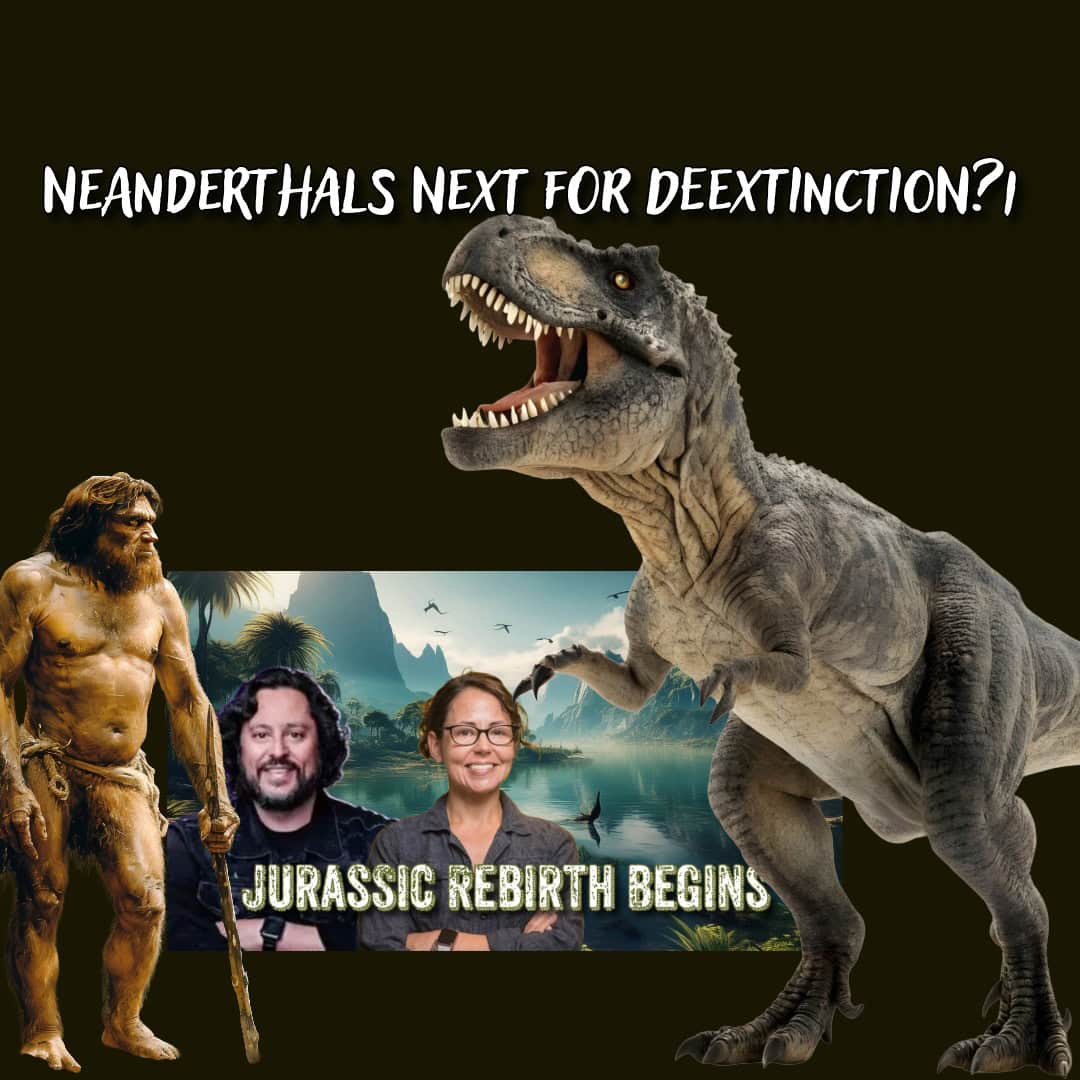 What if the past wasn’t truly behind us?
From the icy wastelands of extinction, the once-mythical Dire Wolves have clawed their way back into reality. Once thought to be confined to the fossil record and Game of Thrones lore, these apex predators are now part of a bold scientific frontier—de-extinction. But this is just the beginning.
In the shadows of cutting-edge genetics, a question looms larger than ever: Could humanity’s own ancient cousins, the Neanderthals, follow suit?
As science pushes boundaries once thought unbreakable, the possibilities are as thrilling as they are controversial. The resurrection of extinct species is no longer confined to speculative fiction—it’s unfolding in real labs, with real DNA, and real implications.
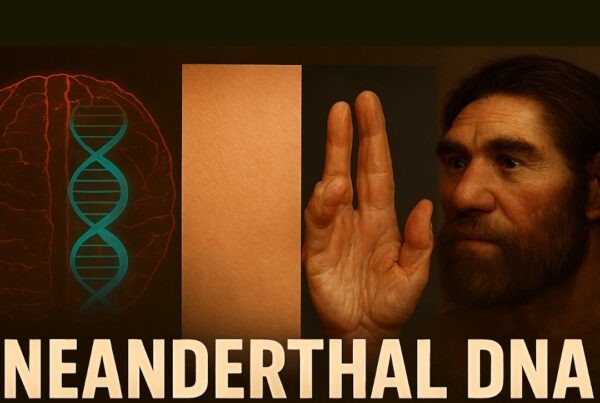
And thanks to Svante Paabo and the Max Planck Institute in Leipzig, Germany, we have the fully sequenced Neanderthal DNA genome.
The Neanderthal Question
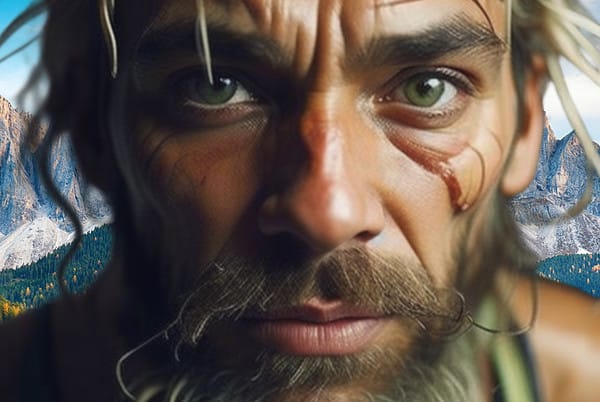
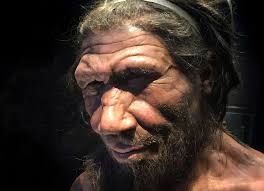 Neanderthals (Homo neanderthalensis) lived across Europe and parts of Asia from roughly 400,000 to 40,000 years ago. Stockier and more muscular than modern humans, they were adapted to cold climates, with large noses for warming dry air and robust bodies built for survival. Far from the brutish caricatures of old textbooks, Neanderthals made sophisticated tools, wore clothing, buried their dead, and may have even created symbolic art.
Their brains were as large as ours—sometimes larger—and they hunted, gathered, and lived in complex social groups. DNA evidence confirms that Neanderthals and Homo sapiens interbred, leaving traces of their genome in many modern humans.
So if we carry fragments of their legacy, could we one day carry their rebirth?
Beyond the Neanderthal: Hobbits, Naledi, and Lucy
 The idea of reviving Neanderthals is provocative enough. But what about other ancient hominins?
- Homo floresiensis, nicknamed the “Hobbit,” stood barely over three feet tall and lived on the Indonesian island of Flores until about 50,000 years ago.
- Homo naledi, discovered in South Africa’s Rising Star cave system, had a curious mix of primitive and advanced traits, suggesting a complex evolutionary mosaic.
- And then there’s Lucy—Australopithecus afarensis—whose 3.2-million-year-old skeleton reshaped our understanding of bipedalism and early human ancestry.
Each of these species represents a different branch of the human story. Reviving them wouldn’t just be a scientific feat—it would be a cultural and existential reckoning.
Enter Colossal: Engineering the Impossible
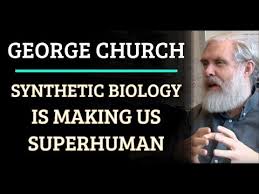 At the forefront of this movement is biotech company Colossal, co-founded by Ben Lamm and George Church. Their mission? To bring back extinct species—not just for spectacle, but to restore ecosystems and reframe evolution itself.
Colossal’s work began with the woolly mammoth, aiming to reintroduce cold-adapted elephants to the Arctic tundra. But their ambitions have expanded. The Dire Wolf project is already underway, and whispers of Neanderthal resurrection—while not officially confirmed—hover at the edge of possibility.
This isn’t just about cloning. It’s about genetic engineering, synthetic biology, and the ethical tightrope of playing god with genomes.
Colossal Biosciences Secures $150M Series B Financing To Continue ‘Jurassic Park’-Like Pursuits
Almost thirty years following the release of one of the 1990’s most iconic sci-fi movies, Jurassic Park, a new age biosciences company has obtained substantial funding to recreate such a future scenario. While initial living iterations won’t be resurrected from the Mesozoic Era, Colossal Biosciences has plans to resurrect long extinct earth beings dating back to the Neanderthal period and beyond.
The Ethical Frontier
Are we ready to confront the ethical, environmental, and existential questions such advancements will bring?
- What rights would a revived Neanderthal have?
- Could they integrate into modern society—or should they?
- Would de-extinction distract from conservation efforts for species still alive but endangered?
These aren’t just hypotheticals. They’re the questions we must answer as science blurs the line between fiction and inevitability.
And now, the visual echo. This is where the myth fractures. This is where the archive breathes.
Watch the video below to explore how de-extinction is reshaping our understanding of evolution, identity, and the future of our past.

Whoa, hold onto your woolly mammoths! This Neanderthal business sounds like a genetic tightrope walk straight out of a Jurassic Park sequel, minus the dinoJurassic drama. Bringing back our ancient cousins – or any extinct species, for that matter – raises more ethical questions than a Colossal Biosciences press conference. Will we be playing God, or just hitting undo on evolution? And what about the social integration? Imagine explaining family dinner plans to a resurrected hominin! It’s science blurring fiction, but lets hope our moral compass is a bit more advanced than the technology before we start filling in the human storys blanks.đếm ngược thời gian
Whoa, hold onto your woolly mammoths! This de-extinction talk is more thrilling than a Dire Wolf hunt. Bringing back Neanderthals – are we ready for their large noses in our social groups? And the Hobbits! Imagine tiny feet in our shoes! But seriously, Colossals mission to play god with genomes is a genetic tightrope walk. Ethical questions? Abound! Rights for reborn hominins? Integrating them into *our* complex social groups? It’s a scientific Jurassic Park, but with way bigger questions than just T-Rex chomping on tourists. Let’s hope we’ve got our ethics sorted before the archive really starts breathing! 🧬🤔