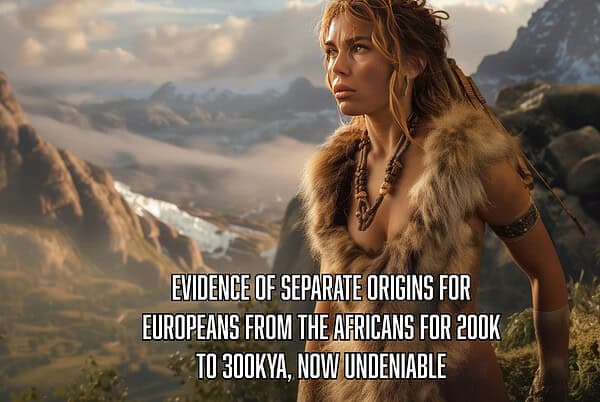
Cheddar Man was only the beginning of this continuing controversy with the BBC
ACTION ALERT! Major brands and top corporations are now advertising on our documentaries at YouTube. We appreciate you visiting our website — truly. But a click on the video above, and a like, helps us grow far more than reading this page ever could. Please click now and support the mission.
 For more than a decade, three ancient individuals have stood at the center of Britain’s public conversation about ancestry: Cheddar Man, Beachy Head Lady, and the Ivory Bangle Lady. Their stories have been told and retold through documentaries, museum exhibits, and high‑profile media features. Yet much of what the public believes about them comes not from the underlying archaeology or genetics, but from a particular narrative lens that dominated the 2010s and early 2020s.
This article accompanies our latest documentary and examines what the archaeology, osteology, and genetics actually show — and how those findings were transformed into the versions promoted by major broadcasters. It also draws on research and commentary from historian and filmmaker Tom Rowsell, whose work has been central in reassessing these cases.
Media Narratives in the 2010s and Early 2020s
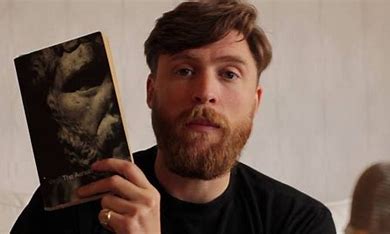 Beginning in the early 2010s, a wave of books, museum exhibits, and television programs emphasized the idea of a highly diverse Roman and post‑Roman Britain. Within that framing, the Ivory Bangle Lady — a high‑status burial from Roman York — became a symbolic figure. Some commentators argued that questioning her ancestry was inherently prejudiced. In 2023, writer John Haywood described online disputes about her origins as examples of racist commentary from fringe groups, framing the debate as a cultural flashpoint rather than a scientific question.
This approach shaped how the public encountered the story. The Ivory Bangle Lady was often presented as evidence of African presence in Roman Britain, and the narrative hardened over time. Yet, as with many archaeological interpretations, the original claims were speculative, based on cranial metrics and isotopic hints rather than direct genetic evidence.
The same pattern appeared in the cases of Beachy Head Lady and Cheddar Man, where early reconstructions and media framing amplified tentative interpretations into confident public claims.
The 2026 Francis Crick Institute Study
In 2026, a major shift occurred. A massive new genome project from the Francis Crick Institute, sequencing over 1,000 ancient British individuals, finally included the Ivory Bangle Lady’s genetic data. The results were striking.
Researchers identified a sample — C12826 — matching the archaeological context of the Ivory Bangle Lady. The accompanying genomic data showed no detectable Sub‑Saharan African ancestry and no North African ancestry. Instead, the genome clustered tightly with local Romano‑British and continental European populations, consistent with mobility within the European provinces of the Roman Empire.
This overturned more than a decade of assumptions.
Early interpretations had relied on skull measurements and morphological inference. But cranial metrics can only suggest possibilities. Genomics is direct evidence, and the new DNA results contradicted the earlier narrative completely.
Tom Rowsell’s Response and the Media Silence
 Historian and filmmaker Tom Rowsell, known for his work on ancient European cultures, was among the first to highlight the implications of the new data. On X, he noted that the Crick Institute had placed the Ivory Bangle Lady’s genome deep within supplementary tables rather than in the main text. Rowsell argued that this effectively buried a result that contradicted years of public storytelling.
On June 13, 2026, he posted again, stating that the Crick Institute had not issued any public clarification. According to Rowsell, neither the Yorkshire Museum, the BBC, nor the Crick Institute had acknowledged the updated findings regarding the Ivory Bangle Lady, Cheddar Man, or Beachy Head Lady.
This silence stands in contrast to the high‑profile coverage that accompanied the earlier interpretations.
Revisiting Beachy Head Lady
Beachy Head Lady, discovered in East Sussex and dated to the 2nd–3rd century CE, was originally presented as a woman of African ancestry based on cranial morphology. The BBC featured her prominently in lists of “Great Black Britons,” and her digital reconstruction — produced by Face Lab at Liverpool John Moores University — circulated widely.
However, later genomic analysis suggested she was more likely of local British ancestry, contradicting the earlier claims. Even Chris Stringer of the Natural History Museum acknowledged that the original interpretation had been incorrect.
A curious detail emerged from a BBC interview: the original examiner of the skull, Dr. J. Simpson, described her as “the earliest, in fact, Briton.” Auto‑captioning rendered this as “the first black Briton,” creating confusion that spread widely online.
Cheddar Man and the 2018 Reconstruction
 Cheddar Man, discovered in 1903 and dated to around 10,000 years ago, became internationally famous after a 2018 reconstruction by the Kennis brothers. Media headlines proclaimed that “the first Britons were black,” citing early DNA models that suggested darker pigmentation.
Yet these claims were based on incomplete genomic data and a highly speculative pigmentation model. Subsequent analyses, including the broader 2026 dataset, placed Cheddar Man within the expected range of Mesolithic European variation. The pigmentation inference that drove the headlines was far from certain.
Nevertheless, the 2018 media cycle was intense. BBC panels framed the reconstruction as a rebuke to “racists ignorant of their own heritage,” and the narrative became culturally charged.
What the New Evidence Shows
Across all three cases, the pattern is consistent:
- Early interpretations relied on skull measurements, isotopes, and inference.
- Media outlets amplified these interpretations into confident narratives.
- Later genomic evidence contradicted or significantly revised the earlier claims.
The new data suggests:
- Ivory Bangle Lady — genetically Romano‑British/continental European
- Beachy Head Lady — likely local British ancestry
- Cheddar Man — pigmentation uncertain; not evidence for a “black Britain” narrative
These findings do not diminish the complexity of Roman Britain or its connections across the empire. But they do show that some widely circulated claims were premature.
Why This Matters
Archaeology and genetics are iterative sciences. Interpretations evolve as new evidence emerges. The challenge arises when early, speculative interpretations become entrenched through media repetition, museum exhibits, and cultural narratives.
The 2026 genomic study provides a clearer picture — one grounded in direct evidence rather than inference. It also raises questions about how scientific findings are communicated to the public, and how narratives can persist even after the underlying evidence changes.
Conclusion
The stories of Cheddar Man, Beachy Head Lady, and the Ivory Bangle Lady are not just about ancient individuals. They are about how modern societies interpret the past, how media framing shapes public understanding, and how new scientific methods can overturn long‑held assumptions.
As more ancient genomes are sequenced, Britain’s deep past will continue to come into sharper focus. The challenge — and the responsibility — is to follow the evidence wherever it leads.
Andy Burnham to PM
Update! Starmer has resigned. New UK Prime minister Andy Burnham. Many have described Burnham as a radical anti-white multicultural accelerationist.