Kon-Tiki voyage evidence is now in
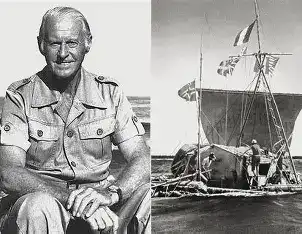
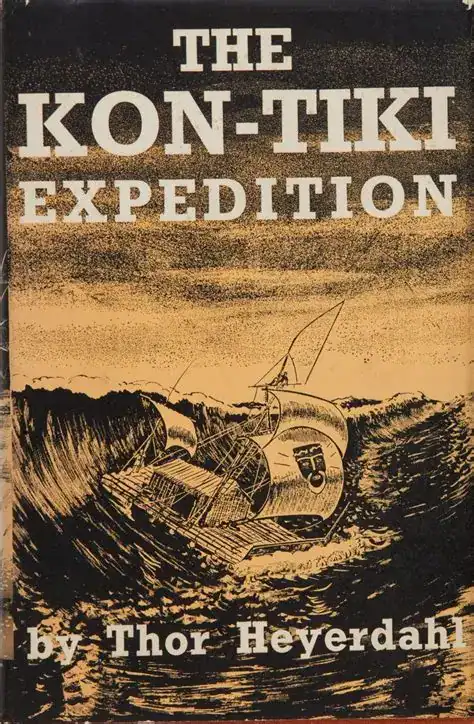 In 1947, Norwegian explorer Thor Heyerdahl launched one of the most daring expeditions of the 20th century: the Kon-Tiki voyage. Aboard a balsa wood raft, he sailed over 4,300 miles from Peru to Polynesia, determined to prove that ancient South American civilizations could have reached the islands of the Pacific long before European contact. His theory, dismissed by many academics at the time, was labeled diffusionist—an affront to the prevailing belief in isolated cultural development.
Decades later, Heyerdahl’s vision is being vindicated. A convergence of archaeological, genetic, and ethnographic evidence now suggests that prehistoric transoceanic contact between South America and Polynesia may not only be possible—it may have happened. At the heart of this emerging narrative lies Rapa Nui (Easter Island), a remote outpost whose cultural and genetic fingerprints hint at a deeper, more complex web of migration.
Tiki Bars vs. Kon Tiki Voyage
Note on Terminology: Kon-Tiki—with the dash—is the scholarly and historically accurate spelling, referring specifically to Thor Heyerdahl’s 1947 expedition and the raft itself. The variant Kon Tiki (without the dash) is more commonly associated with Tiki bar culture and pop exotica. This article adheres to the academic convention to honor the expedition’s legacy.
From Archaeology Magazine, July 15, 2025,
Easter Island was not isolated: new study reveals Rapa Nui’s role in Polynesian culture
 This history is being rewritten by new Uppsala University research published in Antiquity, with evidence that Rapa Nui was not a passive recipient of cultural traditions, but an active participant in the molding of ritual architecture in East Polynesia.
Led by Professors Paul Wallin and Helene Martinsson-Wallin, Swedish researchers analyzed archaeological data and radiocarbon dates from ritual sites, settlements, and monumental structures throughout Polynesia. Their findings challenge the belief that cultural development followed a simple west-to-east trajectory from Tonga and Samoa to the outermost reaches of Polynesia, including Hawaiʻi, New Zealand, and Rapa Nui.
Additional,
This study stands in stark contrast to the general presumption that Rapa Nui developed in isolation after a single wave of settlement. Instead, there are signs of multiple settlements and ongoing cultural exchange through seafaring networks. The researchers note that the Polynesians were skilled sailors.
🧬 DNA, Canoes, and Oral Memory
Recent genetic studies have revealed traces of Native South American ancestry in Polynesian populations, particularly on Rapa Nui. These findings, paired with advances in maritime archaeology, suggest that ancient seafarers possessed the technological prowess to navigate vast oceanic distances. Polynesian double-hulled canoes and South American reed vessels were not just symbolic—they were functional, formidable, and capable of crossing the Pacific.
Oral traditions, often dismissed as myth, are now being re-evaluated as historical archives. Stories of long-distance voyages, ancestral arrivals from distant lands, and cultural exchanges echo across both Polynesian and Andean narratives. These tales, once relegated to folklore, are being reinterpreted as mnemonic vessels of prehistoric truth.
🗿 Rapa Nui: The Waypoint of Legends
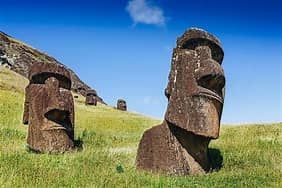 Easter Island stands as a sentinel in this unfolding saga. Its monumental moai statues, complex rongorongo script, and unique genetic makeup position it as a key waypoint in ancient transoceanic migration. The island’s archaeological record reveals sudden shifts in material culture—pottery styles, agricultural techniques, and even linguistic traces—that suggest external influence.
Heyerdahl believed Rapa Nui was a cultural crossroads, a place where South American and Polynesian worlds collided. Today, researchers are beginning to see the island not as an anomaly, but as a nexus—a mythic node in a vast prehistoric network.
🧝 Nordic Echoes and Mythic Migrations
 The documentary also ventures into more speculative terrain, touching on the controversial subjects of Atlantis and the Yamnaya migrations. While Atlantis remains a metaphorical cipher, the Yamnaya culture—known for its westward expansion and replacement of hunter-gatherer populations—offers a compelling parallel. Just as the Yamnaya reshaped the genetic and cultural landscape of Europe, could similar migratory waves have shaped the Pacific?
Nordic legends, Viking folklore, and Scandinavian maritime traditions also find their way into the narrative. Heyerdahl, a Norwegian, was deeply influenced by tales of Odin, sea kings, and ancient voyages. These mythic motifs infuse the documentary with a sense of ancestral continuity, linking the icy fjords of Scandinavia to the sun-drenched shores of Polynesia.
🎥 A Cinematic Deep Dive into Alternative Archaeology
This documentary is more than a historical recounting—it’s a cinematic excavation of forgotten truths. Featuring archival footage, expert commentary, and newly uncovered data, it challenges long-held academic assumptions and invites viewers to reconsider the boundaries of ancient exploration.
Whether you’re drawn to the thrill of discovery, the allure of ancient history, or the provocative realm of alternative archaeology, this journey offers a fresh lens on Heyerdahl’s legacy. It’s a story of courage, controversy, and vindication—a testament to the power of myth, memory, and the enduring human desire to cross horizons.