Are Asians and Melanesians Denisovan Hybrids?
Ever wondered if your DNA holds traces of our ancient Denisovan ancestors? This quirky, fast-paced breakdown explores how certain populations—like Asians and Melanesians—carry Denisovan genes, unlocking traits you might not even realize are inherited! From extra molars (yes, really!) to superhuman breath-holding abilities and high-altitude adaptations, we highlight the fascinating genetic perks that come with Denisovan heritage.
This video has an upbeat vibe which makes ancient DNA an exciting topic for all. Whether you’re curious about your genetic origins or just want to know if you can survive longer underwater, buckle up—this is evolutionary science like you’ve never seen before!
🧠 Who Were the Denisovans?
 The Denisovans were a mysterious group of archaic humans who lived in parts of Asia during the Middle and Late Pleistocene. First identified in 2010 from DNA extracted from a finger bone found in Denisova Cave in Siberia, they were a sister group to the Neanderthals. Unlike Neanderthals, Denisovans left behind few physical remains—but their genetic legacy is surprisingly widespread.
From Nature, May 2025,
Who were the ancient Denisovans? Fossils reveal secrets about the mysterious humans
 It was the finger seen around the world.
In 2008, archaeologists working in Denisova Cave in southern Siberia, Russia, uncovered a tiny bone: the tip of the little finger of an ancient human that lived there tens of thousands of years ago.
The fragment didn’t seem remarkable, but it was well preserved, giving researchers hope that it harboured intact DNA. A team of geneticists led by Johannes Krause at the Max Planck Institute for Evolutionary Anthropology in Leipzig, Germany, removed 30 milligrams of bone and managed to extract enough intact DNA to analyse it. They were able to sequence the entire mitochondrial genome — and were shocked by what they found. The DNA did not match that of modern humans, or of Neanderthals, the other likely candidate1. It was a new population, which they dubbed the Denisovans, after the cave.
Additionally,
Now, 15 years after the first report on this hominin, a handful of fossils have been identified as Denisovan, with varying degrees of certainty. Some are from the lofty heights of the Tibetan plateau; one was hidden in a well for decades; another was dredged from the bottom of the sea. They reveal a diverse, adaptable population that lived in frigid Siberia, at high altitudes and in the tropics — and researchers are scouring Asia for more evidence of them. What they have found so far could force a rethink of the origin of our species.
🌏 Where Is Denisovan DNA Found Today?
 Modern genetic studies reveal that Denisovan DNA is most prevalent in populations from Southeast Asia and Oceania. Indigenous groups in Papua New Guinea, Bougainville, and the Philippines carry between 4–6% Denisovan ancestry. In fact, the Ayta Magbukon people of the Philippines hold the highest known levels of Denisovan DNA—around 5%, which is 30–40% more than even Papua New Guinea highlanders.
This suggests that Denisovans weren’t confined to Siberia. They likely spread across Asia, interbreeding with Homo sapiens in multiple waves. Some researchers even propose that different Denisovan populations reached various Southeast Asian islands independently, long before modern humans arrived.
🦷 What Traits Might You Inherit?
Denisovan DNA isn’t just a historical curiosity—it may influence your physiology today. Here are a few traits linked to Denisovan ancestry:
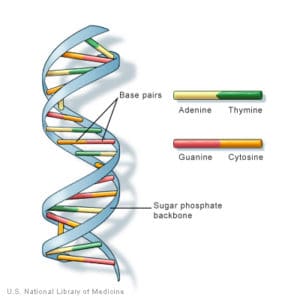 Extra molars: Some Denisovan fossils show unusually large teeth, and certain populations today exhibit similar dental traits.
- High-altitude adaptation: Tibetans carry a Denisovan-derived gene variant (EPAS1) that helps them thrive in low-oxygen environments.
- Breath-holding ability: Populations like the Bajau “sea nomads” of Southeast Asia, known for their deep diving skills, may benefit from Denisovan-influenced traits that enhance oxygen storage and circulation.
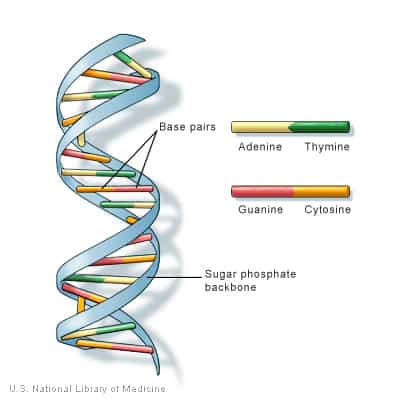
🧪 Can You Test for Denisovan DNA?
Note – the full term is quite the tongue twister – deoxyribonucleic acid.
Yes! Commercial DNA testing services like 23andMe and AncestryDNA can reveal traces of archaic ancestry, including Denisovan and Neanderthal DNA. While the percentage may be small, it’s a fascinating glimpse into your evolutionary past.
If you’re of Southeast Asian, Melanesian, or Indigenous Australian descent, your chances of carrying Denisovan DNA are significantly higher. Indeed, there is even one isolated tribe in the Luzon Province of the Philippines with an astonishing 8% Denisovan DNA. But even if you’re not Asian or Melanesian, a few Denisovan genes may still be hiding in your genome—waiting to be discovered. There is some evidence that Western Europeans have small traces of Denisovan.
Be sure to check out our related video on the Pacific Ocean travels of Kon tiki. Did Denisovan DNA make it all the way to South America via Rapa Nui?