
Humanzee suspect with strikingly Chimpanzee like features
In early March, 2026, the West Midlands Police Department issued a public advisory: Have you seen this man. He was wanted for a machete gang fight. A photo was released and showed an African man with strikingly Chimpanzee-like facial features.
The release from the West Midlands Police was circulated all over social media, most prominently by the account Yookay Aesthetics on Twitter. But Carl Benjamin aka Sargon of Akaad also featured the photo on one of his YouTube segments.
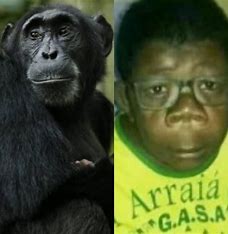 Many social media users speculated the suspect was an example of a Humanzee, in cryptozoology these creatures are known as Human-Chimp hybrids. Is it possible? Unlikely, since Chimps have 48 chromosomes and humans 46. Still, there have been numerous examples of so-called Humanzees over the past few decades that are inexplicable. One of the most famous was the Chimpanzee Oliver who had strikingly human facial features and walked upright. Another more recent example is Augusto Dembo of Angola.
Augusto Dembo’s case has been covered in African media outlets. Some suggested that his mother was a park ranger and had a sexual affair with a Chimpanzee. Dembo even drew the attention of the President of Angola who called the boy, a natural wonder.
A more scienced based explanation could be used for the Humanzees.
Convergent Evolution
 Modern human populations show an extraordinary range of facial shapes, bone structures, and soft‑tissue variation — far more than most people realize. These differences arise from a combination of inherited ancestry, developmental biology, and the environments in which our ancestors lived. When certain traits cluster together, especially traits involving the brow, jaw, or mid‑face, they can create a superficial resemblance to other primates. But these similarities are only skin‑deep: they reflect the flexibility of Homo sapiens, not any form of hybridization.
Central Africa, the most diverse human populations in the world
The suspect from West Midlands is likely a new immigration arrival from Central Africa.
One of the most important scientific facts often overlooked in public discussions is that Central Africa — including the Congo Basin — contains the highest human genetic diversity on Earth. This region represents the deepest and most ancient branches of our species’ family tree. With such deep population history comes a wider range of possible facial morphologies, bone proportions, and soft‑tissue patterns. In other words, features that may look “unusual” to outsiders are often just expressions of the oldest and richest gene pool in our species.
Paper, released March 26, 2026,
Critical Interconnections Between Cultural and Biological Diversity in the Congo Basin
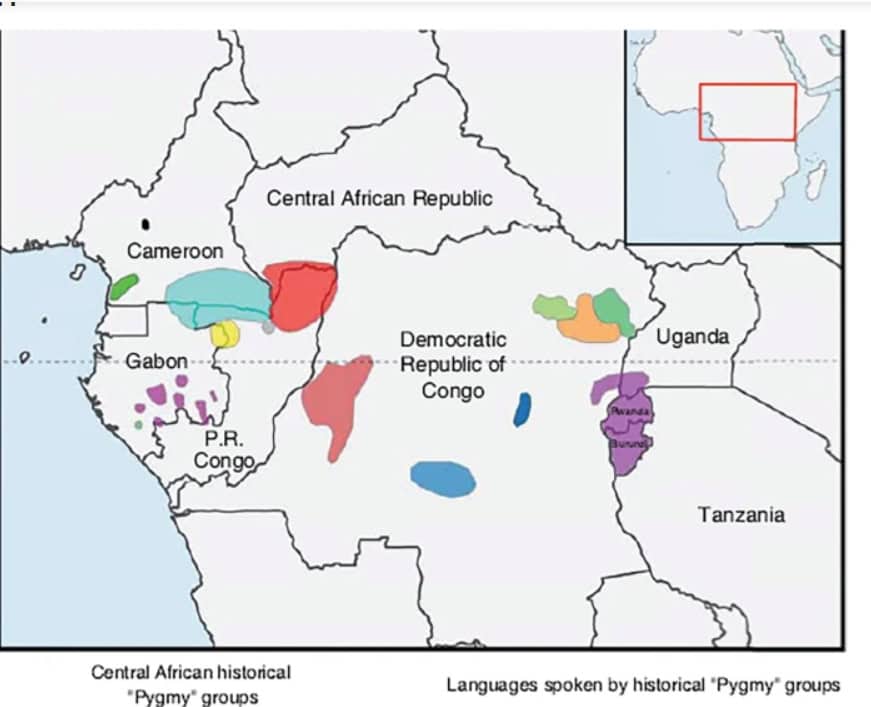 The peoples of the Congo Basin can be broadly grouped into hunter-gatherer groups of “Pygmy” ancestry, farmers of Bantu origin, and pastoralists of Nilotic origin. Worldviews and human-nature relationships differ considerably between and within these three groups, with hunter-gatherers’ worldviews being more egalitarian and emphasizing unconditional sharing, which the other groups do not do.
The languages spoken in the Congo Basin, which are over 400, convey detailed vocabulary and traditional ecological knowledge (TEK) systems, intricately linked to different habitats, biodiversity, and their uses and management. In many parts of the Congo Basin, though, changing social aspirations and traditions have meant that younger generations acquire less traditional ecological knowledge than older generations possessed. Traditional farming, fishing, hunting, and gathering practices are changing, driven by increased market demand for some products and globalization.
When these naturally occurring traits combine with lighting, camera angle, expression, or low‑resolution imagery, they can produce faces that strike viewers as “anomalous” or “non‑human.” But the scientific explanation is far simpler and far more grounded: normal human variation shaped by deep ancestry and, in some cases, convergent evolutionary pressures. No hybridization is required. No cryptic lineage is needed. Just the remarkable range of forms that Homo sapiens has always carried within itself.