Josephine Salmons has been sidelined and forgotten about by mainstream Science
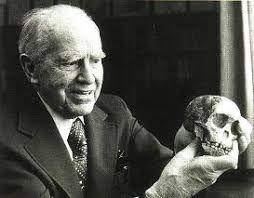
Raymond Dart holding the Taung Child
Josephine Salmons was the first person to recognize a fossilized primate skull in South Africa as potentially significant. She wasn’t just a footnote—she was the spark. Without her, Raymond Dart might never have laid eyes on the Taung child. Yet today, in the new South Africa, Salmons is virtually invisible. Why? Because she was white. And because paleoanthropology, despite being rooted in African soil, is still gatekept by a global establishment that thrives on selective memory.
🔍 The Irony of Erasure
Let’s get this straight:
- Paleoanthropology is based in Africa.
- The most important fossils—Australopithecus, Paranthropus, Homo naledi—were found in African caves, riverbeds, and limestone quarries.
- Yet the field remains overwhelmingly white, Western, and institutionally elitist.
Lauren Schroeder, a Black South African paleoanthropologist, put it bluntly in a 2024 interview:
Lauren Schroeder
“Even though most of it is based in Africa, paleoanthropology is so white,” she said. “As a Black African woman, it was such a lonely place, actually, for a long time.”

Lauren Schroeder, a Black South African paleoanthropologist, put it bluntly in a 2024 interview:
“Even though most of it is based in Africa, paleoanthropology is so white,” she said. “As a Black African woman, it was such a lonely place, actually, for a long time.”
She also reported that:
“Less than 5 percent of papers published in the Journal of Human Evolution from 2016 to 2021 were authored by African researchers.”
So yes, the field is whitewashed. But here’s the kicker: it’s also selectively whitewashed. The establishment doesn’t just ignore African voices—it also erases inconvenient white ones. Especially women. Especially outsiders. Especially those who dared to challenge the orthodoxy.
👩🔬 Josephine Salmons: The Woman Who Saw What Others Ignored

Josephine Salmons (Adobe facsimile)
Salmons was a student at the University of the Witwatersrand when she spotted a fossilized skull in a box at a friend’s house. She brought it to Dart, who recognized it as a juvenile hominin—what we now call the Taung child. It was the first evidence of early human ancestors in Africa.
Did she get credit? Barely. Did she get a statue? Nope. Did she get a Wikipedia page? Only recently, and it’s skeletal at best.
In the new South Africa, Salmons is a ghost. Her whiteness makes her politically inconvenient. Her gender makes her academically disposable. And her role in the birth of African paleoanthropology? That’s been quietly buried under layers of institutional amnesia.
🚕 Dart, the Taung Skull, and the Taxi Backseat
Raymond Dart himself wasn’t exactly embraced by the establishment either. When he tried to present the Taung child as evidence of human origins in Africa, he was met with ridicule. The British elite preferred their fossils to be European, thank you very much.
Legend has it Dart carried the Taung skull around London in the back seat of a taxi, trying to convince anyone who would listen. Nobody did. Because it was African. Because it didn’t fit the narrative. Because Dart wasn’t part of the club.
Raymond Dart wasn’t just a professor—he was a provocateur. At the University of the Witwatersrand, he famously challenged his students to bring him fossil specimens from the South African landscape, offering a $100 prize (a small fortune at the time) for anything of scientific interest. It was part academic incentive, part treasure hunt, and it set the tone for a generation of fieldwork driven by curiosity and rebellion. Josephine Salmons took that challenge seriously—and her discovery of the Taung skull wasn’t just a lucky find, it was a direct response to Dart’s mythic dare. She didn’t just bring him a fossil—she brought him the key to rewriting human origins.
🧠 Mythic Tension and Institutional Blindness
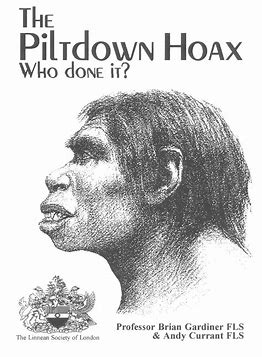
Piltdown Man hoax
This isn’t just about race. It’s about mythic tension. The gatekeepers of paleoanthropology have always preferred tidy narratives:
- Human origins in Europe or Asia.
- Discoveries made by credentialed men in tweed.
- Fossils interpreted through the lens of colonial prestige.
Salmons and Dart disrupted that. They were punk rock before punk rock existed. And today, their legacy is being rewritten—or worse, ignored—by a system that claims to be decolonizing while still clinging to its own academic hierarchies.
🔥 Why This Matters Now
We’re in a moment of reckoning. African researchers like Schroeder are demanding space, visibility, and credit. That’s vital. But let’s not replace one erasure with another. Salmons deserves to be remembered—not as a white woman in a post-apartheid landscape, but as a pioneer who saw what others missed.
Her story is a reminder that paleoanthropology isn’t just about bones. It’s about who gets to tell the story. And who gets left out.
Now that you’ve seen how Salmons was erased from the fossil record, watch how we reclaim her mythic legacy in this cinematic drop.