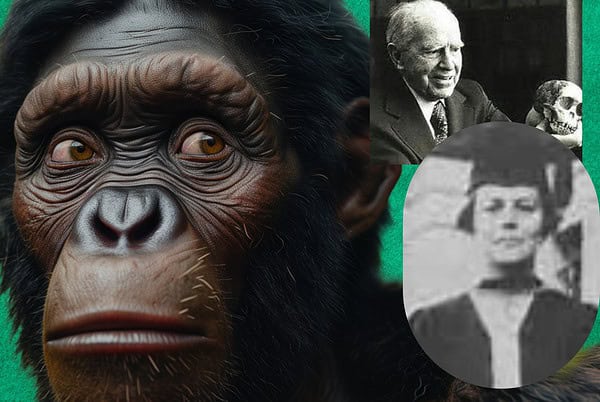
Miocene Apes of Europe getting more support as Stem species for Humans
 For over a century, the “Out of Africa” theory has dominated paleoanthropology, positing that early hominins—our direct ancestors—emerged exclusively from the African continent. But a growing body of fossil and genetic evidence is now challenging that orthodoxy, pointing instead to a provocative alternative: a European origin centered on the Eastern Mediterranean corridor.
A possible scenario is starting to come into focus: Graecopithecus to early Homo erectus to a Neanderthal-Denisovan-Homo sapien split leading to Cro-Magnon in Europe.
Recent discoveries in Greece, Bulgaria, Turkey, added to evidence of stone tools discovered in the 1960s in the Siwalik Hills of Pakistan are reshaping the evolutionary map. Fossil apes like Graecopithecus, Ouranopithecus, and Anadoluvius are no longer fringe curiosities—they’re becoming central characters in a new origin story.
A Mediterranean Mystery
 In 2017, researchers from the University of Toronto published findings that shook the foundations of human evolutionary theory. “Our discovery outlines a new scenario for the beginning of human history,” said Professor David Begun. “The findings allow us to move the human-chimpanzee split into the Mediterranean area.” This wasn’t just a geographic tweak—it was a direct challenge to one of the most dogmatic assertions in paleoanthropology “since Darwin: that the human lineage originated in Africa” Begun went on to assert.
Two controversial studies published in PLOS ONE that same year suggested that the last common ancestor of great apes and humans may have lived in southern Europe, not Africa. The fossil roots of Graecopithecus—partially fused and convergent—mirror traits found in early hominins like Ardipithecus and Orrorin, hinting at a deeper evolutionary connection.
Morphology Meets Migration
Ashley Hammond, a paleoanthropologist interviewed by the Smithsonian, added nuance to the debate. “We’re still unsure what type of ape hominins evolved from,” she admitted. But she emphasized that fossil apes from the late Miocene in Europe appear more generalized and flexible than their African counterparts. “It would have been easier for them to stand up and posture bipedally than it is for chimpanzees,” she noted.
This flexibility in body plan—less derived, more primitive—suggests that European apes may have been better suited for upright locomotion, a key trait in hominin evolution.
The Siwalik Corridor and Asian Echoes
 In 2023, the discovery of Anadoluvius in Anatolia, dated to 8.7 million years ago, added another layer to the puzzle. This fossil ape is now considered a potential candidate for the last common ancestor of African apes and humans. Its morphology and ecology closely resemble known hominins, further challenging the assumption of an exclusively African origin.
Professor Begun elaborated on this shift in a 2019 study of the Rudapithecus pelvis, co-authored with Hammond. He later appeared on the YouTube series Evolution Soup, arguing that the ancestors of humans and African apes may have diverged from orangutans in Eurasia, proliferating in Europe long before appearing in Africa.
“We don’t find the ape line in Africa at all until a much later time,” Begun stated. Indeed, there’s a conspicuous fossil gap in Africa between 10 million and 6.2 million years ago—while Europe and Asia yield a rich tapestry of hominid remains.
A Shifting Map
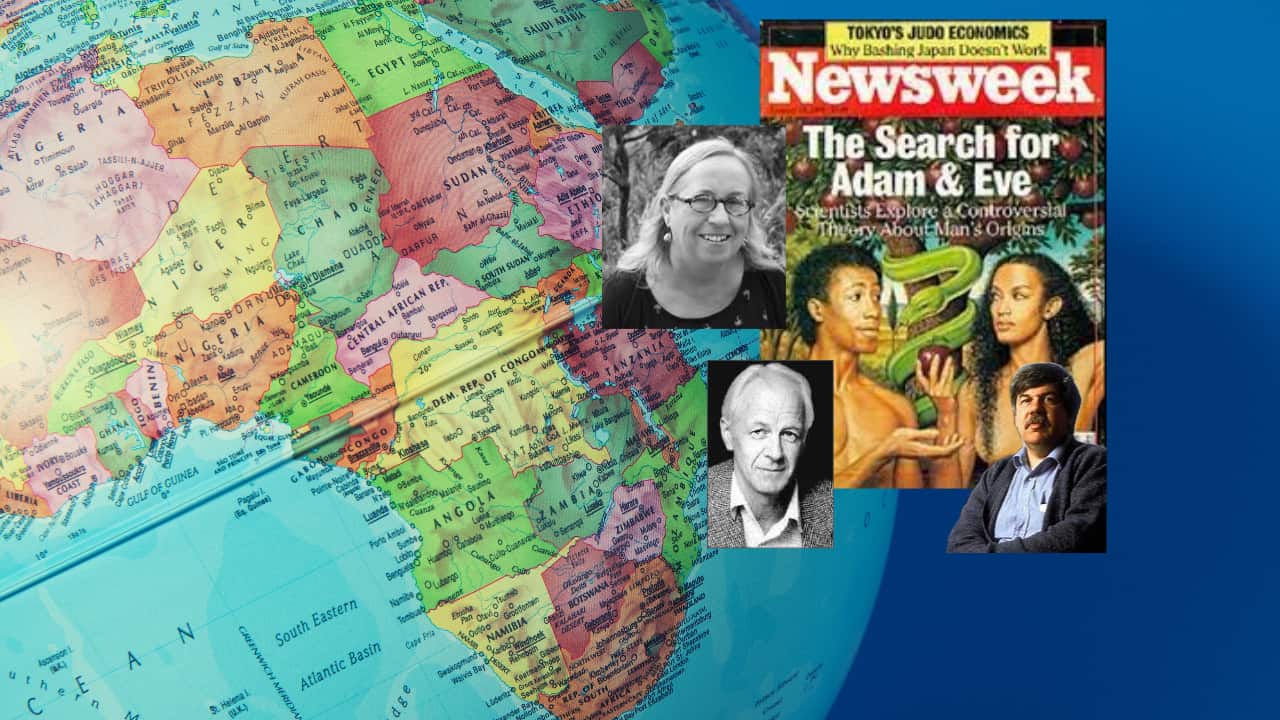 This isn’t just academic speculation. The Yunxian skull from East Asia, along with mounting fossil evidence from the Mediterranean basin, suggests that the evolutionary trail may have twisted through Spain, Hungary, Greece, and the forests of Germany before reaching Africa.
Even Lewis Leakey, the father of African paleoanthropology, once wrote in 1943: “In Proconsul, we have a near approach to a form of ape-like creature from which the human stem eventually evolved.” But 80 years later, that stem may have deeper roots than anyone imagined.
Conclusion: Out of Africa—or Out of Eurasia?
As Chinese anthropologists propose East Asian origins and European fossils continue to surprise, the evolutionary map is shifting. Professors Begun and Hammond—once aligned with the African consensus—now imply that the evidence increasingly supports a Eurasian origin.
This episode reframes human origins not as a settled debate, but as a dynamic, unfolding story. With dramatic visuals, expert quotes, and a narrative arc that challenges orthodoxy, we invite viewers to rethink where humanity truly began.
Stay tuned—there’s much more to come