Trachilos footprints change the story of human evolution, challenging African origins and expanding into Eurasia
The Shoreline That Shouldn’t Exist
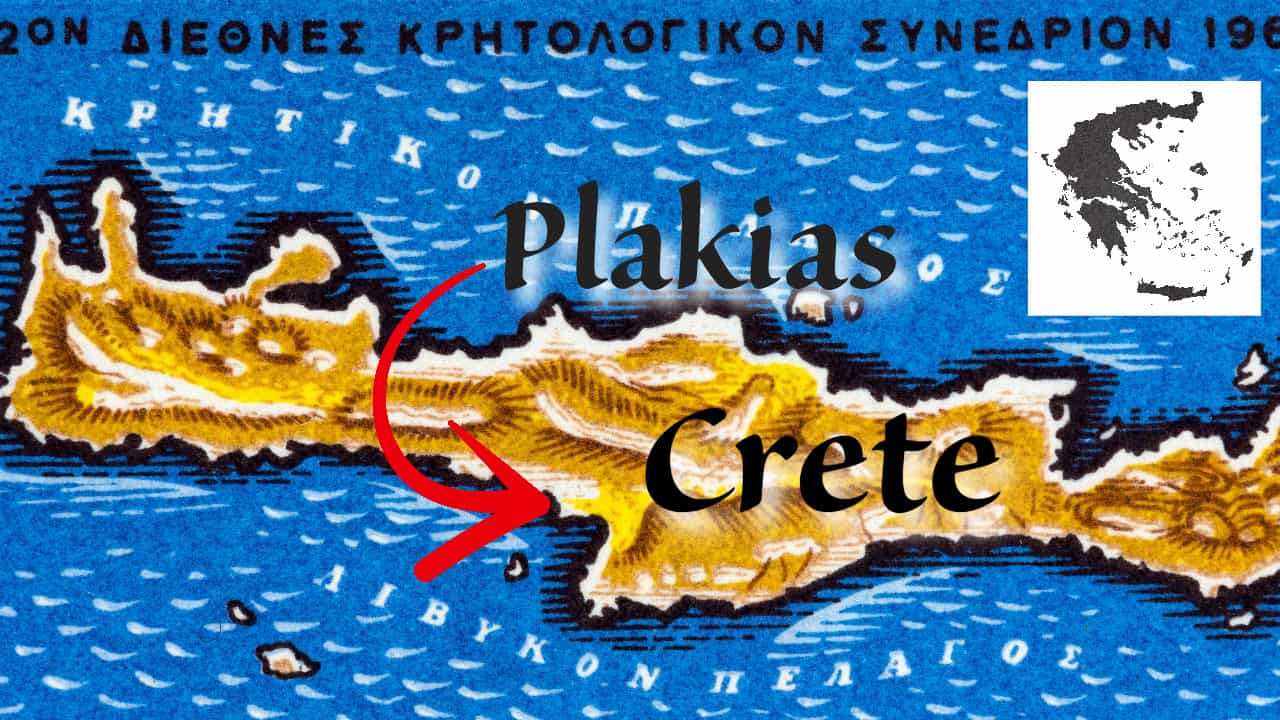 In 2017, a team of researchers announced something unexpected on the island of Crete — pronounced with a hard k, Trá‑ki‑los. Pressed into Miocene shoreline rock on an isolated Mediterranean beach was a set of fossil footprints: humanlike, upright, unmistakably bipedal. Their presence challenged a simple story — that early hominins evolved only in Africa and only much later walked beyond it.
The discovery of the Trachilos footprints has reshaped our understanding of early human movement across continents.
The prints were older than Orrorin, older than Ardipithecus, older than anything that should have been walking upright in the Mediterranean. And from the moment they were published, the reaction was not curiosity. It was resistance.
The Paleontologist Who Stumbled Into History
 Gerard Gierliński, a Warsaw‑born paleontologist trained in Chicago, had spent decades studying fossilized footprints — dinosaurs, early mammals, vertebrate ichnology of every kind. His work on theropod courtship displays had already drawn international attention, and he served as a consultant for dinosaur museums worldwide.
His studies of the Trachilos footprints have opened new avenues in paleoanthropology.
In 2002, he traveled to Crete for what was meant to be a romantic getaway. One morning, while walking along a quiet beach, he paused to take in the scenery. A few steps toward the rocky shoreline, his foot caught on a slab of sandstone. He looked down.
Footprints. Humanlike. Ancient.
“I always carry a hammer, a camera, and a GPS,” he later said. “Even on vacation.”
Eight years later, formal excavations began. Gierliński brought in Swedish paleontologist Per Ahlberg, along with Matthew Bennett, Grzegorz Niedźwiedzki, and U. Kirscher — a team that would spend years analyzing the site.
The Trachilos footprints provided evidence that challenges the accepted timeline of human evolution.
The First Trachilos Paper
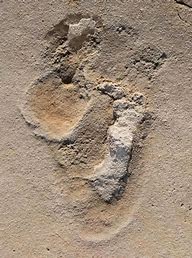 By 2017, after multiple rejections from major journals, the team published their findings in the Proceedings of the Geologists’ Association. The stratigraphic layers pointed to an astonishing date: roughly 5.7 million years old, close to the onset of the Messinian Salinity Crisis.
The age of the Trachilos footprints is crucial for understanding the migration patterns of early hominins.
Morphometric analysis showed the prints were distinct from non‑hominid primates and resembled those of hominins — plantigrade, five‑toed, lacking claws, and made by a bipedal trackmaker.
The reaction was immediate.
“What makes this controversial is the age and location,” Ahlberg noted. The African fossil record did not welcome a Mediterranean intruder.
Some researchers dismissed the prints as erosional features or tracks from an unknown primate. Others argued the interpretation was incompatible with the established timeline anchored by Sahelanthropus, Orrorin, and the iconic Laetoli footprints.
But the prints remained — quiet, stubborn, and carved into stone.
A Timeline Pushed Back
This updated knowledge about the Trachilos footprints has significant implications for human evolutionary biology.
A second paper in 2021 refined the dating to approximately 6 million years. The authors opened with a line that landed like a direct challenge to the field:
“We present an updated timeframe for the late Miocene Trachilos section that contains the potentially oldest hominin footprints.”
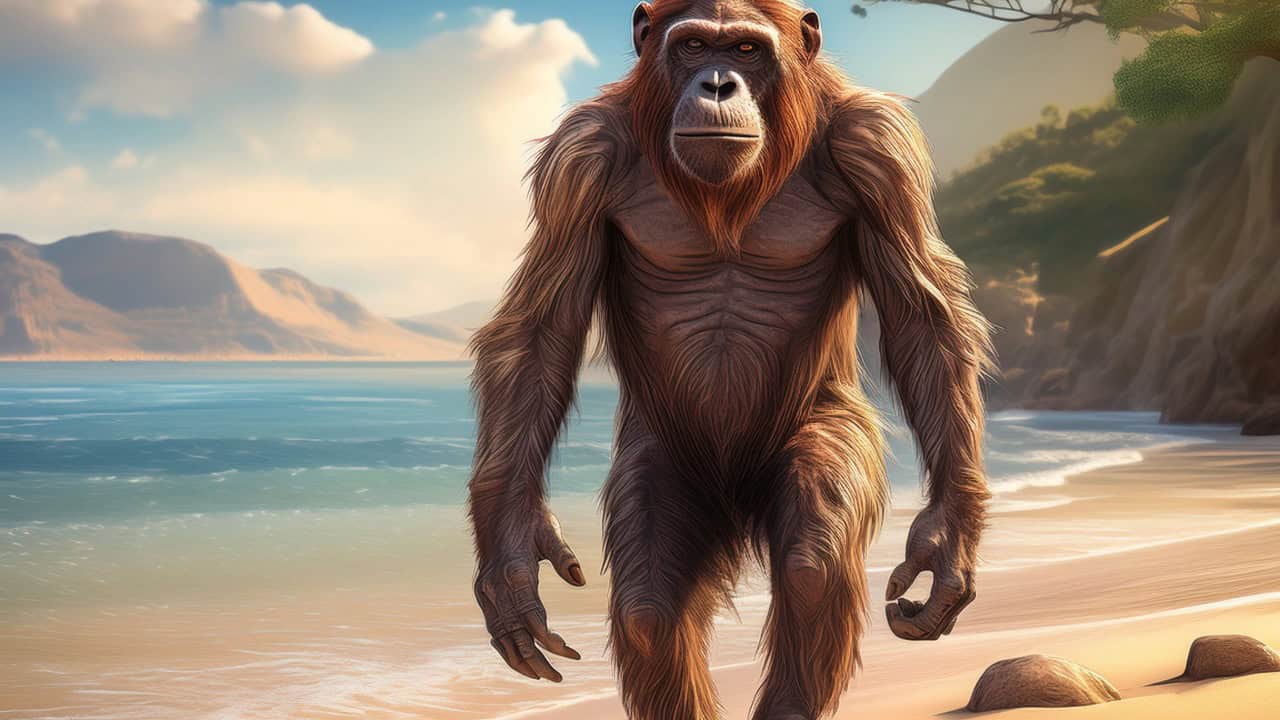 They also noted something else: Graecopithecus — the enigmatic 7.2‑million‑year‑old primate from Greece and Bulgaria — had been reinterpreted as a possible hominin. But in 2017, no postcranial bones existed to compare with the Trachilos prints.
The relationship between Graecopithecus and the Trachilos footprints enhances our comprehension of human ancestry.
That missing piece would not remain missing forever.
V. Graecopithecus and the Return of a Lost Bone
Graecopithecus was known only from teeth and jaws — a mandible unearthed by German soldiers in 1944 near Athens, and a single upper premolar found in Bulgaria. For decades, the species lingered in obscurity.
Then, in March 2026, a paper led by Madelaine Böhme and Nikolai Spassov announced the discovery of a 7.2‑million‑year‑old femur from Azmaka, Bulgaria — the first known postcranial element tentatively attributed to Graecopithecus.
Major media described it as a find that “may reshape the human story.” Science communicators echoed the sentiment. If confirmed, the femur suggests early terrestrial bipedalism in the Balkans — and a lineage more similar to us than to gorillas or chimpanzees.
A femur in Bulgaria. Footprints in Crete. Two clues separated by time yet pointing toward the same horizon.
The Mediterranean Puzzle
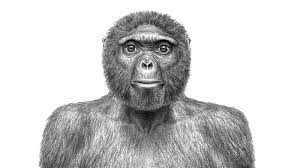 During the late Miocene, the Mediterranean was not the sea we know today. Coastlines shifted. Basins dried. Land bridges emerged. Apes dispersed across southern Europe in landscapes shaped by aridity, retreating forests, and extinction.
Deep time rarely obeys our tidy narratives.
The Trachilos footprints and the Azmaka femur do not necessarily overthrow Africa. They complicate it. They widen the frame. They remind us that human origins may not be a single‑continent story, but a braided one — stretching across the Mediterranean, shaped by forces older and stranger than we imagined.
The implications of the Trachilos footprints extend beyond mere curiosity; they redefine our narrative of human origins.
New Phase Emerges
What began as a regional mystery now spans continents and epochs. As new analyses emerge and long‑buried fossils return to the light, the Mediterranean becomes more than a backdrop. It becomes a stage — a place where early chapters of our lineage may have unfolded, waiting for us to notice.
As we explore the significance of the Trachilos footprints, we uncover the complex story of our evolutionary past.