Python Rock was early in Spirituality, but was it the First?
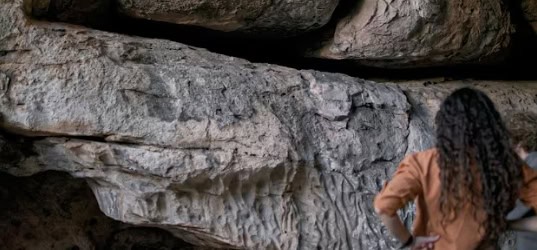 Humanity has always searched for the moment when the sacred first entered our world. Was there a single spark — a ritual, a symbol, a burial — that marked the birth of spirituality? Or did the sacred mind emerge gradually, across continents, cultures, and species? The First Sacred Ones explores this profound question by returning to one of the most controversial archaeological claims of the 21st century: the alleged 70,000‑year‑old ritual site known as Python Rock in Botswana’s Tsodilo Hills.
For nearly two decades, Python Rock has been cited as evidence that early African‑branch Homo sapiens developed symbolic ritual behavior far earlier than previously believed. The claim originates from archaeologist Sheila Coulson, who in 2006 announced that a six‑meter quartzite ridge inside Botswana’s Rhino Cave had been intentionally shaped to resemble a python — a creature deeply embedded in San cosmology. Coulson argued that the rock’s carved depressions, its serpentine form, and the presence of stone tools suggested ritual gatherings dating back roughly 60,000–70,000 years. Her announcement made global headlines, with outlets like the BBC and Reuters describing the site as possibly the world’s oldest known ritual.
Botswana, a Paradise on Earth, but 1st in Ritualism?
 The Tsodilo Hills themselves are a UNESCO World Heritage Site, revered for their extraordinary density of rock art — over 4,500 paintings — and for their long record of human occupation stretching back many millennia. Local peoples have long considered the hills sacred, referring to them as the “Mountains of the Gods.” The site includes multiple rock shelters, depressions, and caves, each with its own archaeological signature. Python Rock sits within this broader sacred landscape, adding to its aura and interpretive complexity.
Yet the Python Rock claim has never been universally accepted. Subsequent archaeological reviews have challenged nearly every component of the original interpretation. Critics argue that the “python” shape is a natural geological formation — a quartzite ridge whose serpentine appearance is a case of pareidolia rather than intentional carving.
Tool‑mark analysis suggests that many of the cupules and depressions are far younger than the proposed Middle Stone Age date, with some showing chalk‑white freshness inconsistent with deep antiquity. Other researchers note that San snake myths are historically documented but cannot be projected backward tens of thousands of years without evidence. These critiques have led many archaeologists to view Python Rock not as a ritual site from 70,000 years ago, but as a palimpsest of much later activity layered onto a naturally evocative rock formation.
Ella Al-Shamahi on the BBC
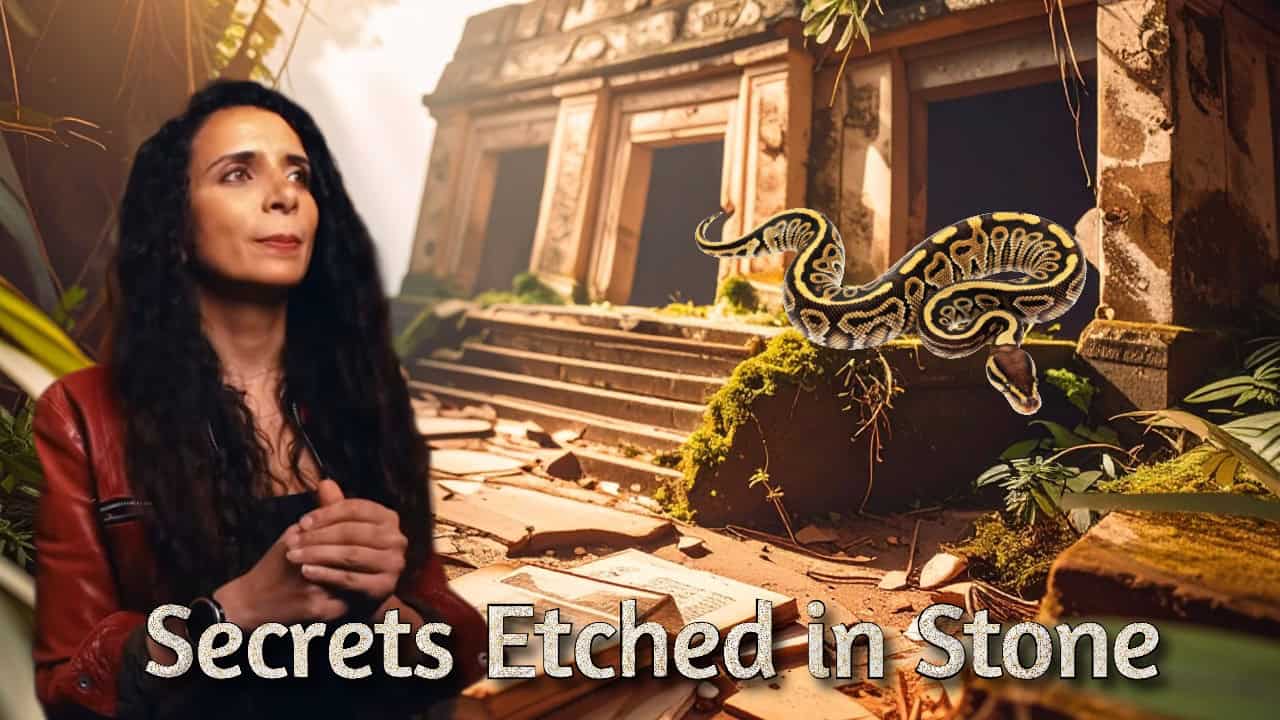 This tension — between the desire for a deep African origin of ritual and the caution demanded by archaeological method — forms the backdrop of The First Sacred Ones. The documentary situates Python Rock within a global debate about the emergence of symbolic behavior. For decades, the dominant narrative placed the birth of ritual squarely within Africa, tied to anatomically modern humans and their cognitive revolution. Python Rock became a centerpiece of that story, a dramatic anchor for the idea that spirituality began in southern Africa long before similar behaviors appeared elsewhere.
The controversy was covered recently by the BBC series – Human.
But discoveries across Europe and the Levant complicate this tidy storyline. Sites such as Qafzeh and Tinshemet in Israel reveal early burials with symbolic elements dating back over 90,000 years. Meanwhile, Neanderthal sites like La Ferrassie, La Chapelle‑aux‑Saints, and Regourdou present evidence — still debated — of intentional burial, grave preparation, and possible ritual treatment of the dead. These findings challenge the assumption that symbolic behavior was exclusive to Homo sapiens, suggesting instead that multiple hominin groups may have independently developed sacred practices.
The First Sacred Ones follows this unfolding debate with cinematic storytelling and grounded archaeological detail. The film moves from the sun‑baked cliffs of Tsodilo Hills to the limestone caves of France, tracing the earliest signs of ritual behavior across continents and species. It examines how scientific consensus forms, how it resists change, and how new discoveries can overturn long‑held assumptions about who we are and where our sacred impulses began.
Blending mythic tone, humor, and rigorous scholarship, the documentary invites viewers to reconsider the origins of the sacred mind. Were modern humans truly the first to create ritual — or have we underestimated our Neanderthal cousins? And if spirituality emerged in multiple places, among multiple human species, what does that say about the nature of consciousness itself?
In the end, Python Rock remains both a cautionary tale and a symbol of our longing to find the first spark of the sacred. Whether a 70,000‑year‑old ritual site or a misinterpreted geological formation, it continues to inspire debate, curiosity, and wonder — exactly the qualities that drive our search for human origins.