Great Zimbabwe Ruins parallels with Goblecki Tepe, two of the greatest of archaeological mysteries
 Göbekli Tepe, the enigmatic archaeological site in southeastern Turkey, has shattered long-held assumptions about the origins of civilization. Dating back over 11,000 years, it predates Stonehenge and the Egyptian pyramids, yet its megalithic architecture and symbolic carvings suggest a level of sophistication once thought impossible for hunter-gatherer societies. As archaeologists continue to decode its secrets, Göbekli Tepe has become a symbol of humanity’s forgotten past—a reminder that early civilizations may have been far more advanced than we imagined.
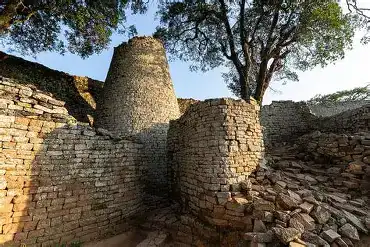
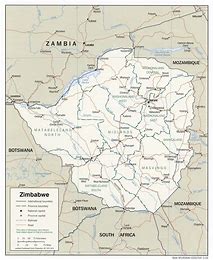
In parallel, Great Zimbabwe, nestled in the southeastern hills of Zimbabwe, stands as Africa’s most iconic stone ruin. Built between the 11th and 15th centuries, its massive granite walls—some reaching 36 feet high—have sparked intense debate over their origins. Was it the work of the Afro-Shona people, whose oral traditions and cultural continuity support indigenous authorship? Or could it have been influenced by Mediterranean or Phoenician seafarers, as early European explorers controversially claimed?
🧩 Göbekli Tepe: The First Temple?
Discovered in the 1990s by Klaus Schmidt, Göbekli Tepe has been dubbed the world’s first temple. Its T-shaped pillars, arranged in circular enclosures, are adorned with carvings of animals, abstract symbols, and humanoid figures. What makes Göbekli Tepe revolutionary is its age—built during a time when agriculture had barely taken root. This suggests that spiritual or ritualistic motivation may have preceded urban development, flipping the conventional narrative of civilization on its head.
The site challenges the linear progression model of history. Instead of small villages evolving into cities, Göbekli Tepe implies that ideological complexity—religion, myth, and social cohesion—may have catalyzed architectural ambition.
From NPR, August 2025,
An ancient archaeological site meets conspiracy theories — and Joe Rogan
 Some now interpret it as a ceremonial gathering site, while others suggest it functioned as a social hub where rituals helped bind together early communities.
The truth? Still mostly a mystery.
Scientists are regularly adjusting their hypotheses about the site’s intended purpose. And it’s not an easy investigation.
Conspiracy theories take root — with help from Joe Rogan
Graham Hancock, a British journalist and star of the controversial Netflix series Ancient Apocalypse, has theorized — without empirical evidence — that Gobekli Tepe was built by a “lost civilization” wiped out by an Ice Age cataclysm.
🏗️ Great Zimbabwe: Monument of Mystery
Great Zimbabwe’s grandeur is equally staggering. The Great Enclosure, with its conical tower and intricate stonework, reflects advanced engineering and symbolic design. Archaeological evidence supports the Shona people’s role in its construction, including pottery, iron tools, and trade artifacts linking the site to Swahili coastal cities and even China.
Yet, early European explorers like Carl Mauch and J. Theodore Bent refused to believe that sub-Saharan Africans could have built such a marvel. Their theories—ranging from Phoenician traders to Queen of Sheba myths—were steeped in colonial bias and have since been debunked. Today, Great Zimbabwe stands as a testament to African ingenuity, though its full story remains elusive.
🌍 Parallels Across Time and Space
 While Göbekli Tepe and Great Zimbabwe differ in age, geography, and cultural context, they share striking parallels:
- Architectural Ambition: Both sites defy the technological expectations of their eras.
- Symbolic Complexity: Carvings at Göbekli Tepe and the conical tower at Great Zimbabwe suggest deep ritual significance.
- Contested Narratives: Each has been subject to revisionist theories, often shaped by political or ideological agendas.
- Preservation Challenges: Climate, tourism, and limited funding threaten the integrity of both sites.
🧭 Conclusion: Rewriting the Human Story
Göbekli Tepe and Great Zimbabwe invite us to reconsider what we think we know about early human achievement. They remind us that civilization is not a straight line, but a tapestry woven from myth, migration, and mystery. As new evidence emerges—from DNA studies to satellite mapping—these sites may yet reveal deeper truths about our shared past.
Whether built by Afro-Shona artisans or inspired by ancient seafarers, Great Zimbabwe deserves recognition as a monument of African heritage. And Göbekli Tepe, with its silent stones and cosmic carvings, continues to whisper secrets from the dawn of time.