🔍 Discovering the link of Graecopithecus (or Anadoluvius) to Lucy
 For over a century, paleoanthropology has clung to a sacred origin myth: that humanity emerged solely from the African savannas, with Europe playing no meaningful role in our evolutionary story. But what if that narrative is incomplete—or worse, deliberately constrained?
This article explores the provocative possibility that Graecopithecus, a Miocene ape from Europe, may be part of a direct evolutionary line leading to Australopithecus and ultimately to Homo sapiens. The implications are staggering, not just for science, but for how we mythologize our own beginnings.
Anadoluvius, recently unearthed in Turkey, is throwing a wrench into the tidy narrative. Its morphology suggests a lineage that doesn’t neatly fit the old models. And then there are the Crete footprints, dated at 6.1 million years ago—a full half-million years later than anyone expected. These weren’t supposed to exist. But they do.
“What if there is continuity from the Miocene Apes in Europe to modern Europeans?”
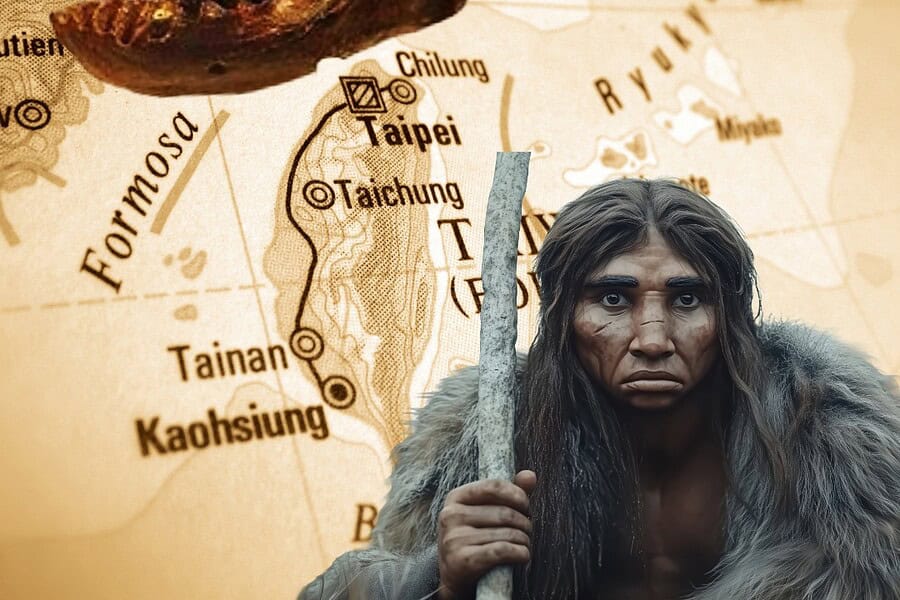
Meanwhile, in northern China, recent lithic finds are pushing Homo erectus back to 2.2 million years ago, shattering the previously parsimonious 1.9mya benchmark from Dmanisi. That leaves a tantalizing 3.9-to-4-million-year gap—a void waiting to be filled by a bold, individual-thinking archaeologist. Not a committee. Not a consensus. A rebel.
🧬 The Fossil Trail: Graecopithecus, Anadoluvius, and the European Echo
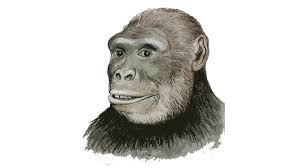
 The 2017 announcement of Graecopithecus freybergi from Greece and Bulgaria sent ripples through the paleoanthropological community. Dated to around 7.2 million years ago, this hominin candidate possessed dental traits that some researchers argue are more human-like than ape-like. It was a bold claim—and one that many dismissed as fringe.
But then came Anadoluvius turkae, discovered in central Turkey and dated to 8.7 million years ago. Its cranial and postcranial features suggest a creature adapted to terrestrial life, with potential affinities to early hominins. Suddenly, the idea of a European or Eurasian root wasn’t just speculative—it was fossilized.
These finds challenge the long-standing assumption that hominins evolved exclusively in Africa. They suggest a more complex, possibly bidirectional migration pattern between continents. And they raise a haunting question:
What if the earliest sparks of humanity ignited not in Africa, but in the shadowed forests of southern Europe?
🦶 Crete Footprints: The Heretical Evidence
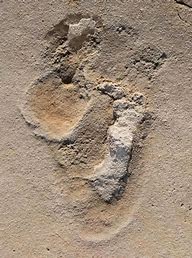 In 2017, researchers announced the discovery of fossilized footprints on the island of Crete, dated to 6.1 million years ago. The prints bear striking resemblance to hominin foot morphology—arched structure, forward-facing big toe, and bipedal gait.
This was not supposed to happen.
Crete was thought to be isolated from mainland Europe and Africa during that time. The presence of hominin-like footprints there upends assumptions about migration, geography, and evolutionary timing. It suggests that bipedal primates may have roamed Europe far longer—and more extensively—than previously believed.
🪨 Lithics in China: Homo erectus Arrives Early
Meanwhile, in northern China, recent discoveries of stone tools dated to 2.2 million years ago are rewriting the timeline of Homo erectus in Eurasia. Previously, the earliest known presence was pegged at 1.9 million years ago from the Dmanisi site in Georgia.
This new evidence compresses the gap between Australopithecus afarensis (Lucy, ~3.2mya) and Homo erectus in Asia to just 1 million years—or even less. That’s a narrow window for migration, adaptation, and technological innovation. And it begs the question:
Who bridged that gap? And why haven’t we found them yet?
🧨 Paleoanthropology elite reaction?
 Let’s be real: the elite anthropologists have been wrong before: Piltdown Man; snubbing Raymond Dart and his Taung Child; Recent Out of Africa and total replacement; Richard Leakey suggesting they would never find Neanderthal DNA in the Eurasian genome. And they’ll be wrong again. They cling to their models like sacred texts, while the fossils keep whispering heresies.
We paleoanthropology enthusiasts on the right are not here to play nice—We’re here to follow the evidence, wherever it leads. Even if it leads to Crete, China, or a Miocene ape with a European passport.
🧭 Conclusion: Rewriting the Origin Myth
From Graecopithecus to Lucy, from Crete to China, the fossil record is whispering a new story. One of migration, convergence, and mythic divergence. The tidy origin myth is unraveling, and in its place emerges a more chaotic, more cinematic, and more human tale.
We are not the product of a single cradle—we are the children of many thresholds.
Watch the video, explore the evidence, and decide for yourself: Are we ready to rewrite the myth of human origins?