
Australopithecus Story like you’ve never seen or heard before
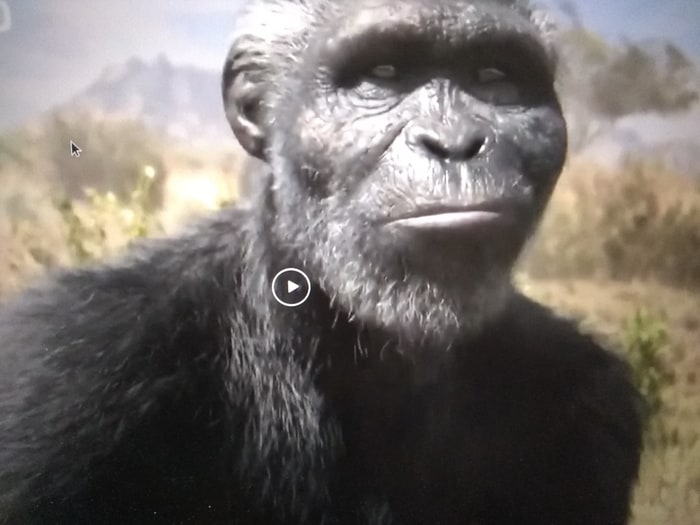
Australopithecus afarensis
Welcome to the Australopithecus Crash Course—your deep dive into early human evolution, stripped of academic dogma and woke distortion. This episode is not just another fossil roundup. It’s a cinematic, mythic, and scientifically rigorous journey through the tangled roots of our species. From Australopithecus anamensis to sediba, we unravel the evolutionary saga your biology professor never dared to tell.
Whether you’re a student, a paleoanthropology enthusiast, or simply fossil-curious, this crash course fuses science, storytelling, and visual artistry to bring ancient bones to life. And yes—it’s guaranteed woke-free.
🔍 What Is Australopithecus? And why an Australopithecus Crash Course?
The genus Australopithecus represents a pivotal chapter in human evolution. These hominins walked the Earth between 4.2 and 2 million years ago, bridging the gap between primitive ape-like ancestors and the genus Homo. They were bipedal, tool-curious, and cognitively complex—yet still retained traits that tethered them to the arboreal past.
In this episode, we explore the full cast of characters:
- Australopithecus anamensis – The earliest known species, discovered in Kenya and Ethiopia. A transitional figure between Ardipithecus and later Australopithecines.
- Australopithecus afarensis – Home to the iconic Lucy, this species roamed East Africa and left behind footprints, skeletons, and mysteries.
- Australopithecus africanus – A South African enigma, often overshadowed but evolutionarily crucial.
- Australopithecus sediba – The newest and most controversial member of the family, discovered in 2008. Sediba may rewrite the timeline of our genus entirely.
Aus. Africanus: The Forgotten Pioneer
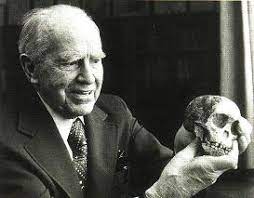
Raymond Dart
While Lucy gets the headlines, Australopithecus africanus deserves a mythic spotlight. Discovered in South Africa in the 1920s, Africanus was the first Australopithecine ever identified. Its rounded cranium, smaller teeth, and forward-shifting foramen magnum hinted at a creature caught between worlds—part ape, part human.
In this episode, we explore:
- The legacy of Raymond Dart and the Taung Child
- Why South Africa’s fossil record rivals East Africa’s in evolutionary significance
- How Africanus may have contributed to the rise of Homo habilis
Africanus is more than a footnote. It’s a keystone.
🦴 Lucy: Iconic, But Still Misunderstood
Discovered in 1974 in Ethiopia, Lucy (Australopithecus afarensis) became the poster child for human evolution. Her partial skeleton revealed a bipedal gait, a small brain, and a surprisingly human-like pelvis. But Lucy’s fame has obscured deeper truths.
We uncover:
- What Lucy’s skeleton still hides—especially in the shoulder and wrist morphology
- The myth of linear evolution and why Lucy doesn’t fit neatly into it
- How Lucy’s species may have overlapped with other hominins, challenging textbook timelines
Lucy is iconic, yes—but she’s also a cipher. And we decode her.
🧬 Sediba: The Timeline Disruptor
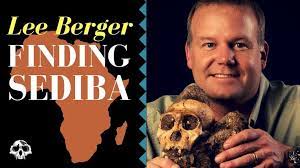
Sediba
Australopithecus sediba is the wildcard. Discovered in South Africa in 2008, this species exhibits a mosaic of traits—some primitive, others shockingly modern. Its pelvis, hand structure, and dental morphology suggest a creature on the cusp of Homo.
In this episode, we explore:
- Why Sediba’s discovery rattled the paleoanthropological establishment
- How its features challenge the East African origin narrative
- The implications for our understanding of human ancestry
Sediba isn’t just another fossil. It’s a narrative disruptor.
🧠 Mythic Resonance: Why These Stories Matter
Beyond the bones and timelines lies a deeper truth: these hominins are part of our mythic inheritance. They represent divergence, adaptation, and survival. Their stories echo through our DNA, our cultures, and our imaginations.
We ask:
- What does it mean to trace our origins to creatures who lived in trees and walked on two legs?
- How do these fossils challenge modern ideologies about race, identity, and progress?
- Why does myth matter in science—and how can storytelling revive paleoanthropology?
This crash course isn’t just educational. It’s existential.
🧬 Genetic Echoes: Australopithecus in Modern Africans?
One of the most provocative questions in paleoanthropology is whether traces of Australopithecus DNA persist in modern humans—especially in extant African populations. While direct genetic evidence is elusive due to fossil age, morphological echoes and regional continuity suggest deeper ancestral ties.
We explore:
- The possibility of archaic introgression in sub-Saharan populations
- How phenotypic traits may reflect ancient lineages
- Why this matters for understanding human diversity today
This isn’t speculation. It’s a frontier.
🎥 Why Watch This Episode?
This isn’t your average YouTube explainer. It’s a cinematic, mythic, and scientifically grounded journey through the roots of humanity. We fuse archival footage, symbolic overlays, and multilingual narration to create an experience that’s both intellectually rigorous and emotionally resonant.
You’ll get:
- A full-spectrum overview of Australopithecus evolution
- Visual storytelling that amplifies fossil data
- A narrative arc that challenges conventional wisdom
And yes—no woke bias. Just raw science, mythic storytelling, and evolutionary truth.
🔗 Watch Now and Explore More
Ready to dive in? Watch the full episode of Australopithecus Crash Course on our . Be sure to subscribe, comment, and share—every view helps us resurrect the mythic pulse of paleoanthropology.
And stay tuned to for more articles, fossil breakdowns, and mythic commentary. This site is your companion archive—a place where cinematic science meets evolutionary storytelling.